
We got up early to take an hour and a half drive to a coffee plantation. Our hotel hostess provided fresh fruit and other things for breakfast, knowing we would have to leave before the hotel served breakfast.
Our driver was a cheerful gentleman named Roger, who pronounced his name in the Anglo fashion. We asked about it, never having met a Roger in a Spanish-speaking country. He then pronounced it RRRho-hair, explaining that a lot of visitors did not know how to roll their r’s. Still strikes me as an unusual name in this part of the world.
We made our way out of busy, bustling Tamarindo and were soon in open country, dominated by grazing cattle and horses, and dotted with tiny pueblos. Each, as Roger pointed out, had its own church, soccer field and bar. Larger towns might have two or three bars. It is drier here than in La Fortuna, but still lush. Gorgeous plants that I see at home as expensive indoor plants are weeds here.
Roger suggested that we stop at a coyol producer. Coyol is a wine made from a particular species of palm tree. The cut trunk is laid flat, and a rectangular well is cut at the end that would normally be supporting the leaves. The sap collects in the cut and is harvested daily. The pre-fermented sap is sweet. It ferments within hours. Interestingly, Wikipedia says, “The wine is purportedly unique in that it causes inebriation not primarily by its alcohol content, but through enzymatic action triggered when one drinks it and then receives significant sun exposure.” Not hard to do here.
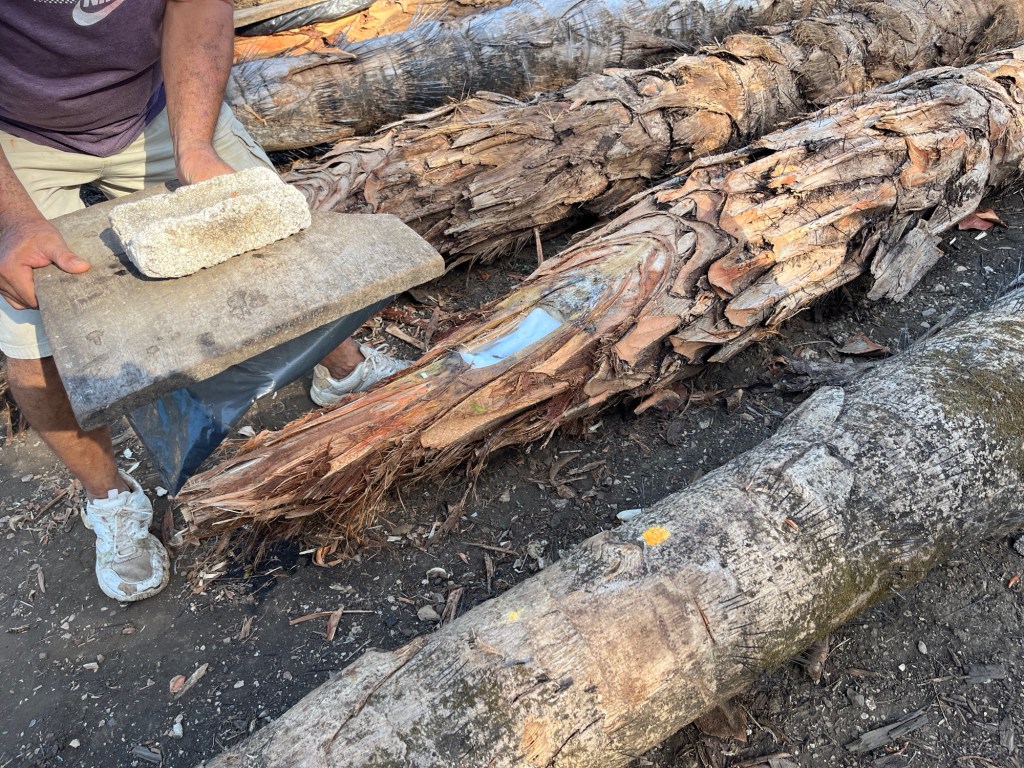
The coyol maker removed the protective covering to show us the fresh sap collecting in the palm log. They offered is a taste of coyol that had been harvested 24 hours earlier—the strong stuff, which we accepted. It wasn’t awful, but it will not be my favorite tipple.
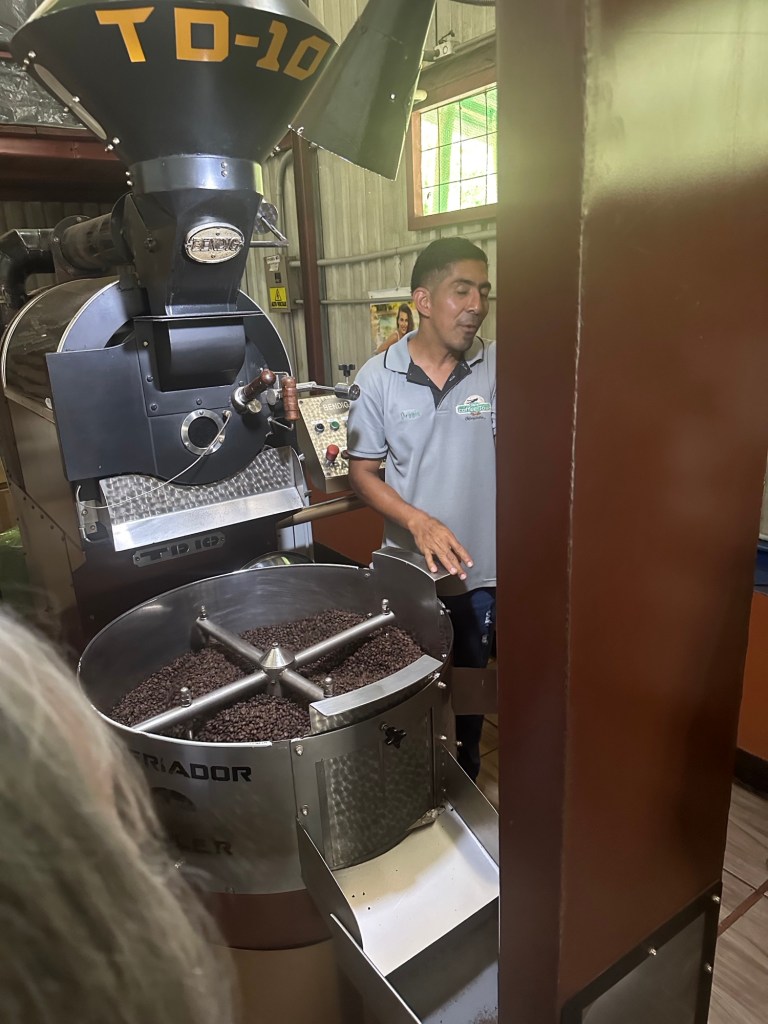
We gained a bit of altitude and finally arrived at Coffee Dirià. Several other tourists were already there. They handed us a small cup of coffee, which smelled delicious, but I can no longer drink coffee black, nor do I enjoy it without the modifying elements of milk and sweetening. I am certain it embodied all the taste subtleties that our guide, Dennis (another weirdly Anglo name) described.
Dennis took us all through the plant and described the process in tremendous detail. I have probably already forgotten much of it, it here’s what I remember:
The coffee is harvested by hand. It cannot be done by machine because the beans on the same plant ripen at different times. Also, the coffee flowers, which can appear on the coffee plant along with ripe and unripe beans, are quite small and delicate, and they would be destroyed if machinery were used. The flowers resemble jasmine in size and fragrance, though the scent is lighter.
Only the bright red berries are premium quality and fetch the highest price. A mixed lot of picked berries—red, yellow, green—will not fetch a lot of money for the worker (not that they are particularly well-paid even if they get nothing but premium berries.)
The coffee berry has three “skins.” First, the outer layer, which is the consistency of a very tough grape skin. Then a layer of sweet jelly, similar in looks and taste to the white goo inside a cacao bean. Inside that, there are either two beans or one coffee bean. The singles are the most highly prized, more intense in flavor but smaller in size. These beans have a final “silver” skin that must be removed before roasting.
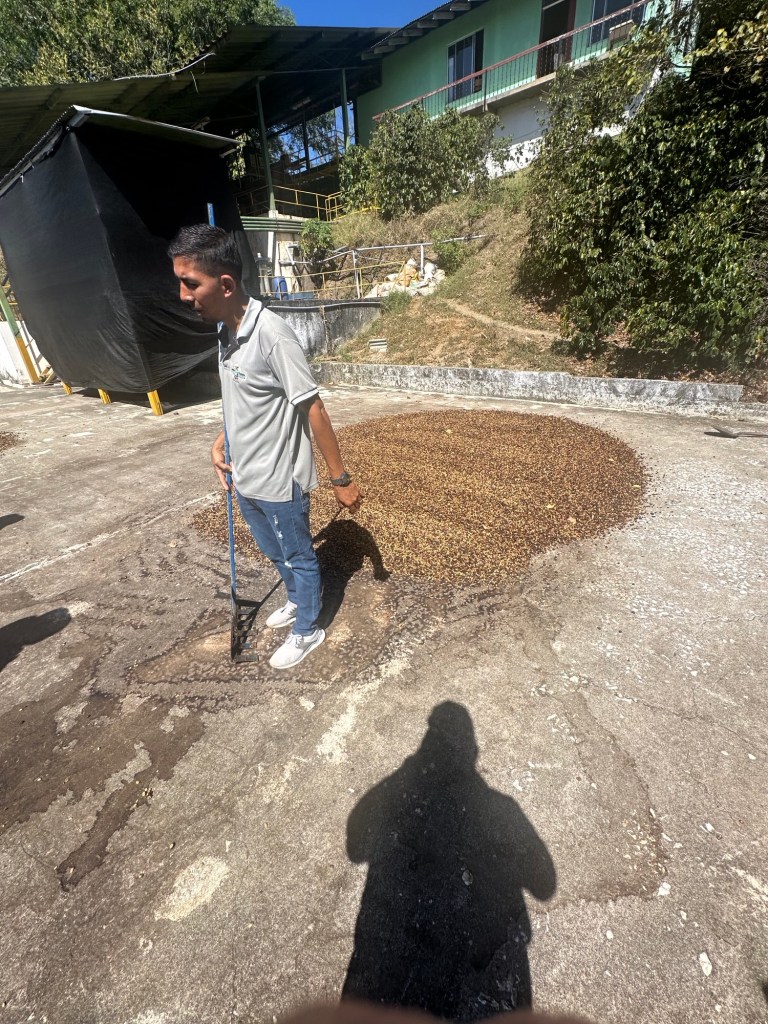
I’m skipping over the drying, fermenting, roasting, etc. that most of us know about. I was most interested in how they have approached farming coffee organically, without pesticides, and used every part of coffee bean by-products.
Instead of using pesticides, they spray the plants with a tea made of oregano, basil, chilis, and other things. This helps, but there is a weevil that made its way down from Brazil that still manages to infect some of the beans, laying eggs in them. The weevils hatch out and set up housekeeping by eating the house. Dennis selected a bean with a tiny hole and ejected the weevil to show us. It was tiny.
The harvested coffee beans are submerged in water. The good beans sink, and the weevily beans float. The bad beans are submerged for 24 hours in water, which drowns the weevils. The now-unoccupied weevil houses are dried and used for things that are coffee-flavored, like instant coffee. Remember this when you sip that next cup of Nescafé.
The external skin is left on the beans during fermentation and drying, then removed and used for animal feed. The silver skins are dried and turned into paper. The flowers are sometimes used for perfume and skin care products. There are more uses for different parts of the beans, but this is what I recall. Very impressive, IMHO.
We bought some of the plantation’s highest-quality beans, called Black Honey. They had actual honey made from the bees that pollinate the coffee flowers. It was an unusual flavor and delicious, but I didn’t want to carry a heavy glass jar of glutinous sticky stuff in my suitcase. 😢
So then Roger and the Keenans were on the road back to Tamarindo. Roger gave us beers. I am not a beer drinker, but my Mom always said a cold beer on a really hot day hots the spot, and she was right.
We stopped in Villareál, a small town not far from Tamarindo. We were promised lunch at Roger’s favorite soda. A soda is a small, usually family-owned restaurant where you can get local food—la comida typica. The soda in question, Soda y Masqueria Marcel, has its own Facebook page.

Roger had ordered while we were on the road. We all had casada, which is the classic mid-day meal here. It consists of a protein (I and Roger had fish, Tom had chicken), salad with lots of raw veggies, rice and black beans, and plaintains, which in this case were cut into long strips and deep-fried until light and crisp. It struck me as a well-balanced, nutritious meal, and it was delicious.
A word about Costa Rican food in general. It is safe to eat raw vegetables here. I got the squits once, but I always get the squits when I travel outside the US—even in pristine Iceland. Tom has been fine. The tap water is also safe. The food is not at all spicy, though sauce picante is available on request. The food at our hotel at La Fortuna tended to the bland and uninteresting, but we have had really good food in Tamarindo, although you do have to go a bit further abroad if you want la comida typica.
I took my now-habitual siesta in the afternoon and Tom walked in the suffocating heat. (Note that he is the healthy one.) For dinner, we returned to the Falafel Bar because it was really exceptionally good middle eastern food.

 obsidianmirrorblog