Review: “Normal Women” by Philippa Gregory

If this book doesn’t make you furious, you’re probably not human.

I had expected the book to be a collection of biographies of normal women throughout history—not queens or the elite, but ordinary women, though little has come down to us about ordinary women in history. This book is not that. Philippa Gregory, the author of numerous historical novels about women, has written a master class in the history of misogyny, at least in England, though America or the United States is mentioned because it perpetuated much of its colonists’ culture in the New World. The book is painstakingly researched, in many cases using ancient records to bolster her points—the production of wool thread, for example, or the number of licenses issued to “femes soles” (in Medieval times, women who were working for themselves with no husband or other man involved in their businesses).

Prior to 1066, when William the Conqueror forayed into England and defeated the Anglo-Saxons, women in Anglo-Saxon society had a reasonable say in their own affairs, and could own their own land and monies. (This is not to say they were considered equal to men, just that they had more rights until William came along.) The Norman Conquest changed all that. Women became legal nonentities; they had no rights under the law separate from their husbands. Misogyny flourished in the succeeding centuries, fueled by religion, classism, racism, superstition, and the pronouncements in every age by learned men on what the true “nature of women” was.

Women, being intelligent and resourceful, strove in many different ways to overcome the obstacles set them. They became proficient and profitable at one trade or another—only to find that a law might be passed prohibiting women from engaging in that trade. Women who found themselves beating men at sports quickly found their participation in men’s sports prohibited. “Normal Women” documents this snatch-the-football trick over and over, up to the modern day.

Women did not feel a sense of sisterhood for much of this history largely because of classism: upper-class women were thought to be delicate and frigid—yet prone to extremes of emotion and irrationality. Working class women were thought to be sturdy, resilient, and sexually available. The classes didn’t mix, and they did not see that they had common cause until the mid-19th Century. White women did not initially see they had anything in common with women of other ethnicities. When women joined hands across class and ethnicity, progress began to be made, though not without many setbacks and failures.

Ms. Gregory is crystal-clear about why the progress of women’s rights has been so painfully slow: men. Men have a vested interest in the unpaid labor of women even today. And when women are able to out-compete men, that appears to trigger the need to shut them down. Why? “Normal Women” explains why, and it is infuriating because it is based on the musings of non-scientific Greek philosophers, an eight-thousand-year-old story created by goat herders about the fall of Adam and Eve (Eve thereby making all females everywhere suspect and inferior in the millennia since), Medieval fantasies about chivalry, completely unscientific “truths” about the female body and its workings, and similar nonsense. These attitudes persist today, as does widespread ignorance about the female body.

I told my husband about some of the anti-women measures mentioned in the book during Medieval times, and he immediately said, “Not all men were responsible for this.” Well, there were no women in Parliament writing the laws. There were no women sheriffs or bailiffs enforcing the laws. There were no women lawyers defending or prosecuting the laws. There were no women judges making decisions about the laws and their enforcement. And there were no men opposing the unjust laws against women, either. So yeah, all men, at least at that particular time. Thankfully, there has been some progress since, and today—not all men. Just a lot of them.

So I guess if you’re a man, “Normal Women” will infuriate you because “not all men.” If you are a woman, you will be infuriated because of the relentless and irrational war against women over the centuries. And if you aren’t infuriated—you are probably an alien.

Costa Rica: Days 20 & 21: Our Trip Comes to a Close

View of the jungle from the spice plantation viewing tower.

This morning when we made our way to the restaurant for breakfast, spider monkeys were everywhere–leaping overhead from bough to bough and chattering. At the restaurant, several of them were intent on snatching some food, but they were shooed away by staff.

Spider monkey looking for mischief.

We visited a spice plantation on day 20. It was about a half-hour drive from the hotel. They grow a number of different spices: vanilla, allspice, cardamom, cloves, cinnamon, black pepper, hibiscus, and more, as well as chocolate and coffee. The chocolate, we were informed, is pollinated by mosquitoes, so there is a reason for them after all. The spice plants were spread along winding, gravel paths among tropical flowers–very picturesque.

Hibiscus drying.
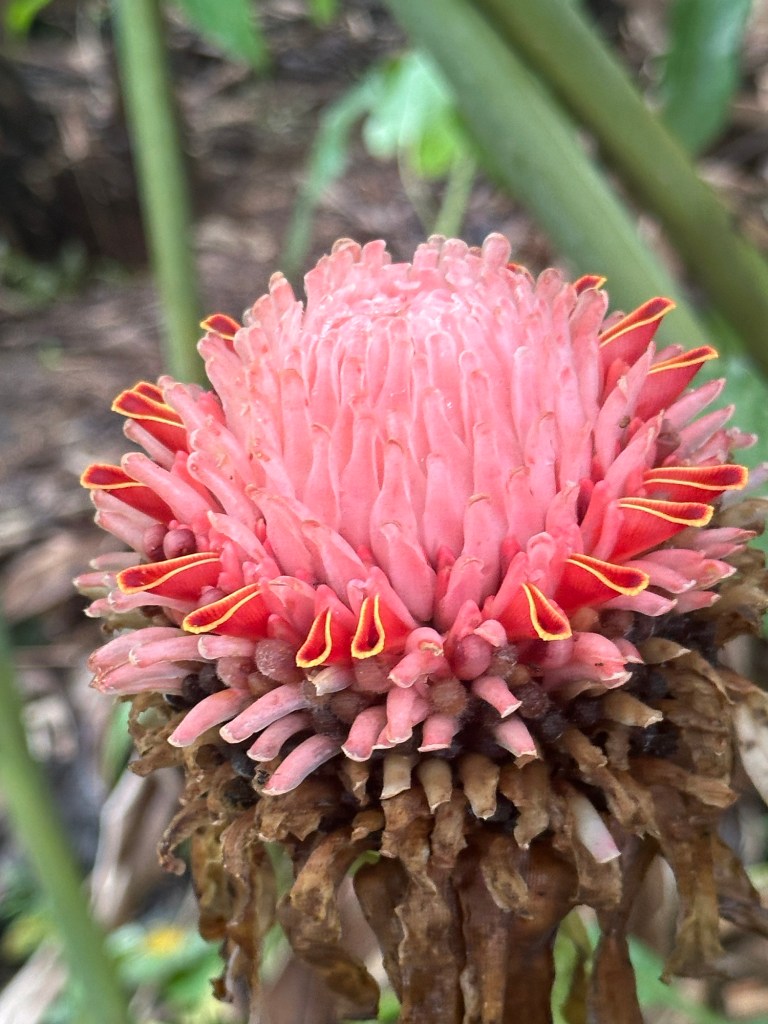
Torch ginger.

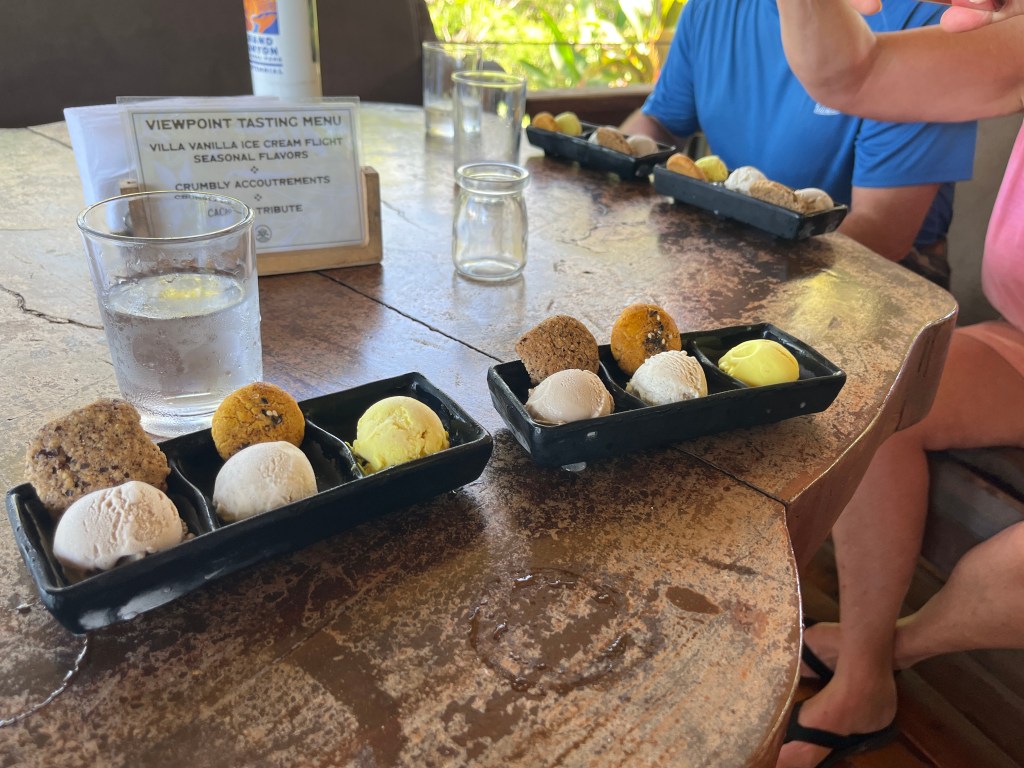
Then they took us to a building rather like a fire tower, reached by stairs. The view over the plantation was gorgeous from up there. We sat and tasted chocolate and three different flavors (vanilla, chocolate, and goldenberry, a local delicacy) of ice cream, complemented by “crumbly accoutrements,” as the menu said. Very satisfactory.

The tasting of local ice cream and crumbly accoutrements.

On our last day, we hired a guide to take us on a short hike through Manuel Antonio National Park, which is an enormous biological reserve. Needless, to say, we only saw a very small part of it. It turned out that the entrance was right across the street from the hotel–the same entrance we used to visit the butterfly sanctuary.

Our guide, David, was a young man whose primary training was in ziplines and such, but he wants additional certification to become a wildlife guide. He likes being in the forest best as he says it makes him feel peaceful. He also mentioned that he has had dengue fever three times, which is one of the things I was worried about until I saw our accommodations and realized that a kissing bug (the vector for dengue) would die from the air conditioning before it reached us. He confirmed that it was very painful (dengue is also called bone-break fever). He spoke good English, which–like most of our guides–he taught himself.

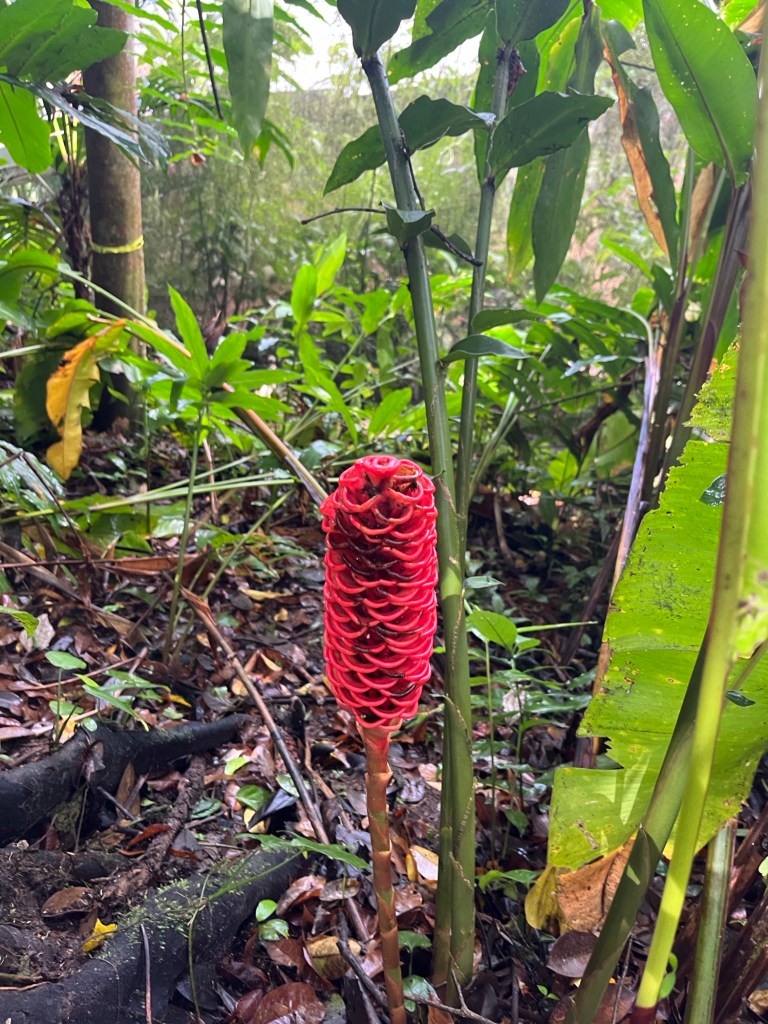
Ginger. Of course.

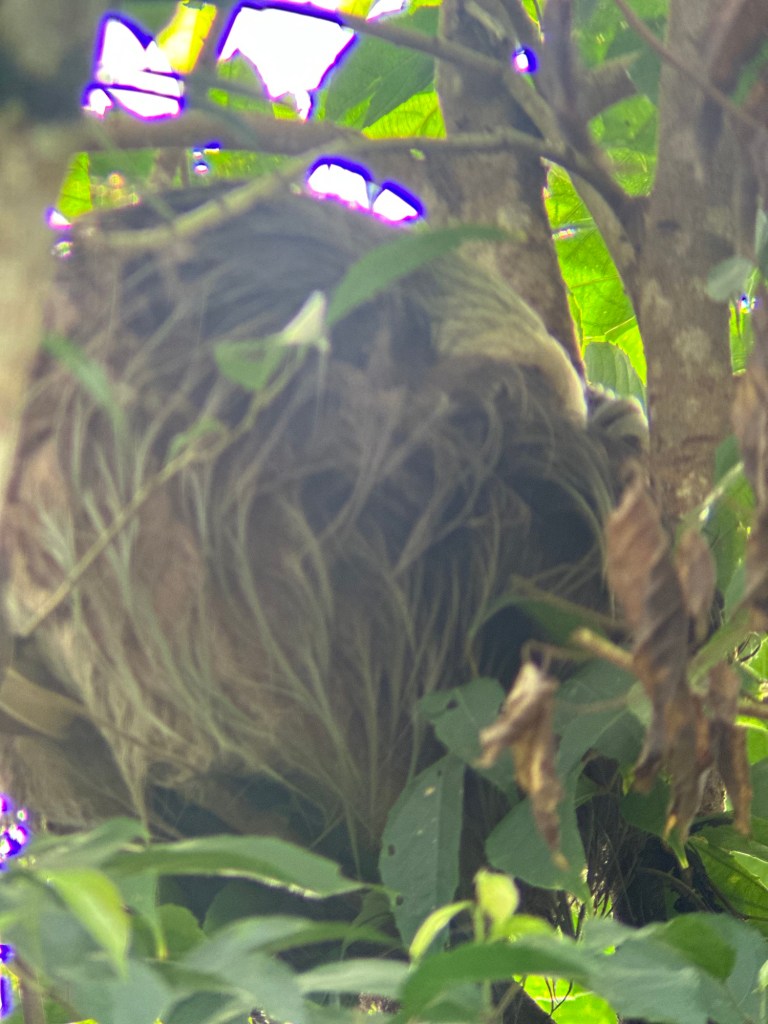
We saw a sloth high up in a tree, hanging upside-down in archetypal sloth fashion. We also saw a number of iguanas and basilisk lizards, and some spider monkeys. We also saw a column of army ants, no more than an inch wide, but stretching ahead and behind for unknown lengths as they disappeared into the leaf litter. They have no permanent nest, carrying their pupae on their backs as they travel, stopping only at night. We only saw them because they crossed the trail we were on. I was also delighted to spot a gorgeous morpho butterfly, flashing its bright blue, iridescent wings as it wafted through the trees. I had seen them in the sanctuaries, but this one was in the wild.

I apologize for not having more photos of the end of our trip. Technical problems, but I wanted to get this down and finished.

We decided to take a small commuter plane from Manuel Antonio to San Jose airport, where we would catch a flight to Panama City and from there to San Francisco, CA. The drive from Manuel Antonio to San Jose was five hours; the flight was 30 minutes. This was compl=elling enough to overcome my objection to small planes. We arrived at the Manuel Antonio airport, which now holds our record for being the smallest airport we have ever been in. It was basically a large room. The security consisted of a uniformed guy who looked at everyone as they came through the gate. They weighed us and our bags, then we were allowed to board a 12-passenger Cessna. It was a quick trip on a fine day, with very little turbulence.

Costa Rica spread out below us, mountainous and green. We saw a lot on this trip, but I couldn’t help thinking how much more the country has to offer. No army, investing in education and the environment instead. Costa Rica runs on 100% renewable energies–hydroelectric, wind, and thermal. Despite all the sunshine they get, there are few solar panels visible at houses because electricity is subsidized by the government and solar panels are 100% imported and thus expensive. They like Americans. They believe in their “Pura Vida,” and they act accordingly. It appears to be a government that acts on behalf of the people, and not corporations and oligarchs. I know they have their issues, but I really liked the country and the people. I was both sad to leave and yet eager to get home, which I suppose is the hallmark of a great trip.
Costa Rica: Day 18 & 19: doing nothing and another mangrove swamp

Day 18 didn’t work out as planned, so we hung around the hotel, which was interesting in itself. When I woke up, I joined Tom on our balcony, overlooking a broad swath of jungle spilling down a steep slope to the ocean. Tom reported he had just seen a flock of scarlet macaws. As I sat and gazed, I saw a toucan flying below—its enormous yellow beak was unmistakable. That was my first toucan sighting, and as we leave day after tomorrow, it may be my last.

We spent some time in the adult pool and bar. I don’t know what the attraction is of swimming up to a bar for a drink but it’s undeniable.

On Day 19, we had a mangrove swamp tour scheduled for the afternoon. We discovered that the tour included a dinner, which was not what we had in mind. But we went with the flow.

Our guide was named Tomàs. I think he had doubts about us at first—I don’t know why, but he just seemed a bit standoffish at first. After a bit, when we listened attentively to his history talk as we drove, he began to warm up. His family was from Jamaica, and he grew up on a farm on the Caribbean side. He speaks English, Spanish, and French (yes, we chatted briefly in French), and he wants to learn Hebrew because he thinks it is the most beautiful language he has ever heard and he loves Israeli people. If he does learn Hebrew (and why not? He taught himself French), he will have a lock on the Israeli tourist market here. (My thought, not his.)

Tomás explains mangroves to us.

There were no other tourists booked for this tour. We started out in a bayou full of small, Fiberglas boats similar to the one we were on. This is the first time I have seen serious poverty here—the shacks lining the waterway reminded me of Disney’s Pirates of the Caribbean ride, only utterly without charm. I imagine that the swamp is not a popular location for housing, especially during the rainy season.

In the beginning of the tour, there were many mangroves. Many, many mangroves, if nothing else. Poor Tomás talked manfully about the differences between the mangrove species for a while, as there was nothing else to be seen. He pointed out that crocodiles didn’t live in this mangrove swamp because there were no sandbanks for them to haul out on—just tangled mangrove roots, impenetrable to crocs, providing no places to nest or lay their eggs. The channels seemed deeper than the ones in Tamarindo, and Tomás said there were lots of fish, some of them quite large.

Tomá is holding a tiger-faced crab. They live on the mangrove roots. The crab was carefully placed in the water near a root, which it swam to rapidly.

We finally did begin to see birds—blue herons, which are a bright blue and smaller than great blue herons, white ibis, yellow-crested herons, great blue herons. As we approached the mouth of the estuary, we saw pelicans roosting in the trees. We approached quite closely as the pelicans stared down at us. They were clearly judging us, and not for the better. One of them made a disapproving gurgling sound as we passed by.

Judgy pelicans.

There are sandbanks and crocodiles here, but we didn’t see any (crocs, that is. There were plenty of sandbanks). We did see a chachalaca, but it was too far away to photograph. We also saw a HUGE iguana, lying on a branch and basking in the sun.

This guy (or gal) was probably four feet long, nose to tail tip.

The exciting finds were a silky anteater, a ball of golden-brown fur in a mangrove tree, and a capuchin monkey, who went about his business quite close to us without seeming to care at all that we were there.

Capuchin monkey. we were fortunate in that we saw all three species in Costa Rica–howler, capuchin, and spider.

We were constantly astonished by the sharp eyes of the boat captain and Tomás, who could pick out a bird sitting like a statue within the tangled mangrove roots. There were times we didn’t see anything until it moved.

We headed back as the sun was setting and drive into Guero, a small town on a deep shipping harbor here. Tomás took us to a restaurant for some casado. I am a fan, but I wasn’t hungry. Tom did it justice, though. It was delicious, but my late lunch stuck with me. We had a gorgeous view of the sunset over the harbor.

Costa Rica Day 14: a visit to Flamingo Beach which has no flamingos and and never has had any flamingos

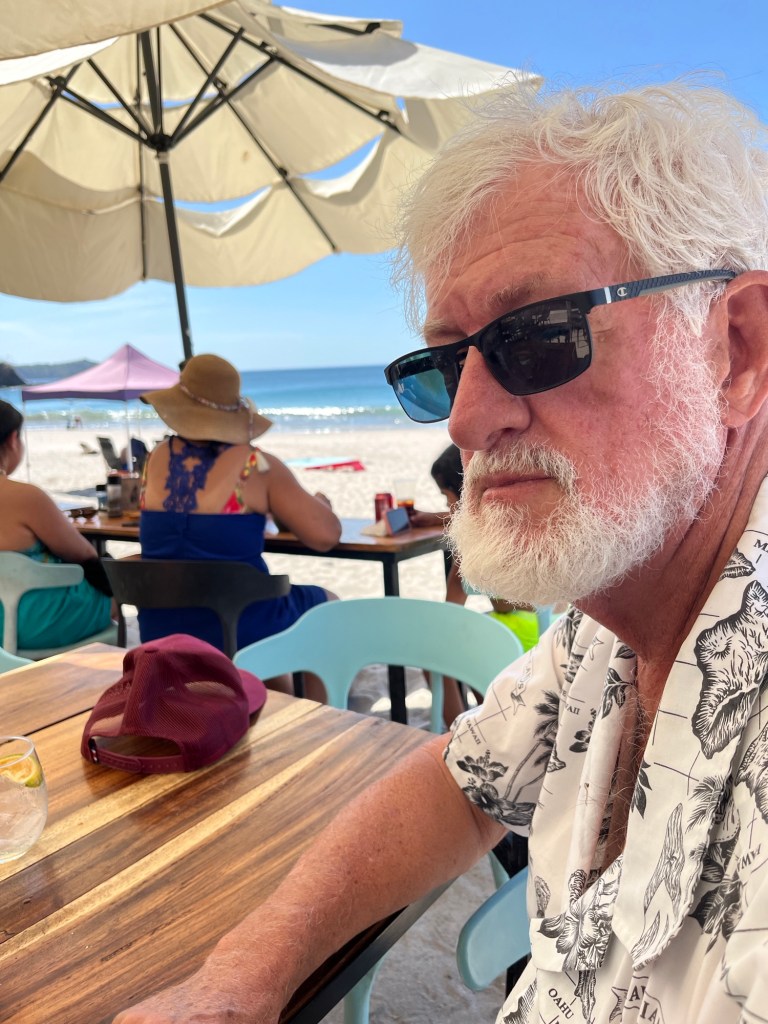
My beloved at CocoLoco.

On the advice of the hotel mom, Marie, we decided to go to Flamingo Beach. She said it was a beautiful white sand beach, but the wave break is pretty strong, and I should be careful. She also recommended a restaurant on the beach called CocoLoco. So we hired a car and driver, whose name was Orlando, and set off, bathing suits under our shorts and shirts.

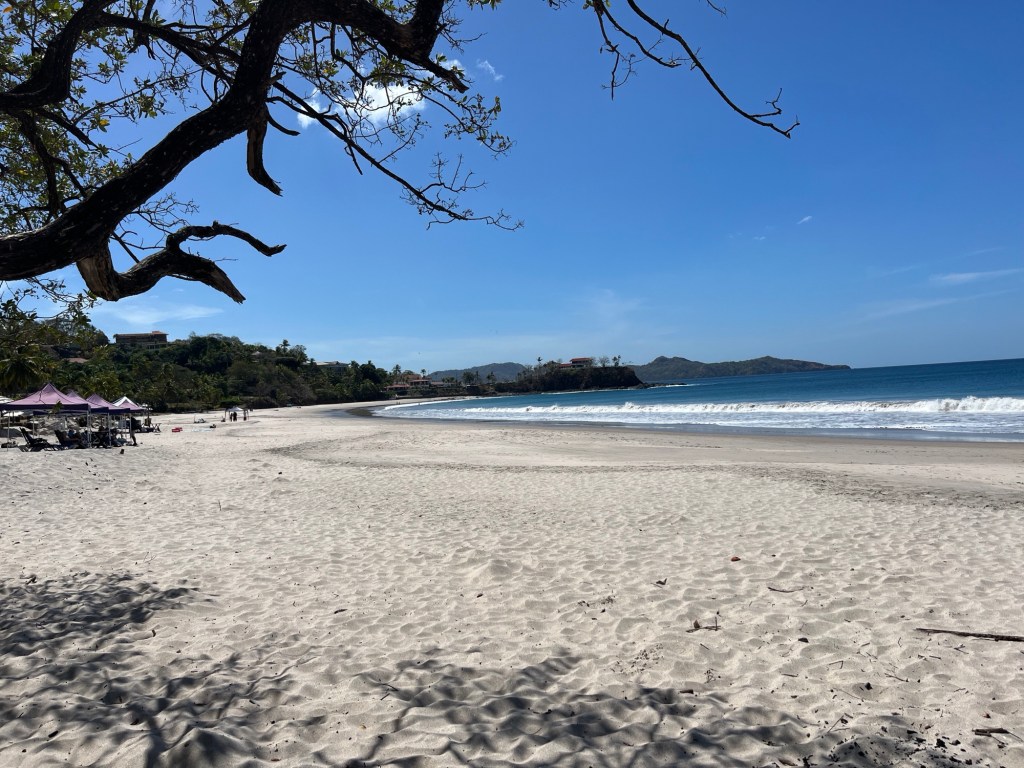
Flamingo Beach

We already knew about Flamingo Beach because our driver Roger said it was very nice and he lived there. He also said there used to be roseate ibis there, which would be exciting to see. People mistook the ibis for flamingoes—hence the name. I doubt there are many ibis left there, as it has been developed. It looks nice to us, but I am sure it ruined the ibis neighborhood.

We rented a tent for shade and some chaise lounges. There was very little shade on the beach, and I am a very white person who burns badly. (Of course, I was wearing sunscreen, but sunscreen only goes so far.)

I waded into the water. Marie was right about the break, but getting out was no problem. The waves were powerful, but small, breaking almost on the beach. Past the surf line, it was still quite shallow very far out. I was cautious about my feet, thinking there might be stingrays. But I didn’t see a single, solitary fish of any sort as I bobbed around in the warm water.

Getting back to the beach through those waves was another matter entirely. The waves broke hard, and then pulled strongly back out. Having grown up swimming in the ocean, I allowed them to knock me down, relaxing into the force and not resisting, trying not to put strain or torque on my knee or shoulder, but making steadily towards the shore when possible. I was absolutely astonished when one of those little waves knocked me down and boiled me! Having learned to survive boiling in the much larger waves of Southern California, I wasn’t hurt. Eventually I found my feet and crawled onto the beach, dripping with compacted sand that filled my bathing suit.

Then Tom went in (we took turns because leaving our stuff unattended would be stupid, right?). Tom saw myriads of baby manta rays (they do not sting), swimming everywhere and surfing in the waves! I could see them in the breaking waves. Evidently, they do it for fun, because they swim back out and go again. He also saw a four foot fish with a dorsal fin that might have been a shark. But the shark, if that’s what it was, was uninterested in him.

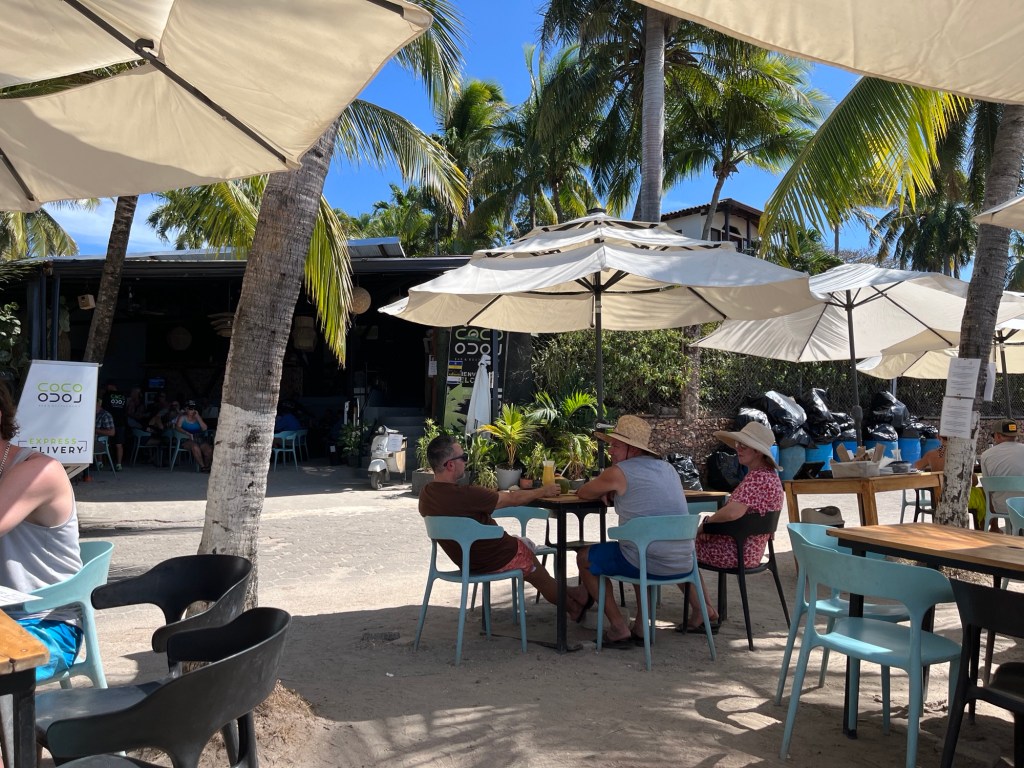
CocoLoco

When Tom returned, we packed up and walked the short distance to CocoLoco. We sat at a table on the beach and ordered margaritas. Tom had yellowfin tuna tacos. I had taquitos with chicken, and we shared a watermelon-feta-cashew salad. We ordered more margaritas, and then Orlando showed up, right on time. When we returned to the hotel, I showered in my suit and the amount of sand that flooded out was astounding. Then I went for a brief dip in the hotel pool, which was cool and refreshing. Then I took the suit off and took a real shower. I discovered that my cleverly-designed bathing suit, in addition to drying slowly, was fashioned with many clever nooks and crannies, apparently ideal for sand storage. Another avalanche of sand in the shower.

We ate at Dragonfly again. This time I had beef empanadas and the kale salad. Delicious. The music was ghastly—a monotonous bass beat with an electric guitar tootling around it. Every number sounded just like every other number. I guess people would rather listen to any kind of music rather than have an actual conversation.

Today was the first day since we arrived at Tamarindo that I didn’t take a siesta. Maybe I am acclimating?

Tomorrow we leave for a week in Manuel Antonio, near a large biological reserve. I had my doubts about TamaGringo when we arrived, but we had an enjoyable stay. I can’t close without mentioning how they manage dust control here. They periodically come through and spray the streets from a huge truck. But it’s not water. It’s something with molasses in it, probably combined with oil, because it collects in the ruts, but doesn’t evaporate. The bugs don’t go for it either, although it is sticky with sugar. It sits there in odiferous, dark-brown puddles, making walking all the more interesting.

Costa Rica, Day 13: A country drive to a coffee plantation and almuerzo con comida typica

We got up early to take an hour and a half drive to a coffee plantation. Our hotel hostess provided fresh fruit and other things for breakfast, knowing we would have to leave before the hotel served breakfast.

Our driver was a cheerful gentleman named Roger, who pronounced his name in the Anglo fashion. We asked about it, never having met a Roger in a Spanish-speaking country. He then pronounced it RRRho-hair, explaining that a lot of visitors did not know how to roll their r’s. Still strikes me as an unusual name in this part of the world.

We made our way out of busy, bustling Tamarindo and were soon in open country, dominated by grazing cattle and horses, and dotted with tiny pueblos. Each, as Roger pointed out, had its own church, soccer field and bar. Larger towns might have two or three bars. It is drier here than in La Fortuna, but still lush. Gorgeous plants that I see at home as expensive indoor plants are weeds here.

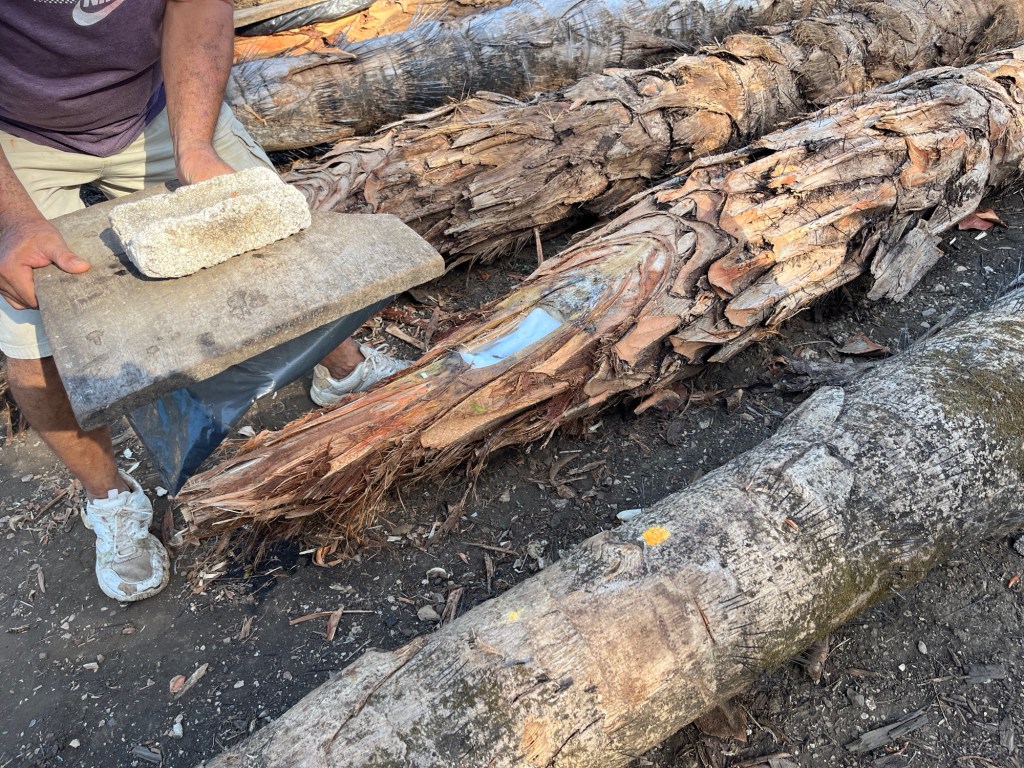
Roger suggested that we stop at a coyol producer. Coyol is a wine made from a particular species of palm tree. The cut trunk is laid flat, and a rectangular well is cut at the end that would normally be supporting the leaves. The sap collects in the cut and is harvested daily. The pre-fermented sap is sweet. It ferments within hours. Interestingly, Wikipedia says, “The wine is purportedly unique in that it causes inebriation not primarily by its alcohol content, but through enzymatic action triggered when one drinks it and then receives significant sun exposure.” Not hard to do here.

The coyol maker removed the protective covering to show us the fresh sap collecting in the palm log. They offered is a taste of coyol that had been harvested 24 hours earlier—the strong stuff, which we accepted. It wasn’t awful, but it will not be my favorite tipple.

We gained a bit of altitude and finally arrived at Coffee Dirià. Several other tourists were already there. They handed us a small cup of coffee, which smelled delicious, but I can no longer drink coffee black, nor do I enjoy it without the modifying elements of milk and sweetening. I am certain it embodied all the taste subtleties that our guide, Dennis (another weirdly Anglo name) described.

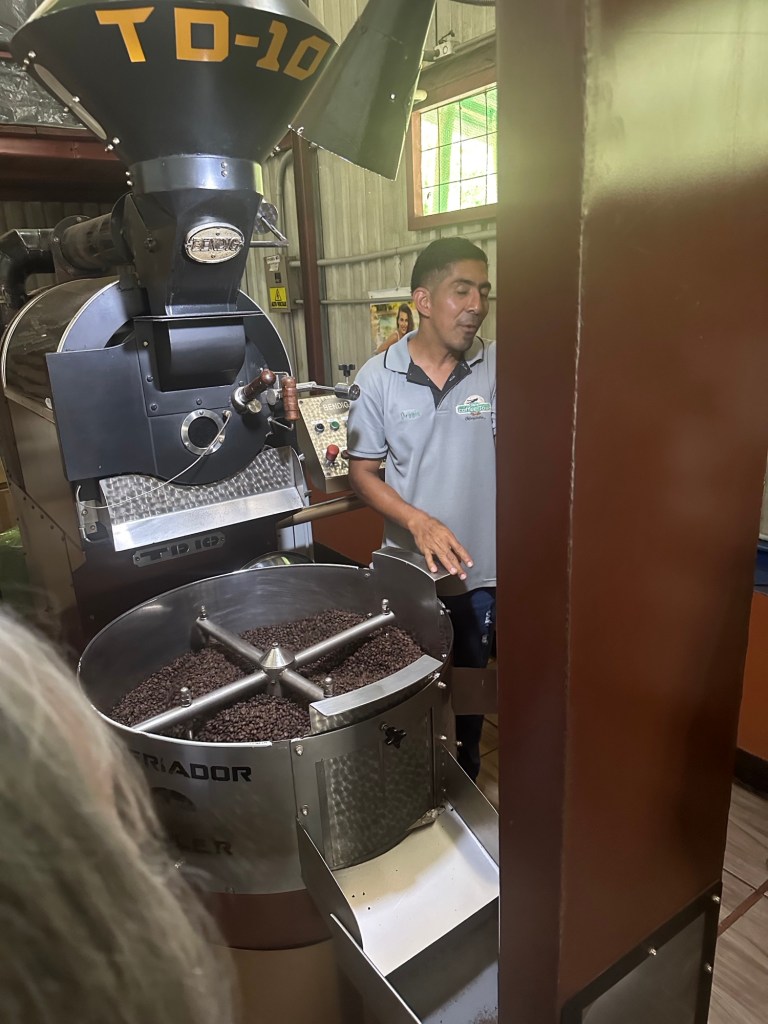
Dennis took us all through the plant and described the process in tremendous detail. I have probably already forgotten much of it, it here’s what I remember:

Dennis showing us the coffee roaster.

The coffee is harvested by hand. It cannot be done by machine because the beans on the same plant ripen at different times. Also, the coffee flowers, which can appear on the coffee plant along with ripe and unripe beans, are quite small and delicate, and they would be destroyed if machinery were used. The flowers resemble jasmine in size and fragrance, though the scent is lighter.

Only the bright red berries are premium quality and fetch the highest price. A mixed lot of picked berries—red, yellow, green—will not fetch a lot of money for the worker (not that they are particularly well-paid even if they get nothing but premium berries.)

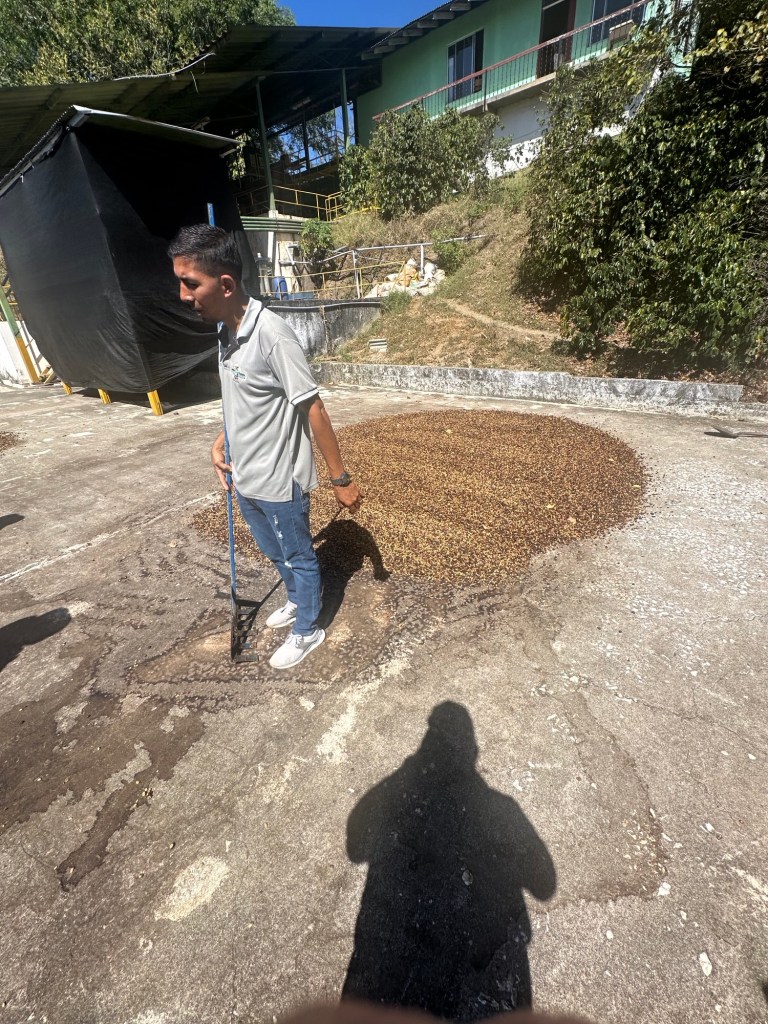
Dennis is standing to one side of premium coffee berries set to dry. The best way to dry them is in the sun, which takes longer than machine drying.

The coffee berry has three “skins.” First, the outer layer, which is the consistency of a very tough grape skin. Then a layer of sweet jelly, similar in looks and taste to the white goo inside a cacao bean. Inside that, there are either two beans or one coffee bean. The singles are the most highly prized, more intense in flavor but smaller in size. These beans have a final “silver” skin that must be removed before roasting.

I’m skipping over the drying, fermenting, roasting, etc. that most of us know about. I was most interested in how they have approached farming coffee organically, without pesticides, and used every part of coffee bean by-products.

Instead of using pesticides, they spray the plants with a tea made of oregano, basil, chilis, and other things. This helps, but there is a weevil that made its way down from Brazil that still manages to infect some of the beans, laying eggs in them. The weevils hatch out and set up housekeeping by eating the house. Dennis selected a bean with a tiny hole and ejected the weevil to show us. It was tiny.

The harvested coffee beans are submerged in water. The good beans sink, and the weevily beans float. The bad beans are submerged for 24 hours in water, which drowns the weevils. The now-unoccupied weevil houses are dried and used for things that are coffee-flavored, like instant coffee. Remember this when you sip that next cup of Nescafé.

The external skin is left on the beans during fermentation and drying, then removed and used for animal feed. The silver skins are dried and turned into paper. The flowers are sometimes used for perfume and skin care products. There are more uses for different parts of the beans, but this is what I recall. Very impressive, IMHO.

We bought some of the plantation’s highest-quality beans, called Black Honey. They had actual honey made from the bees that pollinate the coffee flowers. It was an unusual flavor and delicious, but I didn’t want to carry a heavy glass jar of glutinous sticky stuff in my suitcase. 😢

So then Roger and the Keenans were on the road back to Tamarindo. Roger gave us beers. I am not a beer drinker, but my Mom always said a cold beer on a really hot day hots the spot, and she was right.

We stopped in Villareál, a small town not far from Tamarindo. We were promised lunch at Roger’s favorite soda. A soda is a small, usually family-owned restaurant where you can get local food—la comida typica. The soda in question, Soda y Masqueria Marcel, has its own Facebook page.

Roger had ordered while we were on the road. We all had casada, which is the classic mid-day meal here. It consists of a protein (I and Roger had fish, Tom had chicken), salad with lots of raw veggies, rice and black beans, and plaintains, which in this case were cut into long strips and deep-fried until light and crisp. It struck me as a well-balanced, nutritious meal, and it was delicious.

A word about Costa Rican food in general. It is safe to eat raw vegetables here. I got the squits once, but I always get the squits when I travel outside the US—even in pristine Iceland. Tom has been fine. The tap water is also safe. The food is not at all spicy, though sauce picante is available on request. The food at our hotel at La Fortuna tended to the bland and uninteresting, but we have had really good food in Tamarindo, although you do have to go a bit further abroad if you want la comida typica.

I took my now-habitual siesta in the afternoon and Tom walked in the suffocating heat. (Note that he is the healthy one.) For dinner, we returned to the Falafel Bar because it was really exceptionally good middle eastern food.

This is the hotel’s cat. I don’t know it’s name or gender, but it follows us whenever we emerge from our room. But it does not wish to be petted.
Another hotel guest. He also does not wish to be petted.

Costa Rica, Day 12

I am still laughing at myself, 24 hours after it happened. We were on the way back from Dr. Piloto’s office. I had trouble getting into the taxi van because the first step is quite high, and the van was parked at an angle that made it even higher. My walking sticks signal to most people that I am not terribly agile right now. There were other people in the taxi, and when the driver pulled away. I thought he was leaving. But instead, he reparked the van to make it easier for me to get in and offered me the shotgun seat. I was grateful, but when I tried to tell him my knee required surgery, I misspelled surgery in my translation app and told him that “My knee requires sugar (azucar).” I KNOW the word azucar but said it anyway. He was such a kind man that he did not burst out laughing, which he was certainly entitled to do! He seemed to get it, but I’ve been breaking out in little burst of laughter ever since.

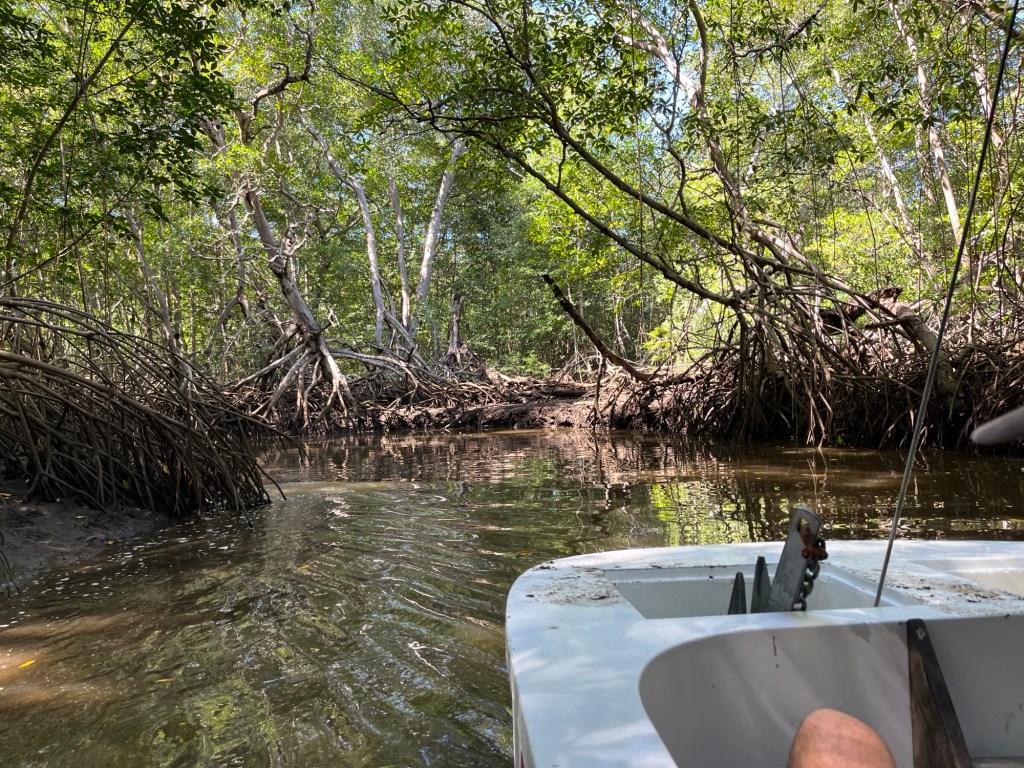
Today we took an estuary tour by boat through the mangrove swamps. We had to leave before our hotel served breakfast, so we walked into town. Most restaurants were closed, but we found a breakfast place and had fruit, avocado toast, yogurt, and coffee. Perfect.

The estuary tour was via a small boat with a canopy, powered by an outboard motor. The guide pointed out several different varieties of mangroves ( I had no idea), and my favorite was the “gentleman mangrove.” Our guide didn’t really know why it was called that.

Gentleman mangroves.

It was very low tide, and the boat got hung up on sandbars several times. This did not worry the men in charge of the boat; they always got us safely sailing again. At the beginning of our tour, the mangrove roots were high out of the water, and they looked like fingers reaching for the tide. By the time we returned, they were underwater again.

We wandered down some very narrow channels. Then we had to wander out again before getting stuck.

We saw a good variety of birds. They don’t have toucans, or macaws (none of which I have seen yet), but we did see:

Yellow-crowned night heron

White ibis (not my photo)

We didn’t get photos of most of them because they were too far away, but we also saw:

Green-backed heron

Little blue heron, adult and juvenile

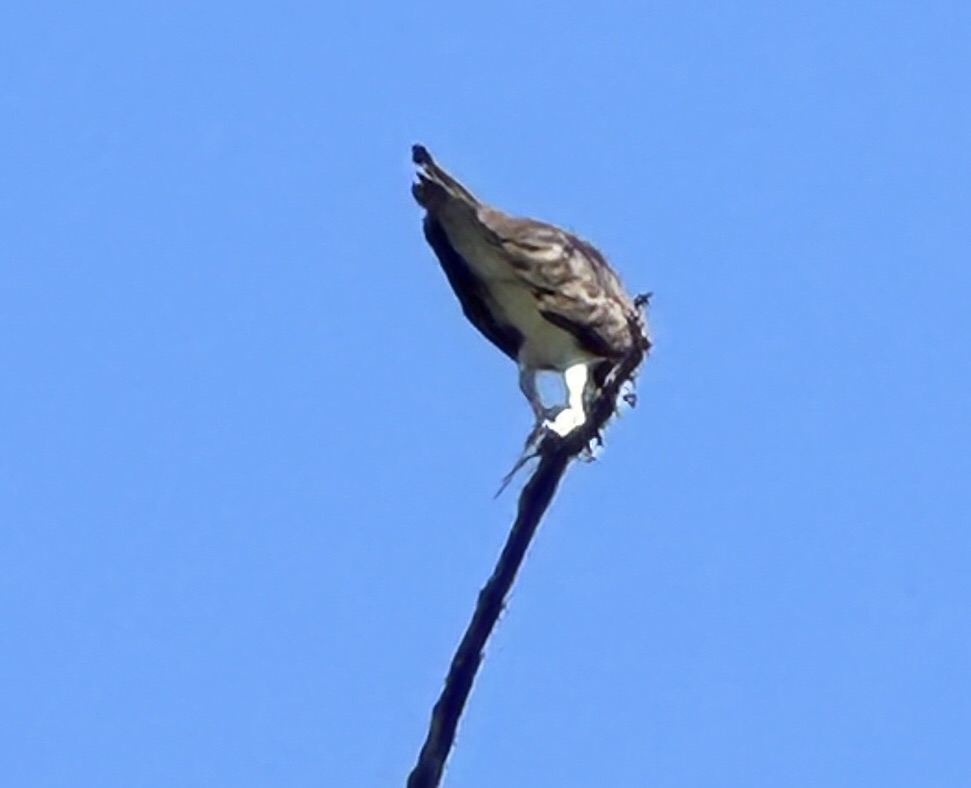
Osprey, sitting in a tree and lunching on a silvery fish

Common black hawk

Great blue heron

Whimbrels

Willets ( migratory birds that look identical to the ones on our beach at Aptos, CA)

Sandpipers (also migratory)

Kingfishers

Mangrove hummingbird

Black-throat trogon (maybe)

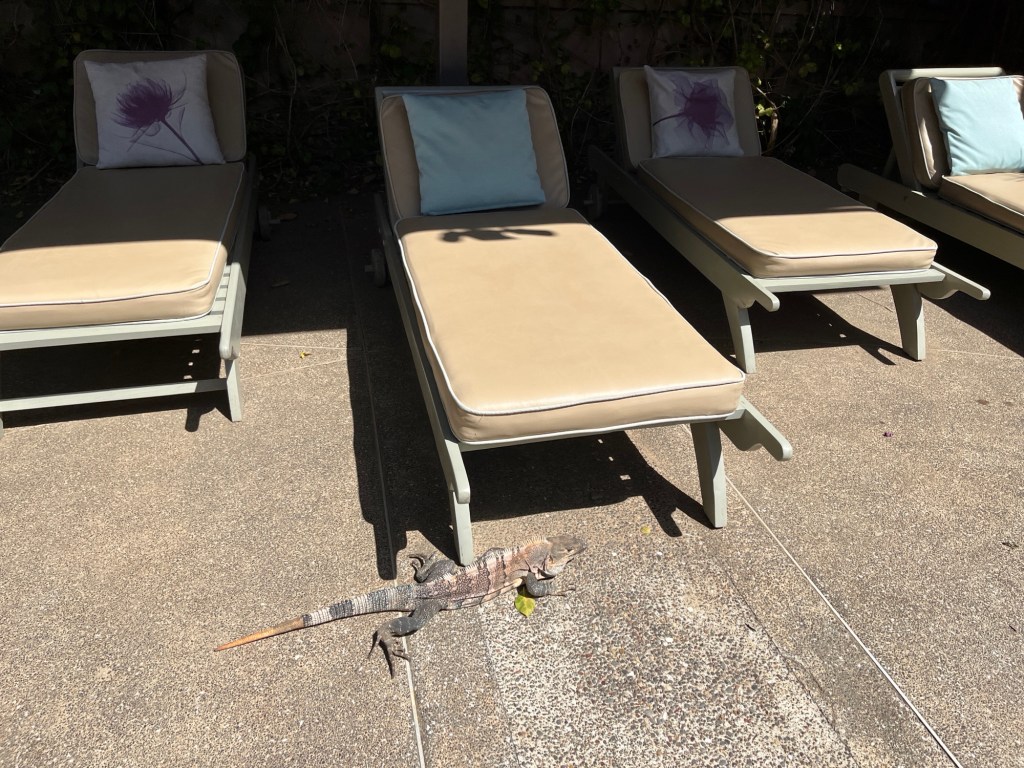
About midway along, they served us fresh-cut pineapple, which was refreshing. I guess someone threw extra pineapple onto the beach, because on the way back, there was a very happy and very large iguana chowing down on it.

Happy iguana eating pineapple. What a find for him or her!

We also saw several baby crocodiles in the water. None of them more more than two years old. Sadly, none of the croc videos wants to load.

The guides anchored the boat next to a muddy bank with mangrove roots sticking out of it and invited us to climb up so we could go see howler monkeys. I and my bum knee and torn rotator cuff opted to stay in the boat, much to their surprise, but I was happy with my decision.

At one point, there were howler monkeys in the trees right next to the water, so I got to see them anyway. One of the other boats had a guide who could imitate the howler call and got a rather lackadaisical response from the male troupe leader. You know, it was hot.

Howler monkey.

Costa Rica, Days 9, 10, and 11

On Day 9, we said farewell to the Royal Corin Spa, where they treated us like royalty. We filled out a survey, and we did not rate everything 100%. The food, in particular, was hit-or-miss. To our surprise, they wanted to ask us in person what was not perfectly to our satisfaction. A first, and I was impressed. We rated everything else very highly.

We hired a car and driver to get to Tamarindo—far cheaper than renting a car alone here. Misa spoke very good English. We saw a couple of coatis near the road, begging, but otherwise, the wildlife kept pretty much out of sight. The scenery gradually changed from lush cloud forest to dry chaparral as we came down out of the mountains and got closer to the coast.

We discussed the party atmosphere of Tamarindo. Misa said it was crazy this time of year, and it is. He also called it “TamaGringo,” which is accurate.

The Tamarindo Bay Boutique Hotel is a nice place, but it cannot compete with the luxury of the Royal Corin. Our room is large, with a huge dressing room, a bathroom, and a small kitchen. Very clean and comfortable.

Tamarindo is HOT, which my lizard husband loves. Me, not so much, and there is a howling, burning wind to boot. An American who is staying here said that going to the beach is an excellent exfoliant.

I am hurting rather badly, not from any expected source, like my bone-on-bone knee. I seem to have torn my rotary cuff, and it is not getting better. I may have to see a doctor as the pain is intense.

I saw a squirrel here within the first few minutes of arrival. I didn’t photograph it because he was too qui k for me, it there’s what he looked like.

Costa Rican squirrel.

We managed to eat at a restaurant that was only blasting rock music, and didn’t feature fire eaters or live bands, Green Papaya. They serve only tacos. I had shrimp tacos, and they were lovely and fresh.

On Day 10, we ran around taking care of laundry, buying food for lunches, etc. We discovered that in Costa Rica, pharmacists can administer cortisone shots. Filled with hope, we went to the local pharmacy, but they didn’t have the right kind of cortisone, so I will have to see a doctor.

I am sorry to say I spent the rest of the day in bed. We had dinner at a restaurant called the Falafel Bar. We weren’t especially in the mood for Middle Eastern food, but it came highly recommended. It was truly excellent food. We chatted with the couple next to us—Americans, of course. Turns out the husband, John, has had just about all of his major joints replaced—truly the bionic man. He seems fit and active, so there is hope! (This is what old people talk about all the time. I now understand the fascination.)

Early to bed, No photos. Sorry.

Day 11 started with getting a doctor’s appointment for 11 am. I have rarely been more thrilled with getting a doctor’s appointment. The owner or manager here is Marie, and she has been very helpful.

It is still very hot and very windy.

Doctor Piloto was a nice man maybe a few years younger than us. He said he could not do a shoulder injection because he wasn’t an orthopedic doctor. The nearest orthopedist is in Liberia, a city some 46 km from here. But he did offer me some anti-inflammatories and steroid pills, yay. There was a pharmacist right door, so that was easily taken care of.

While we were waiting for a taxi, we chatted with another American couple who were waiting for the doctor. They plan to move here next year. He can work remotely and she is retired. They are looking to get away from the stress, politics, and racism of the US. They mentioned seeing a very large snake in the road that acted quite aggressively. I found a photo of the very scary terciopelo (fer-de-lance), which is one of the deadliest and most aggressive snakes in the world. They agreed it was the snake they saw. I am hoping not to see one.

We waited for about an hour for the taxi back to the hotel. The medic who manned the front desk of Dr. Piloto’s tiny office invited us to stay inside in the air conditioning, and called the taxi company several times. So very kind.

We returned to Tamarindo Bay Boutique Hotel and ate some things we had picked up at the local supermercado (but not until I eagerly downed Dr. Piloto’s prescriptions). Then for the second day in a row, I flopped down and had a siesta. I am not a napper, but I do not do well with either heat or pain, so I guess my body was trying to tell me something.

In the evening, we went to a nearby restaurant called La Oveja Surf House, which means “the sheep surf house,” which makes no sense at all. The food was delicious, and we took our leftovers back to the hotel for lunch the next day.

Sorry this post wasn’t more exciting. ☹️

Costa Rica, Day 8

The view from our room this morning. I keep trying to memorize the Spanish word for fog (niebla), but for some reason my brain absolutely refuses to retain this.

Today we visited a butterfly sanctuary, located in a tiny pueblo about 30 minutes from La Fortuna. It’s on the opposite side of the Arenal volcano from our hotel, which is also the side of the volcano that gets all the lava. It you wouldn’t know that at the sanctuary, which has never gotten lava flow (in historical times, anyway)

We were greeted by the owner of the sanctuary, a man who moved here from Texas 27 years ago. (We agreed that Texas was a good state to be FROM). He proceeded to go over the butterfly life cycle, and I patiently prepared to be bored (I nailed this in elementary school). But he pointed something out that caught my attention; he said the reason for the larval stage is because the tiny eggs just don’t have enough energy to produce a butterfly. The caterpillar stage is intended to store up enough energy for the ultimate transformation. I guess that’s obvious, but I had never viewed it in quite that light before. What an amazing adaptation.

He also told us that moths (which he insisted on calling “night butterflies”) came before butterflies, evolutionarily. I didn’t know that.

We walked down the rather steep but paved path into the sanctuary, first encountering the butterfly habitats. There were three large, domed cages, each providing a slightly different environment for the different butterflies. The first cage featured many owl-faced butterflies, like the one we saw on the sloth walk, each almost as large as my hand. The defensive side of their wings has a very scary brown owl face, and their attractant side is brilliantly colored.

A couple of owl-faced butterflies having a romantic moment.

Owl-faced butterflies feeding.

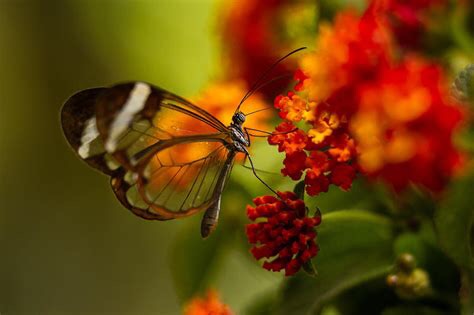
The next enclosure featured glass-winged butterflies. There weren’t a lot of them and they weren’t interested in sitting still for a photo. They are almost entirely invisible when they aren’t flying, and when they are flying, I can see they would be confusing to predators—they sort of flicker in the air like tiny ghosts.

Glass wing butterfly photo found on the Internet. We were not so lucky as to get a photo of these elusive little guys.

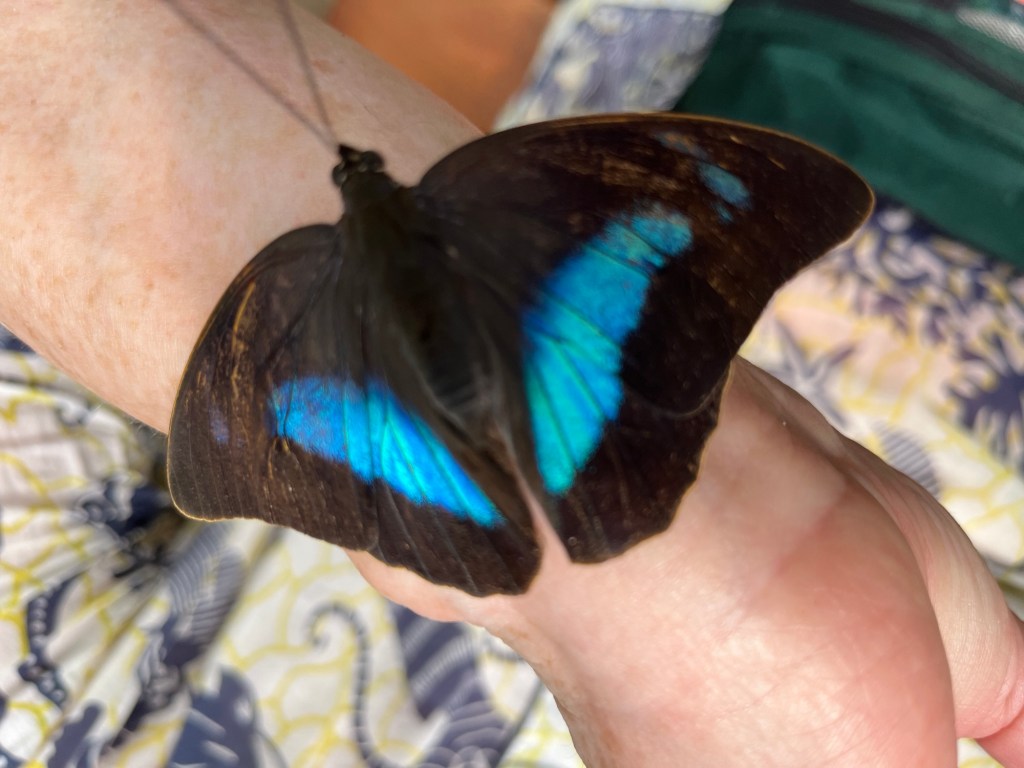
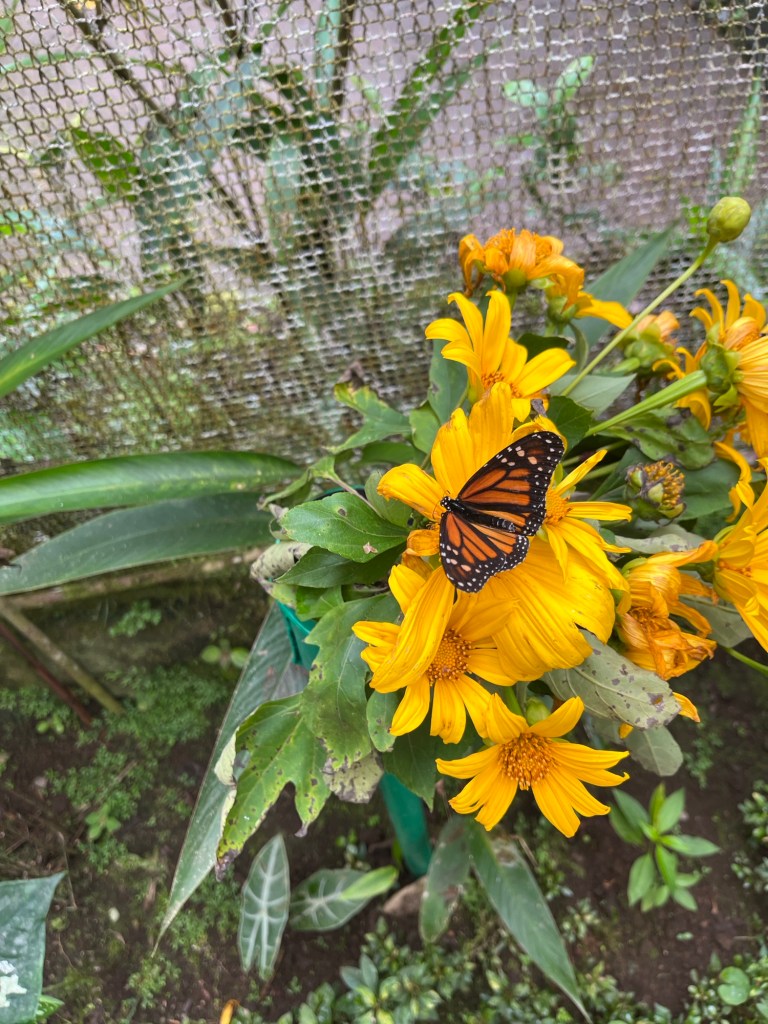
The final enclosure held many, many morphos—the national butterfly of Costa Rica, and surely one of the most beautiful of all butterflies. They are as big as my hand, and far from shy. Several landed on my hat for a brief rest, and I could hear their tiny feet scraping against the cloth. To our surprise, we also saw monarch butterflies. I didn’t get a photo of the morphos (the available specimens were bedraggled and clearly at the end of their short days), but I did get some of the others.

The prepona butterflies were quite friendly and sat on my hat and arms.
Monarch butterfly
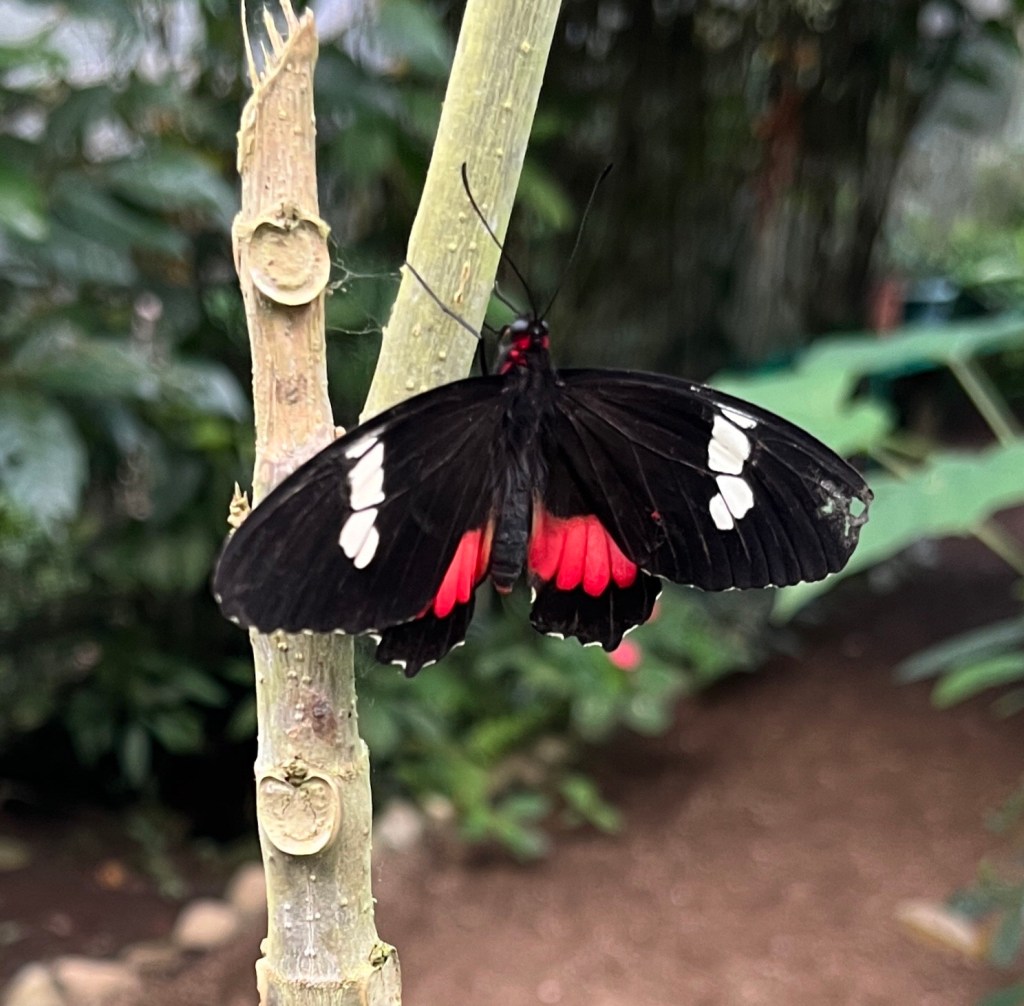
Paridies butterfly.

The next stop was the frog enclosure. The butterflies are free to mate and reproduce here, but the frogs are separated by gender. It has to do with laws restricting the breeding of frogs for the pet and zoo trade. It was broad daylight, and frogs being nocturnal, they were all tucked away out of sight. Fortunately, a docent arrived to open the cages and gently part the leaves to reveal the frogs. The first frog we saw was the national frog of Costa Rica, the red eyed frog. But her eyes were very small, sunken into her Kermit-colored face. The docent said she was asleep, but showed us another one, an apparent insomniac who was wide awake. Her eyes were popping out of her face and a brilliant red. Now I know how to tell if a frog is asleep or awake! There must be a Girl Scout badge for this.

Sleeping red-eyed frog.
Wide-awake red-eyed frog.

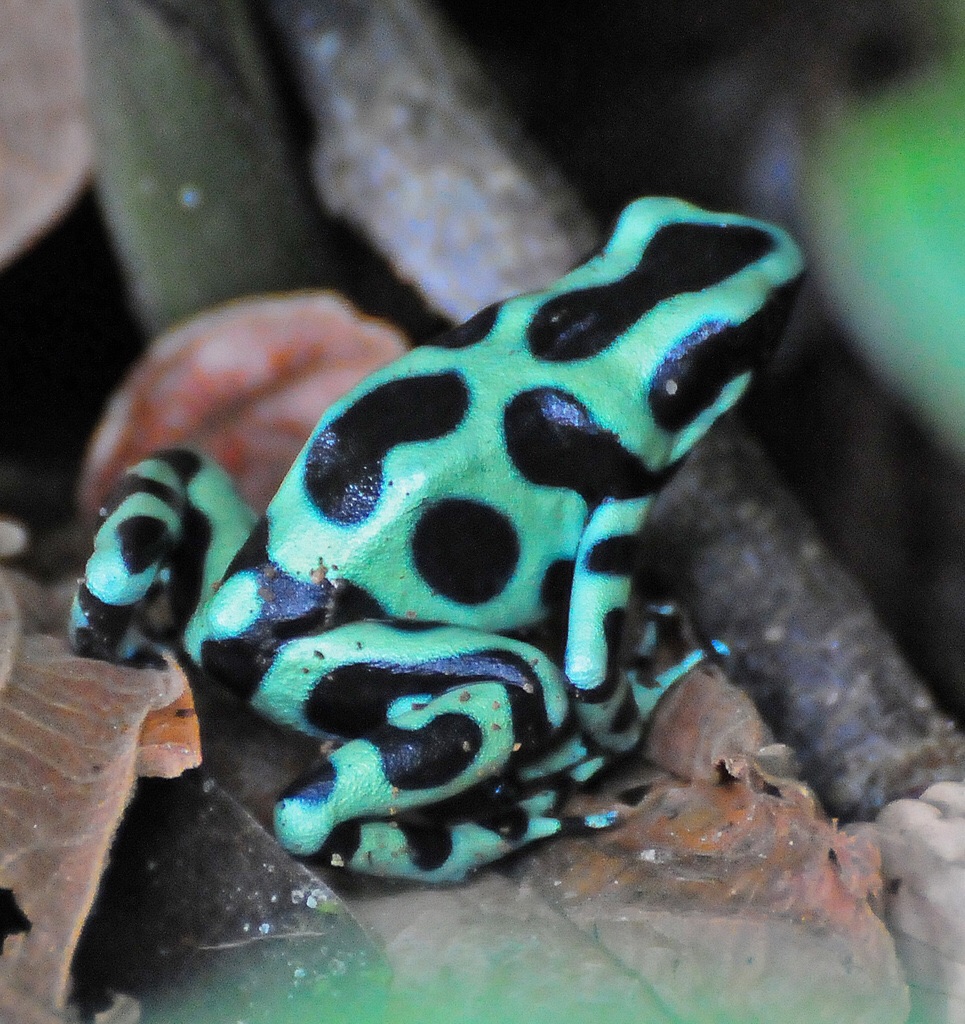
We encountered many other amphibians, including our old friend the blue jean poison dart frog,also called the strawberry poison dart frog. They also had another type of poison dart frog, which has the creative name of “green and black poison dart frog.” The photo below illustrates that this is far from being a misnomer.

The eponymous green and black poison dart frog.

Our docent mentioned that the indigenous peoples who used the poison from these frogs did not kill them—merely rubbed the darts over their backs because the toxin sits on the skin. No tocar los ranos.

This frog’s skin changes color in response to how much light is striking it. In direct sunlight, it changes to brown. At night, it turns bright green. This little guy was sitting in mottled sun and shade, resulting in nice camouflage.

We also saw some rather exotic flowers in the sanctuary. The weirdest-looking ones tended to be some sort of ginger.

Yeah. Ginger.
I have no idea what this is.
This is Hairyensis Trumpiana. No, actually I have no idea.
I don’t remember the name of this frog, but at rest, it looks like a snake, which is enough for many animals to vacate the area.

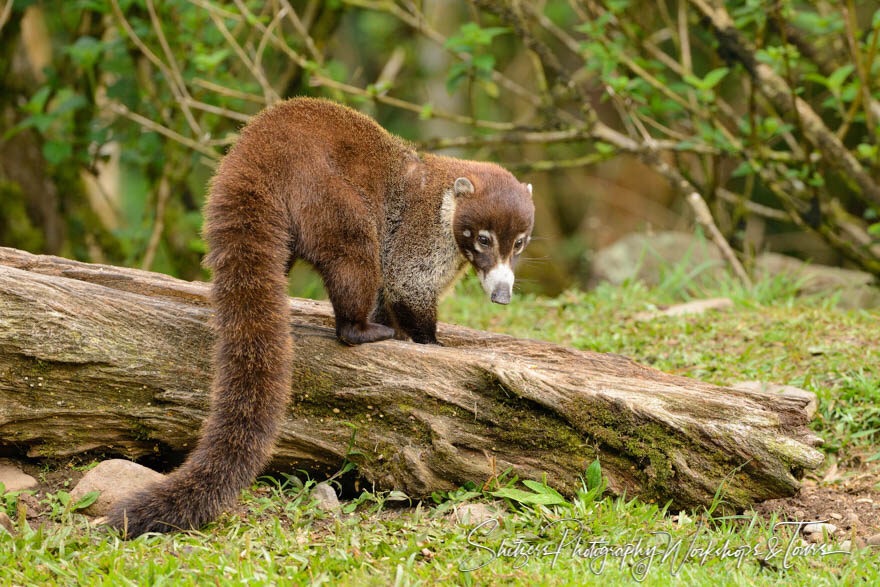
On the way back to the hotel, we saw a coatimundi in the road, stopping traffic and begging for food. It’s the largest one I have ever seen—about the size of a medium-sized dog and four feet from tail to snout. He was a handsome character, too, but I took too long to get my phone out to take a photo, and he wandered off, disappointed. I wasn’t about to roll down the window or get out of the car.

Our coati friend looked a lot like this. They are related to raccoons, and are just as cute and clever and obnoxious as raccoons.

We leave this hotel tomorrow and have hired a car and driver to take us to Tamarindo. The lady at the front desk asked if we were going to party. So did everyone else. I have a sneaking suspicion that Tamarindo is a party town. Don’t know why.

Costa Rica, Day 7

No idea what this flower is, but it’s pretty.

Today, we visited an area where there are lots of sloths. It is a small, privately operated preserve with flat (thank you!) paths winding through the trees. It is all secondary growth that has sprung up where the old trees were cut down, probably for agriculture.

Our guide, David,explained the symbiotic relationship between the sloths and a particular species of tree. The sloths prefer the leaves of the tree because they are highly nutritious. Once a week, the sloths descend and defecate at the foot of the tree, thus returning some of the nutrition to its host.

Our first sloth. It was asleep and looked more like bird’s nest than a mammal.

We saw about six sloths, both two-and three-toed. They are amazingly well camouflaged and hard to spot, but Tom found one on his own.

This guy was moving like a sedated speed demon through the branches, eating. Tom got a good video, but it won’t upload, ☹️
Poison arrow frog.

There were some ponds there, and we saw a broad-billed heron and a great blue heron, fishing. Also a jacana, a bird with hugely extended toes that walks on the water, eating bugs as it goes. We saw several other birds, but not being a birder, I do not remember their names. We also saw a basilisk lizard (which is also called the Jesus lizard because it can also walk on water. Well, it doesn’t walk so much as run like hell). And lots of hummingbirds, all sizes, shapes and colors, busy pollinating all the gorgeous flowers. And a couple of poison arrow frogs, tiny as jewels.

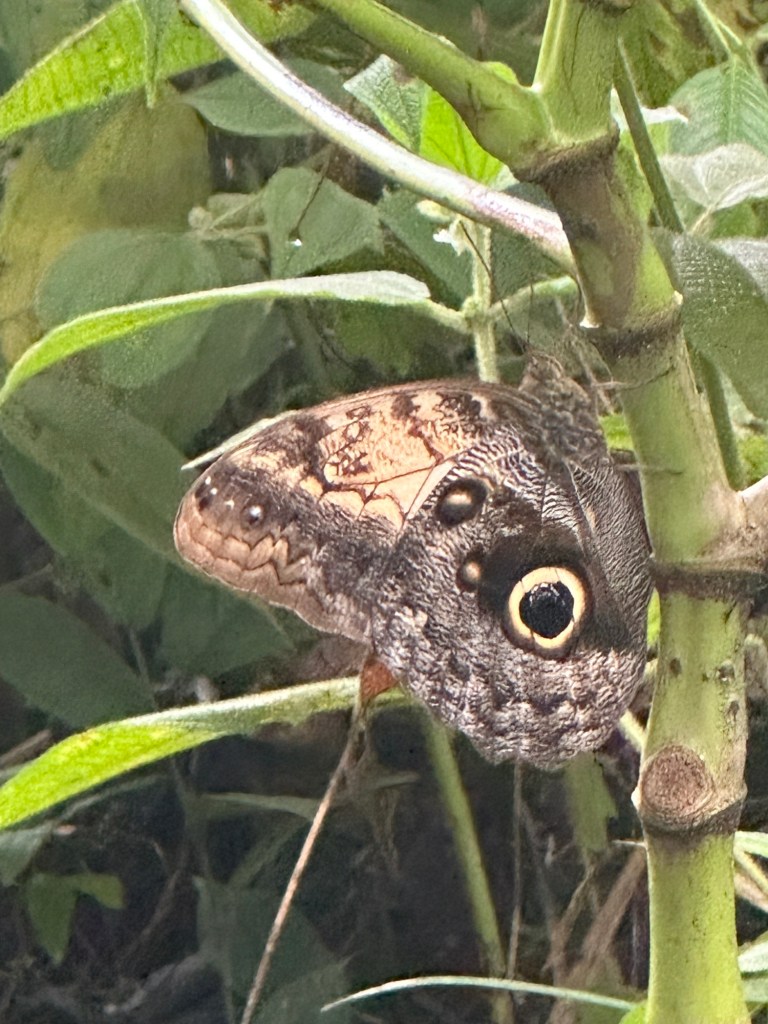
Butterfly with owl eyes on its wings.
Basilisk lizard.
This is a species of ginger. I’ve never seen this before.

We saw a large butterfly with owl eyes on its wings, and some others, unnamed but elegant and beautiful floating amid the trees.

Little bats sheltering under a banana leaf.

I asked about bats, and David found a group of tiny brown bats sleeping under a banana leaf. There were perhaps a dozen of them, no bigger than mice.

We didn’t see any monkeys, but I think we did pretty well.

Costa Rica, Day 4

Our first entire day in Costa Rica, at the hotel we were aiming for. We opted to spend the day resting. We had breakfast, made massage appointments at the spa, ate lunch by the pool, had massages, went to the pool bar in the hot pool for margaritas, and dinner is somewhere in the future. That’s about all we could handle today. Maybe tomorrow we will venture out and buy hats and make tour plans. Something daring and rascally like that.

View of the grounds from our room at night.

Costa Rica, Day 5

Costa Rica does not remind me of Mexico at all. In Mexico, so much of the art, architecture, civic art, derives its themes from their indigenous people. You can see Aztec and Maya elements everywhere (among those from the numerous lesser-known civilizations of Mexico).

Pre-Columbian Costa Rican peoples did not create empires. There were several different tribes, which apparently lived fairly peaceably with each other, and were egalitarian in a way that Mexico’s indigenous tribes were not. And only 2% of Costa Ricans are indigenes today. This may be the reason I so far have not detected any cohesive style here. Our hotel, Royal Corin, could be in the US or Europe for all you can tell from its architecture and decor.

Today we decided to venture into La Fortuna in search of hats and other things. I bought a hat. It is not thing of beauty, but it fit, it’s packable, it has a chin strap, and it was relatively cheap. Most of the hats I looked at were heavy, not packable, had no chin straps, didn’t fit, or were too expensive. So I will wear my ugly hat with pride.

My ugly Costa Rican hat.

Unfortunately, my shoulder decided to be the problem today. It tends to get pissed off anyway, and it really did not like hauling luggage around for three days. My back feels fine, though, so I used my magic machine on my shoulder, took some acetaminophen and felt better.

We soaked in one of the thermal pools, then had cocktails at the pool bar. To the left were two youngish men from some cold state, to the right was somewhat older fellow from England, but originally from Venezuela. He emigrated to England, spent seven years obtaining his Ph.d., and is now a professor of supply chain management at Cardiff University. Impressive.

However, one of the younger men won me over by saying I didn’t look like I was 73 years old. I asked him to marry me.

We opted for the vegetarian menu for dinner. It is interesting that the food in this 5-star hotel is hit-and-miss. Some selections are delicious. Some are very uninteresting. Breakfast is almost universally boring, and I confine my attentions to fruit, scrambled eggs with sauce picante, and bacon. The vegetarian dishes that we ordered fell into the “meh” category, sadly.

I did see a green basilisk lizard near the pool, but he slithered off before Tom could see him. The lizard is almost the only wildlife I have seen so far except for a butterfly that had wandered into the hotel and was obviously confused by all the cold, hard tile. I scooped it gently off the floor and put it out a window.

Costa Rica, Day 6

We booked a chocolate plantation tour for today and had to be ready to go at 7:45 for transportation. Our group was tiny—just us and a family of four from Ohio. Our tour guide was Chapo (he goes by ChapoGuapo on the Internet. His main point appeared to be that the chocolate grown in Africa is produced via slave labor, and many of the slaves are children. He is right, and I never buy chocolate from companies that use slave labor, and that includes all the biggies—Mars, Nestlé, Cadbury, etc. it should be noted that the chocolate manufactured by these companies tends to be poor quality and crammed with sugar. So, Chapo and I were in complete agreement.

We walked through the chocolate trees as Chapo showed us the fruit and flowers and explained cultivation and processing. He also tried to point out a toucan he spotted ( I didn’t see it), and he tried to track down a red and blue arrow poison frog he heard peeping in the leaves near a huge tree. On his first try, he didn’t find it. We asked him if he ever saw Fer-de-lance snakes (extremely venomous and aggressive snakes). He said no, and he is terrified of snakes because he was bitten by a coral snake as a child.

Later, Chapo went back to the leaf pile and found his frog. The poor man also found a small hog-nosed viper, known locally as the “ox-killer.” He shooed everyone away, and I think the experience shook him deeply. Nevertheless, he rallied and we moved on to the fun part—tasting.

Chapo’s poison arrow frog.
Hognosed viper. Not the one Chapo found—it was a small one, and I didn’t see it.

First, he broke open a cacao fruit, exposing the seeds encased in white goo. He gave everyone two gooey seeds with instructions to suck on them, but not chew (or diarrhea would follow). The white goo tasted sweet and citrusy. Then he gave us fermented seeds to smell (earthy), and then roasted seeds (chocolatey). Then we got spoonfuls of melted chocolate that Chapo doctored as we directed with various flavorings—cinnamon, chiles, marshmallows, coffee, salt, etc. I tried Chapo’s recommendations and had three spoonfuls, each a bit different and absolutely yummy!