

Today we visited a butterfly sanctuary, located in a tiny pueblo about 30 minutes from La Fortuna. It’s on the opposite side of the Arenal volcano from our hotel, which is also the side of the volcano that gets all the lava. It you wouldn’t know that at the sanctuary, which has never gotten lava flow (in historical times, anyway)
We were greeted by the owner of the sanctuary, a man who moved here from Texas 27 years ago. (We agreed that Texas was a good state to be FROM). He proceeded to go over the butterfly life cycle, and I patiently prepared to be bored (I nailed this in elementary school). But he pointed something out that caught my attention; he said the reason for the larval stage is because the tiny eggs just don’t have enough energy to produce a butterfly. The caterpillar stage is intended to store up enough energy for the ultimate transformation. I guess that’s obvious, but I had never viewed it in quite that light before. What an amazing adaptation.
He also told us that moths (which he insisted on calling “night butterflies”) came before butterflies, evolutionarily. I didn’t know that.
We walked down the rather steep but paved path into the sanctuary, first encountering the butterfly habitats. There were three large, domed cages, each providing a slightly different environment for the different butterflies. The first cage featured many owl-faced butterflies, like the one we saw on the sloth walk, each almost as large as my hand. The defensive side of their wings has a very scary brown owl face, and their attractant side is brilliantly colored.
A couple of owl-faced butterflies having a romantic moment.

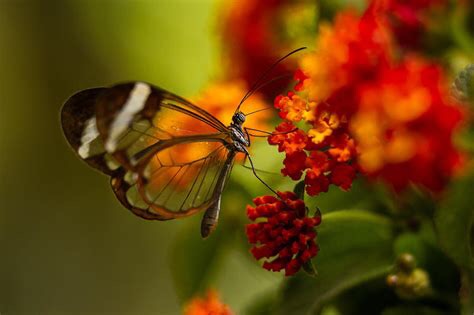
The next enclosure featured glass-winged butterflies. There weren’t a lot of them and they weren’t interested in sitting still for a photo. They are almost entirely invisible when they aren’t flying, and when they are flying, I can see they would be confusing to predators—they sort of flicker in the air like tiny ghosts.
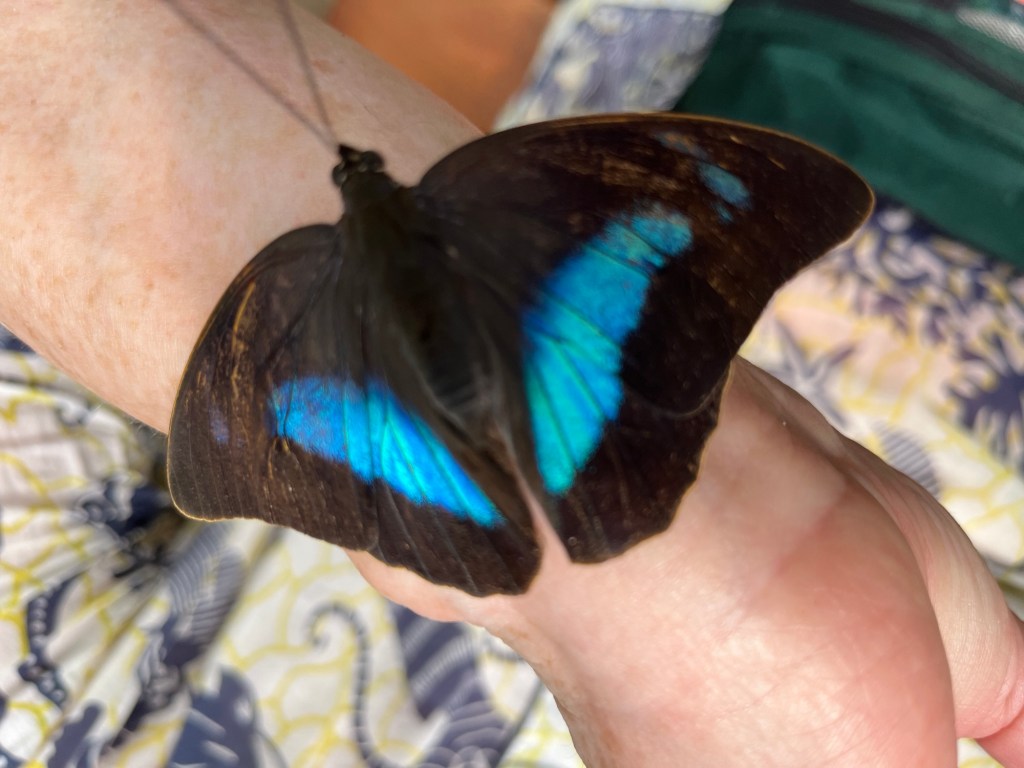
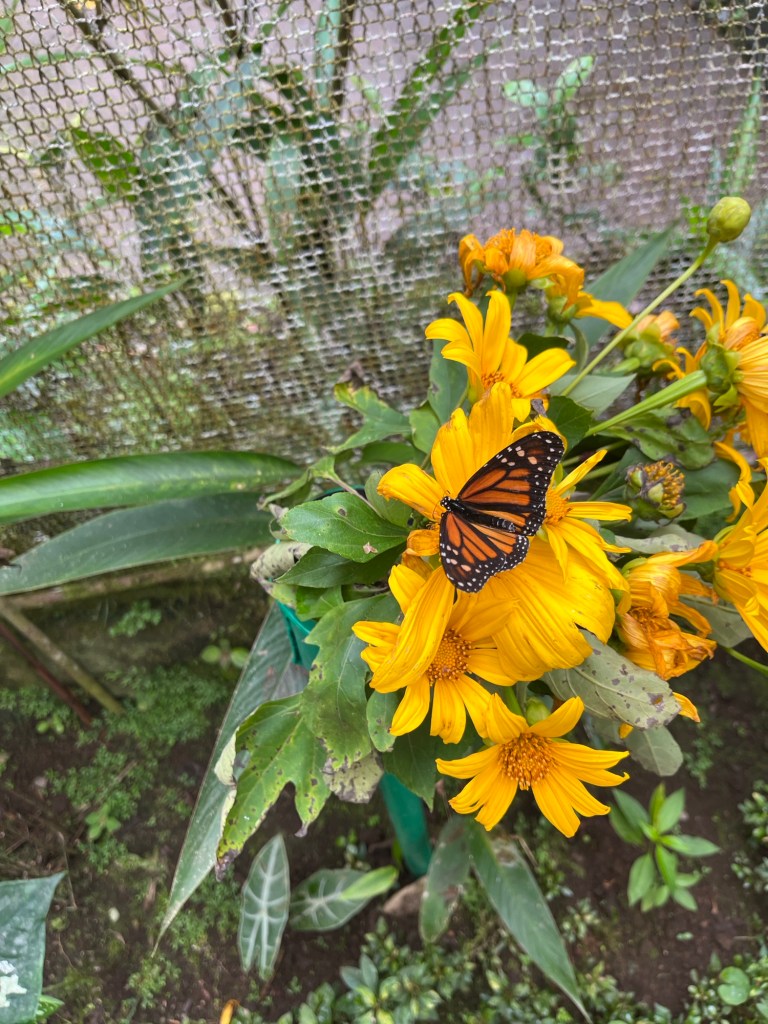
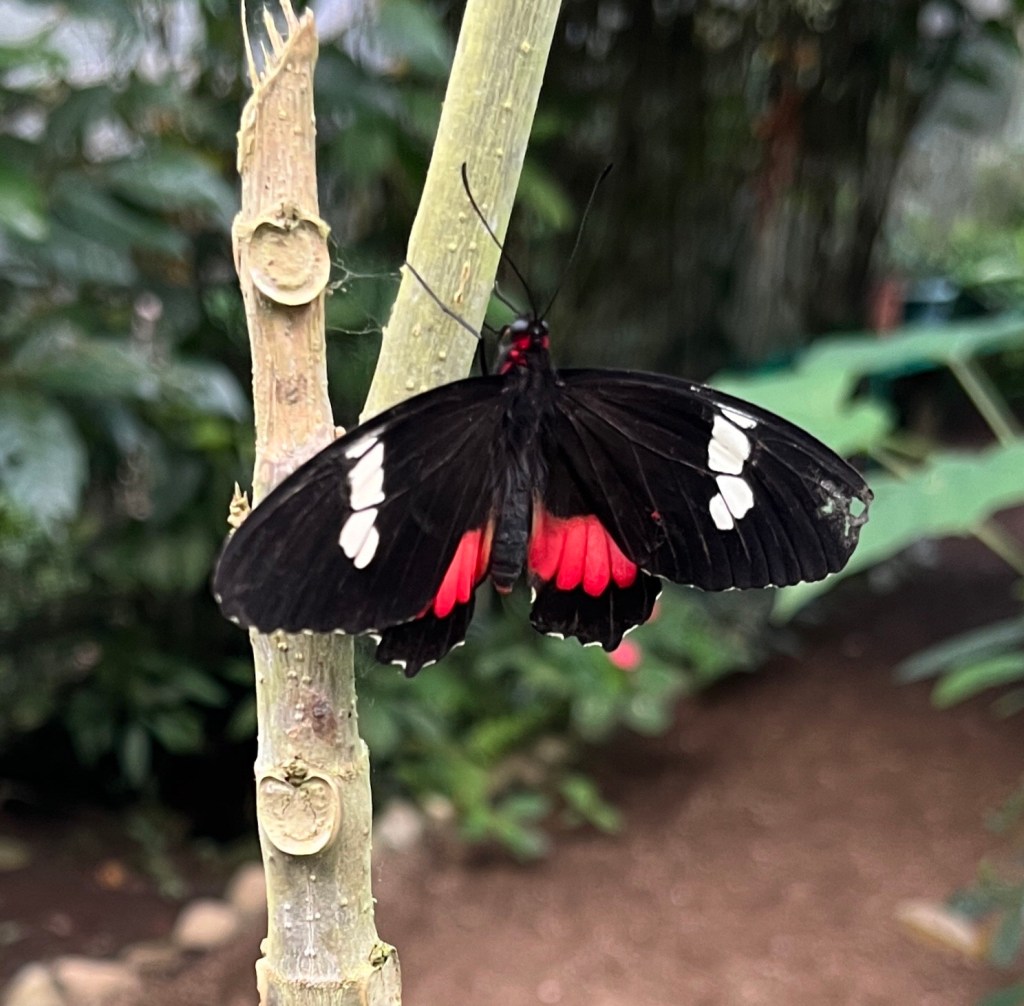
The final enclosure held many, many morphos—the national butterfly of Costa Rica, and surely one of the most beautiful of all butterflies. They are as big as my hand, and far from shy. Several landed on my hat for a brief rest, and I could hear their tiny feet scraping against the cloth. To our surprise, we also saw monarch butterflies. I didn’t get a photo of the morphos (the available specimens were bedraggled and clearly at the end of their short days), but I did get some of the others.
The next stop was the frog enclosure. The butterflies are free to mate and reproduce here, but the frogs are separated by gender. It has to do with laws restricting the breeding of frogs for the pet and zoo trade. It was broad daylight, and frogs being nocturnal, they were all tucked away out of sight. Fortunately, a docent arrived to open the cages and gently part the leaves to reveal the frogs. The first frog we saw was the national frog of Costa Rica, the red eyed frog. But her eyes were very small, sunken into her Kermit-colored face. The docent said she was asleep, but showed us another one, an apparent insomniac who was wide awake. Her eyes were popping out of her face and a brilliant red. Now I know how to tell if a frog is asleep or awake! There must be a Girl Scout badge for this.


We encountered many other amphibians, including our old friend the blue jean poison dart frog,also called the strawberry poison dart frog. They also had another type of poison dart frog, which has the creative name of “green and black poison dart frog.” The photo below illustrates that this is far from being a misnomer.
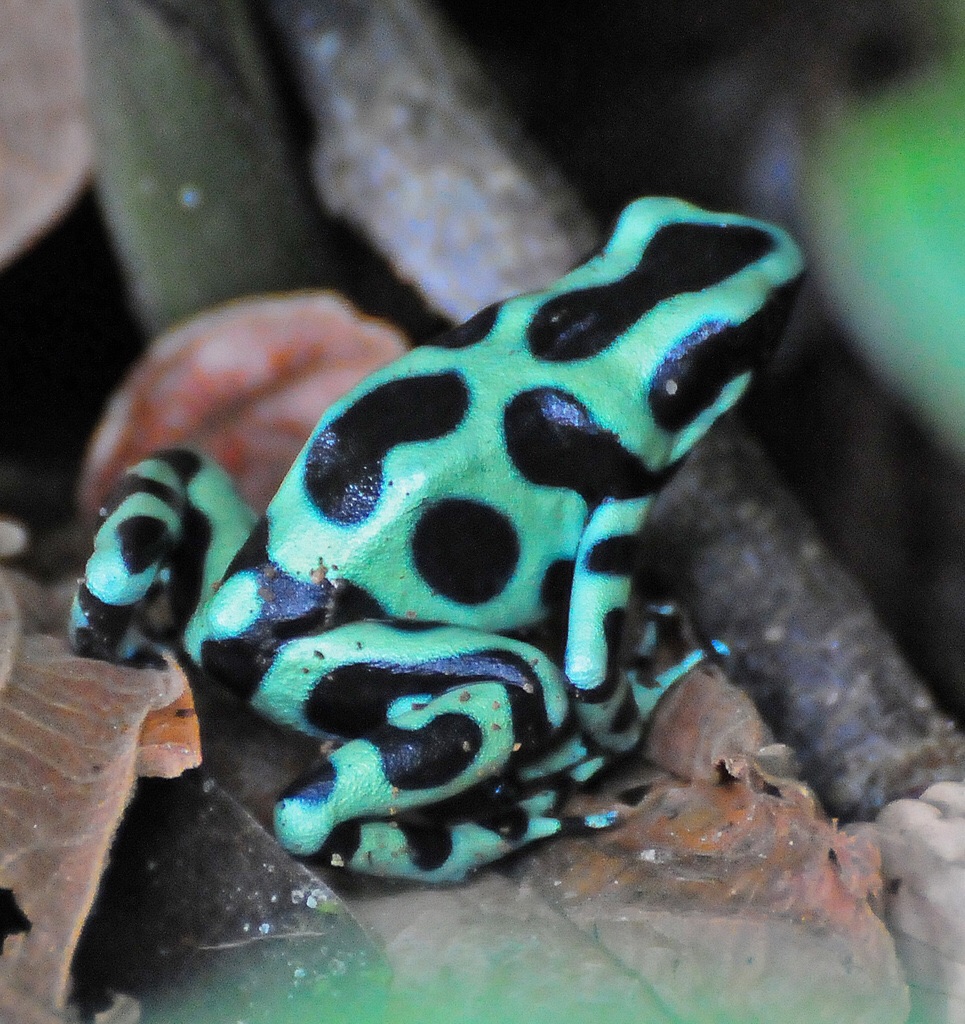
Our docent mentioned that the indigenous peoples who used the poison from these frogs did not kill them—merely rubbed the darts over their backs because the toxin sits on the skin. No tocar los ranos.

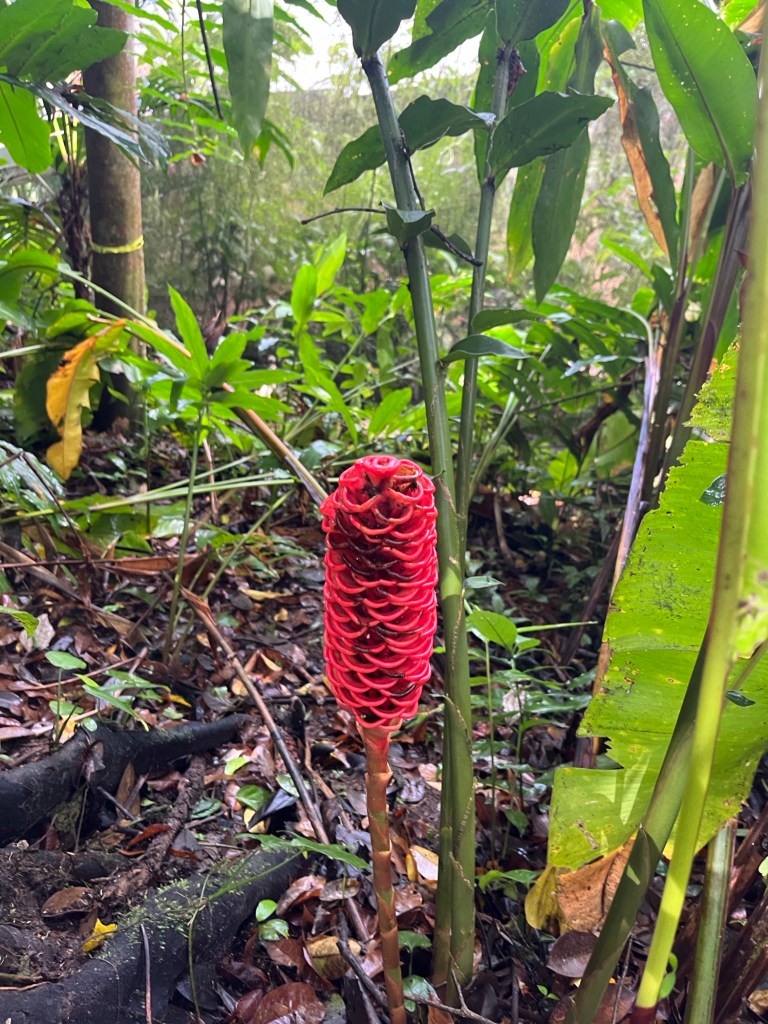
We also saw some rather exotic flowers in the sanctuary. The weirdest-looking ones tended to be some sort of ginger.


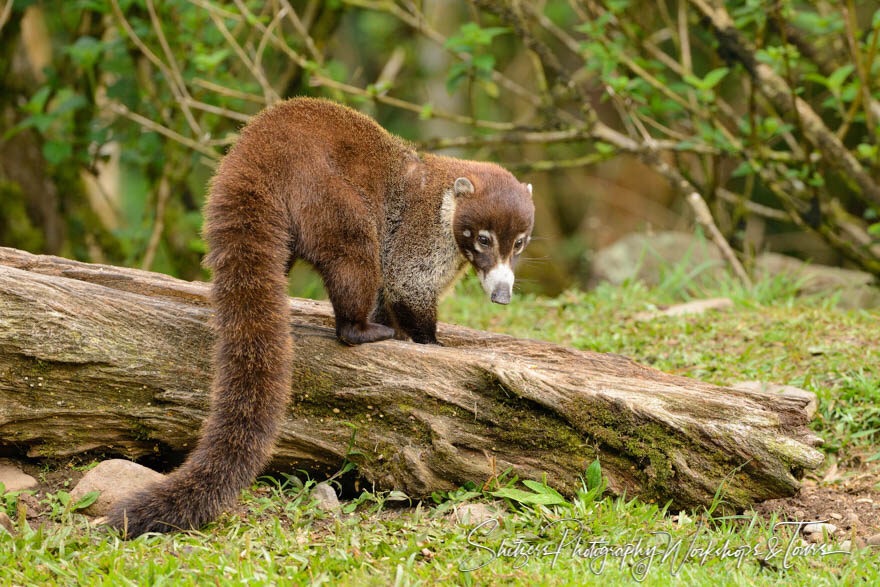
On the way back to the hotel, we saw a coatimundi in the road, stopping traffic and begging for food. It’s the largest one I have ever seen—about the size of a medium-sized dog and four feet from tail to snout. He was a handsome character, too, but I took too long to get my phone out to take a photo, and he wandered off, disappointed. I wasn’t about to roll down the window or get out of the car.
We leave this hotel tomorrow and have hired a car and driver to take us to Tamarindo. The lady at the front desk asked if we were going to party. So did everyone else. I have a sneaking suspicion that Tamarindo is a party town. Don’t know why.
 obsidianmirrorblog