Costa Rica, Day 8

The view from our room this morning. I keep trying to memorize the Spanish word for fog (niebla), but for some reason my brain absolutely refuses to retain this.

Today we visited a butterfly sanctuary, located in a tiny pueblo about 30 minutes from La Fortuna. It’s on the opposite side of the Arenal volcano from our hotel, which is also the side of the volcano that gets all the lava. It you wouldn’t know that at the sanctuary, which has never gotten lava flow (in historical times, anyway)

We were greeted by the owner of the sanctuary, a man who moved here from Texas 27 years ago. (We agreed that Texas was a good state to be FROM). He proceeded to go over the butterfly life cycle, and I patiently prepared to be bored (I nailed this in elementary school). But he pointed something out that caught my attention; he said the reason for the larval stage is because the tiny eggs just don’t have enough energy to produce a butterfly. The caterpillar stage is intended to store up enough energy for the ultimate transformation. I guess that’s obvious, but I had never viewed it in quite that light before. What an amazing adaptation.

He also told us that moths (which he insisted on calling “night butterflies”) came before butterflies, evolutionarily. I didn’t know that.

We walked down the rather steep but paved path into the sanctuary, first encountering the butterfly habitats. There were three large, domed cages, each providing a slightly different environment for the different butterflies. The first cage featured many owl-faced butterflies, like the one we saw on the sloth walk, each almost as large as my hand. The defensive side of their wings has a very scary brown owl face, and their attractant side is brilliantly colored.

A couple of owl-faced butterflies having a romantic moment.

Owl-faced butterflies feeding.

The next enclosure featured glass-winged butterflies. There weren’t a lot of them and they weren’t interested in sitting still for a photo. They are almost entirely invisible when they aren’t flying, and when they are flying, I can see they would be confusing to predators—they sort of flicker in the air like tiny ghosts.
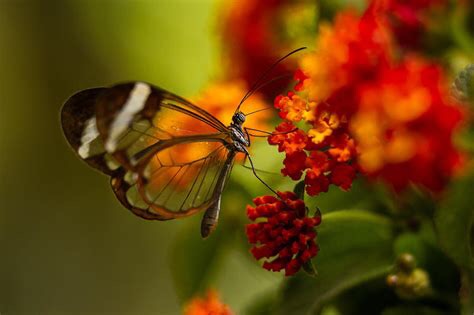
Glass wing butterfly photo found on the Internet. We were not so lucky as to get a photo of these elusive little guys.

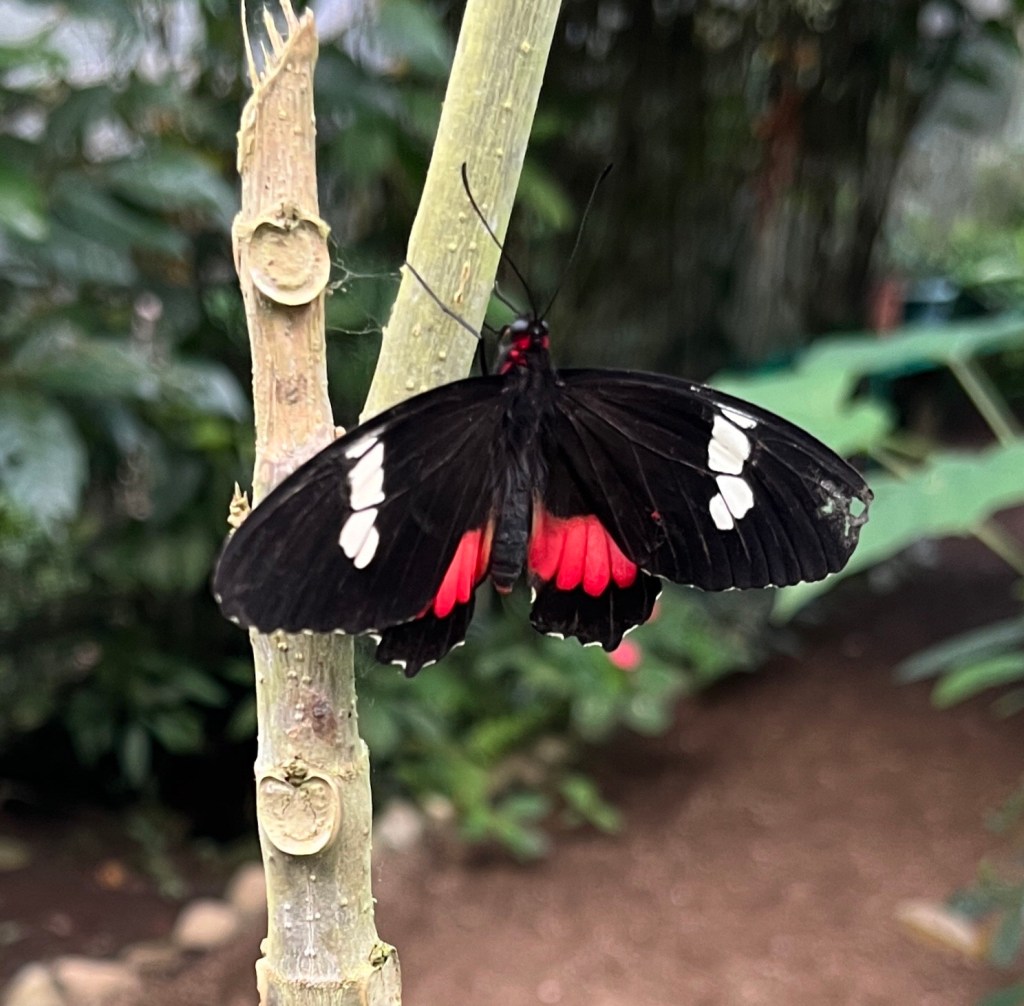
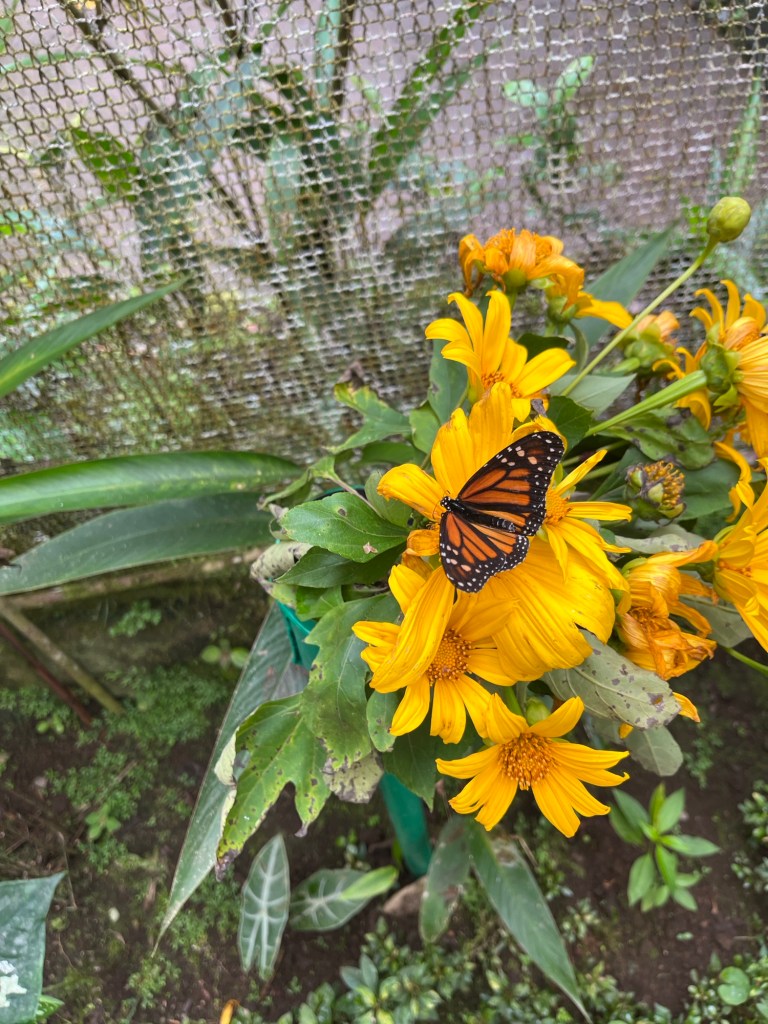
The final enclosure held many, many morphos—the national butterfly of Costa Rica, and surely one of the most beautiful of all butterflies. They are as big as my hand, and far from shy. Several landed on my hat for a brief rest, and I could hear their tiny feet scraping against the cloth. To our surprise, we also saw monarch butterflies. I didn’t get a photo of the morphos (the available specimens were bedraggled and clearly at the end of their short days), but I did get some of the others.
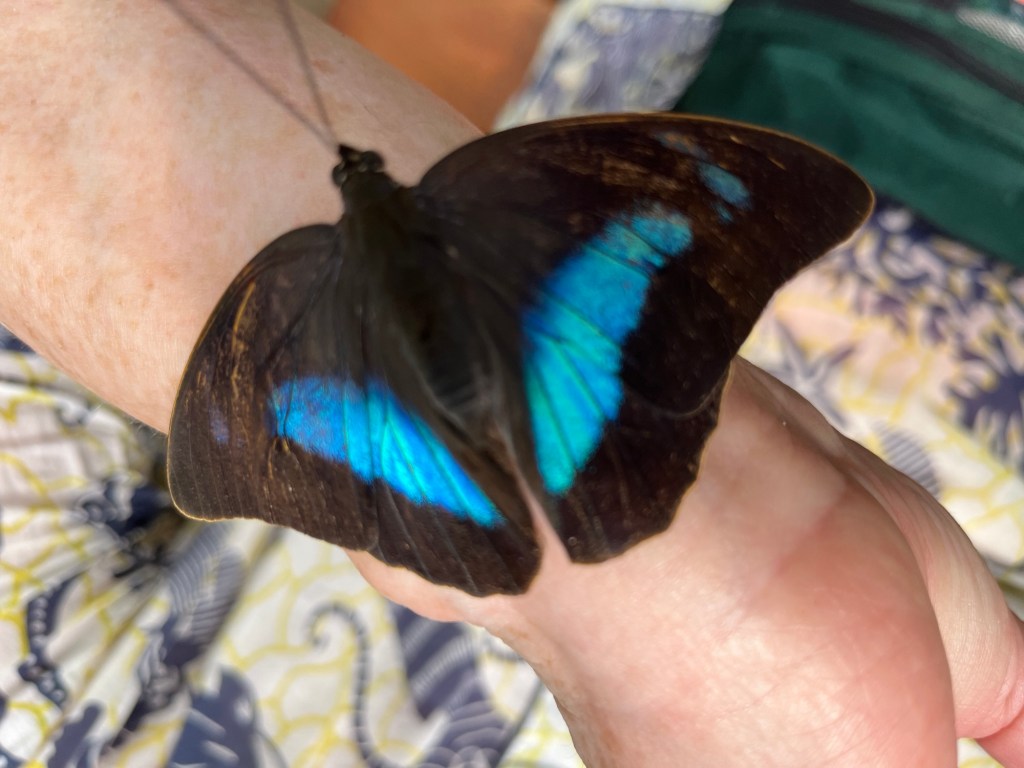
The prepona butterflies were quite friendly and sat on my hat and arms.
Monarch butterfly
Paridies butterfly.

The next stop was the frog enclosure. The butterflies are free to mate and reproduce here, but the frogs are separated by gender. It has to do with laws restricting the breeding of frogs for the pet and zoo trade. It was broad daylight, and frogs being nocturnal, they were all tucked away out of sight. Fortunately, a docent arrived to open the cages and gently part the leaves to reveal the frogs. The first frog we saw was the national frog of Costa Rica, the red eyed frog. But her eyes were very small, sunken into her Kermit-colored face. The docent said she was asleep, but showed us another one, an apparent insomniac who was wide awake. Her eyes were popping out of her face and a brilliant red. Now I know how to tell if a frog is asleep or awake! There must be a Girl Scout badge for this.

Sleeping red-eyed frog.
Wide-awake red-eyed frog.

We encountered many other amphibians, including our old friend the blue jean poison dart frog,also called the strawberry poison dart frog. They also had another type of poison dart frog, which has the creative name of “green and black poison dart frog.” The photo below illustrates that this is far from being a misnomer.
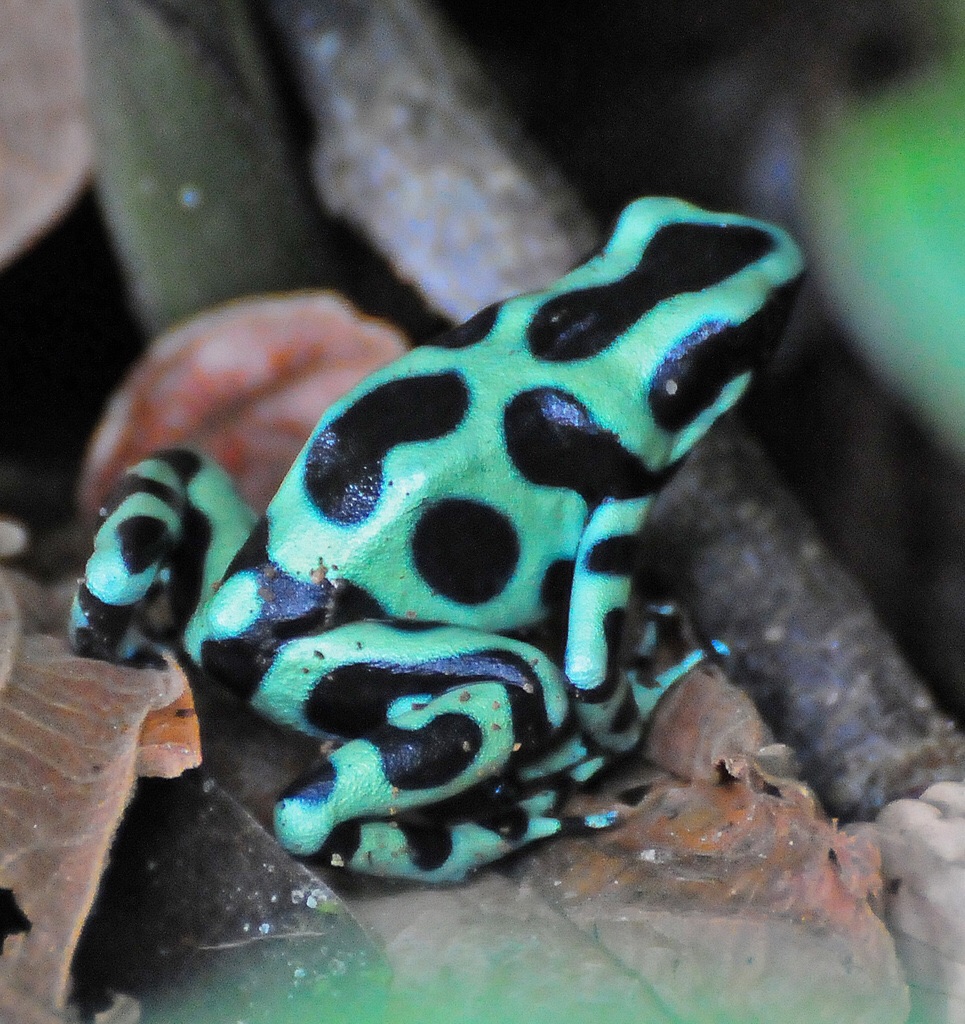
The eponymous green and black poison dart frog.

Our docent mentioned that the indigenous peoples who used the poison from these frogs did not kill them—merely rubbed the darts over their backs because the toxin sits on the skin. No tocar los ranos.

This frog’s skin changes color in response to how much light is striking it. In direct sunlight, it changes to brown. At night, it turns bright green. This little guy was sitting in mottled sun and shade, resulting in nice camouflage.

We also saw some rather exotic flowers in the sanctuary. The weirdest-looking ones tended to be some sort of ginger.
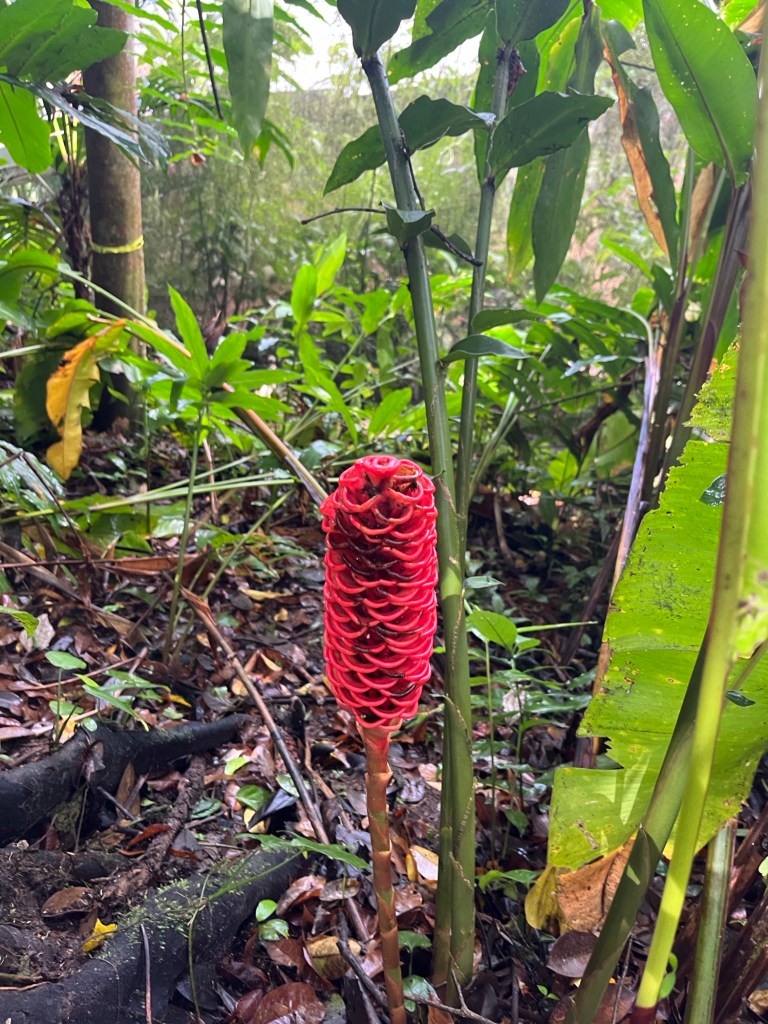
Yeah. Ginger.
I have no idea what this is.
This is Hairyensis Trumpiana. No, actually I have no idea.
I don’t remember the name of this frog, but at rest, it looks like a snake, which is enough for many animals to vacate the area.

On the way back to the hotel, we saw a coatimundi in the road, stopping traffic and begging for food. It’s the largest one I have ever seen—about the size of a medium-sized dog and four feet from tail to snout. He was a handsome character, too, but I took too long to get my phone out to take a photo, and he wandered off, disappointed. I wasn’t about to roll down the window or get out of the car.
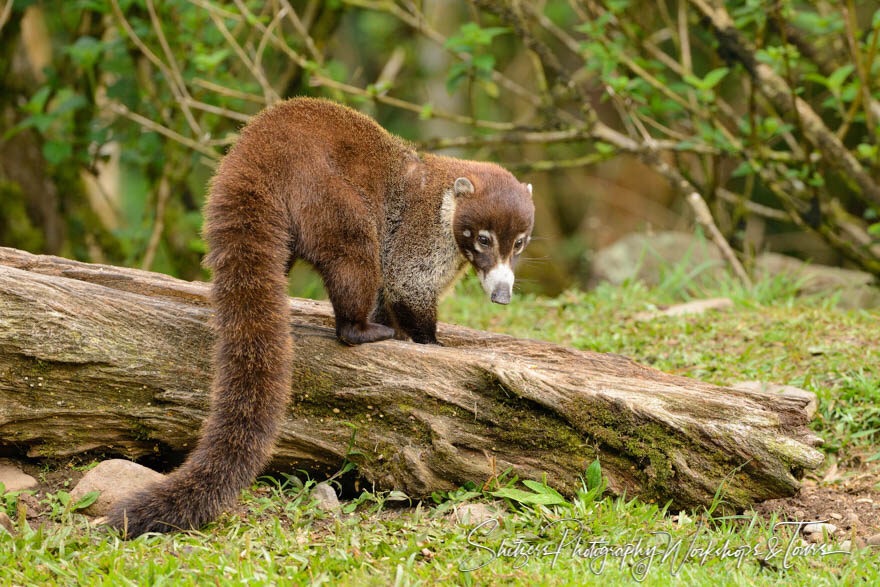
Our coati friend looked a lot like this. They are related to raccoons, and are just as cute and clever and obnoxious as raccoons.

We leave this hotel tomorrow and have hired a car and driver to take us to Tamarindo. The lady at the front desk asked if we were going to party. So did everyone else. I have a sneaking suspicion that Tamarindo is a party town. Don’t know why.
Raising Tad

First:
I love animals. I have always had pets, and never believed what I heard from others about how they don’t have the same emotions, or even the same ability to feel pain. Nonsense. Animals are more like us than not, but we have spent millennia trying to prove that we are better, finer, and superior. We have behaved accordingly, acting as though animals could not feel, or suffer. As if they didn’t matter.

So don’t read this piece if you are one of those individuals. You won’t like it.
* * * *

A few weeks ago, my daughter Kerry came home from her teaching job with a jar of water containing two tiny black commas of life: tadpoles. One of her middle-school students had given them to her so that Kerry’s two little girls could observe the miraculous transformation from tadpole to frog. The tadpoles were no bigger than my little fingernail.

Sadly, one of them did not survive. It was a rough journey from his home pond to middle school to our house. But one tiny scrap of life lived. We never named it, nor do we know its gender, but let’s call him Tad for convenience.

Tad took up residence in a plastic food container with purified water and two baby spinach leaves to eat. He swam around energetically enough for a few weeks, gorging on spinach. I marveled at him. He was so tiny that he couldn’t consume even one leaf before it started to go bad. I regularly changed his water and his spinach leaves as he worked on growing out his hind legs.

He became a bit sluggish and one morning, Kerry found him floating on his back on top of the water, apparently dead. But when she picked up the container, he flicked away, very much alive. Kerry consulted the oracle (the Internet) and found that once tadpoles get their hind legs, they also begin developing lungs, so he needed an easier way to breathe at the surface. I selected a rock for his container, one with gently sloping sides so he could almost swim right out of the water onto the top of the rock, which I left rising just a bit above the waterline. I added some sticks for good measure and topped it off with a couple of baby spinach leaves.

I swear he was way happier with the additions. (Go ahead and laugh. I don’t care.) Lethargy forgotten, he careened around his enclosure, now with far less water, dodging between twigs and hiding by the rock’s sloping sides. He did swim right up to the rock to rest in the water while he breathed. I was delighted, and I think that’s when I lost a little piece of my heart to him.

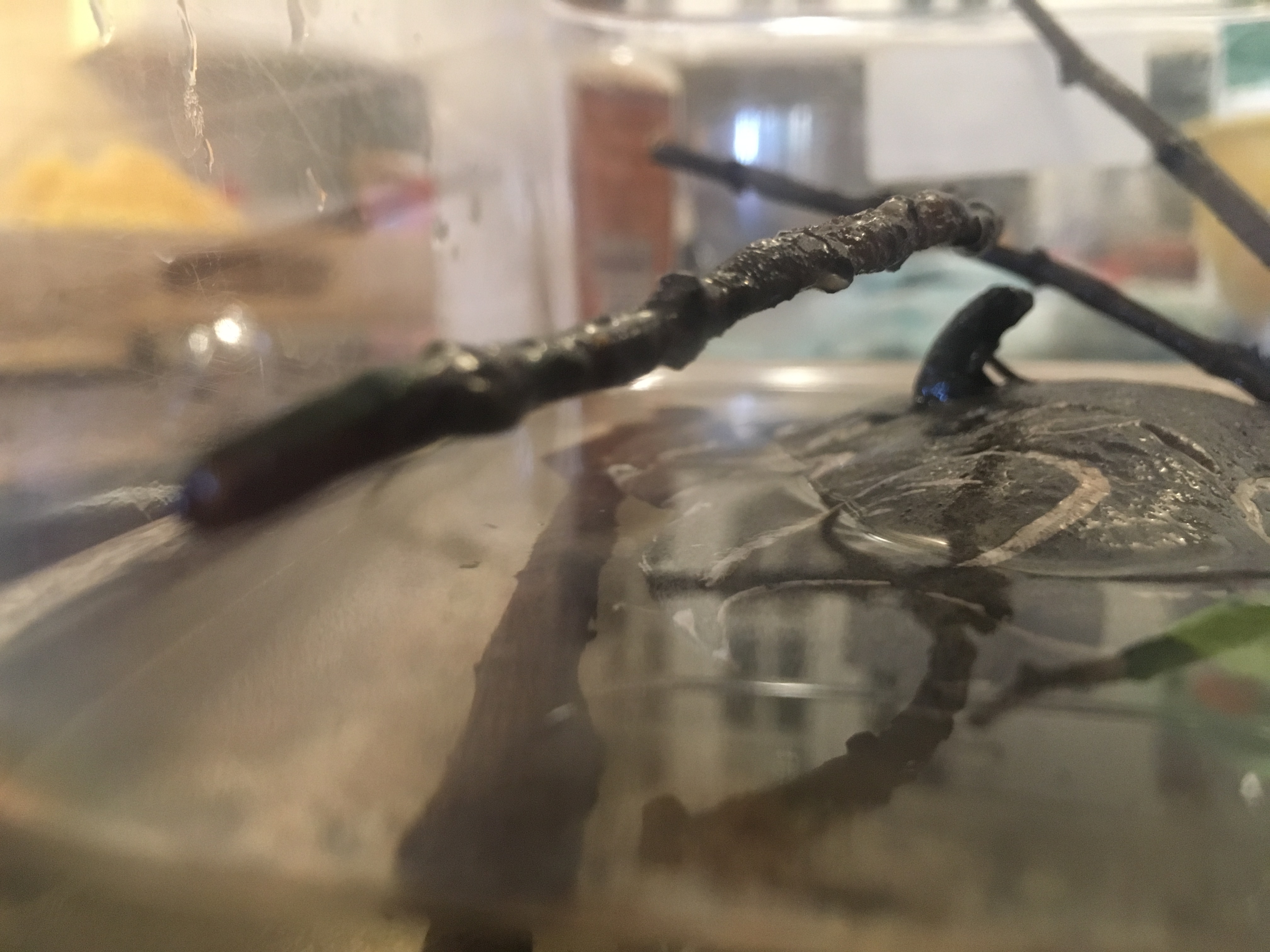
Tad’s forelegs seemed to pop out overnight, each the circumference of a thread. And one day, he climbed right out of the water and sat on top of the rock like a grown-up frog. The picture above is of this event. Terrible photo, but remember, he was teensy, and I was shooting through the plastic walls of a food container.

Tad sat on his rock the entire day without moving. My hypothesis is that he was allowing his lungs to practice breathing, and perhaps this was an energy-intensive exercise. I was smitten. He was just SO cute sitting there like a real frog, and yet—still the size of my little fingernail.

It was time to let Tad return to nature. His tail was nothing but a nubbin and his legs were fully developed. He would need to eat tiny insects now, as spinach would no longer appeal to him.

We live near a large tract of wild woodland. I thought I would let him go in the stream that winds through the woods. Lower downstream where it meanders into the ocean, there is always a crowd of ducks and seagulls, it’s polluted, and the water is brackish.

Unfortunately, we couldn’t reach the forest stream. Although there are places where you can reach the stream easily, they are not near the park road. My husband and I had taken our youngest granddaughter to witness the release and we were also carrying Tad’s container. Jessamyn, age four, is definitely not Nature Girl and objects to long and difficult walks. I had safety-proofed Tad’s container as best I could by removing the sticks, emptying most of the water and replacing the rock with a mound of sodden paper towels so he would have a safe place to sit out of the water if he needed it. But I could tell the movement and jouncing were frightening to him.

So we drove closer to where the creek empties into the ocean. The banks became much less precipitous. I found a spot upstream from where the ducks and seabirds hang out, far enough from the sea that the water wouldn’t be brackish. It was a shallow stretch of streambed with a golden, sandy bottom. I clambered as far down the bank as I could and let Tad out of his container.

With a burst of speed that surprised us, Tad leaped downhill toward the water and disappeared into the weeds matting the stream bank. We lost sight of him within a second. He was such an infinitesimal scrap of a creature that any shadow, any shelter disguised him entirely. It made me wonder how many little animals I have unwittingly walked upon without ever knowing it.

I absolutely would be lying if I told you that were the end of it. No, I worried. Did he make it to the water? Did he live through his first day as a free frog? Did he become a light snack for a garter snake or a sparrow?

Was this silly of me? Yes. Tadpoles are spawned in the hundreds of thousands, and they are ready food for many animals. Frogs, too, are the prey of birds, toads, foxes, raccoons, fish…and so on. Hakuna matata, the great circle of life and all that.

But I still think a lot about that minute froglet, sitting so quietly and proudly on top of his rock. Although Tad’s chances of survival were slim, at least I gave him a safe and predator-free tadpolehood. That is probably the best we can do for our own children before we release them into the wild.