Thanks for Voting Me One of the “50 Great Writers You Should Be Reading”

2014-winner300dpi

Well, the results are in, and I am officially a winner of the “50 Great Writers You Should Be Reading,” a contest sponsored by The Authors Show. The results are determined by public vote–and enough of you voted for me to get me into the winner’s circle! My sincere thanks for taking the trouble to vote for me; I am truly grateful.

Now–on to the next book!

Writing the Sequel: Embarking on a Spirit Journey

"Under the Cliffs of Molokai" by D. Howard Hitchcock

“Under the Cliffs of Molokai” by D. Howard Hitchcock

I deliberately spent the past six months promoting “The Obsidian Mirror.” I curtailed most of my other activities to give myself time to launch my first book properly. I did not start writing the sequel, though I have thought about it a great deal.

Well, “The Obsidian Mirror” is launched, and the time has come to start working on the next novel. During a vacation last year in Oahu I came up with some really fun things that could happen to my characters if they traveled to Hawai’i—although it won’t be as much fun for them as it will be for me. I knew I needed to ground the story in Hawai’ian mythology and tradition. I’ve been to several of the Hawai’ian islands and I have read a fair amount about the Hawai’ians’ ancient culture and mythology. But there is far more that I do not know, so I felt the need to do more research.

In my previous visits to the islands I have been a tourist. I was there for the snorkeling, the beautiful beaches, the fresh-from-the-ocean fish, and the relaxing natural beauty of Hawai’i. This time, it’s different; I want to know more about modern Hawai’ian culture—the culture of the people of Hawai’ian descent—but I also want to know how modern ethnic Hawai’ians relate to the culture and beliefs of their ancestors. To do this, I need to have some meaningful conversations with ethnic Hawai’ians. I am not going to learn this from a book.

I began by trying to track down my former chiropractor, an ethnic Hawai’ian and an excellent practitioner. Kalani has apparently vanished off the face of the earth. Short of hiring a private eye, I am not going to find him. I asked a friend of mine with connections in Hawai’i if she could introduce me to people there. She tried, but the person she introduced me to via email was always too busy to talk, and finally stopped responding altogether.

Then I asked a friend who lives in Hawaii for help. He is not ethnic Hawai’ian, but having lived on the Big Island for many years, he knows many. We actually have met in person only once. He was a technology journalist while I was working in high tech public relations. We’ve stayed in touch as he moved to Hawaii to grow coffee and eventually became an expert in sustainable agricultural practices. Despite the fact that he hasn’t seen me in person for probably 30 years (!!!) he agreed to introduce me to some of his friends and acquaintances on the Big Island. I am still amazed at his generosity and trust.

At the same time I was seeking personal contacts in the islands, I did what a good researcher does; I tried to get in touch with experts at The Bishop Museum, which is recognized as the world’s best museum of Polynesian culture. I never heard back from any of my attempts to communicate by email or phone.

But I did have a commitment from my Big Island friend, so it was starting to get real. I spent a weekend setting up a week on the Big Island, going from there to Oahu, where the Bishop Museum and the University of Hawaii reside. I set it all up—places to stay, rental cars, airplane flights. I arranged eight days in Oahu, reasoning that if worst came to worst, I could always just pay the entrance fee to the Bishop Museum and then find a docent of Hawai’ian descent who might be willing to help me.

Then I started reading a book called “The Sacred Power of Huna,” by Rima A. Morrell, Ph.D. I was actually looking for books on Hawai’ian mythology and folk tales, but I had never heard of Huna, so I bought it on a whim. According to Morrell, Huna is the original Hawai’ian spiritual practice, developed before the introduction of things like the kapu system and human sacrifice, which she says was imposed on the islands by Samoan invaders around the 14th century. Huna is deeply intertwined with hula and with the Hawai’ian language. Its purpose is to help individuals to increase the light in the world—literally and metaphysically. The author—who did her Ph.D. in Hawai’ian shamanism at University College London after getting her masters and undergraduate degrees from Cambridge—firmly states that magic is REAL, and gives several examples from her personal experience. She also states that Hawai’ians on other islands suspect that Molokai—the island of fewest tourists and greatest percentage of ethnic Hawai’ians other than Ni’ihau—is where magic is still being made. How could a fantasy writer resist?

I put the book down at this point. Molokai. Why had I not thought about Molokai? I have often wondered about it. It’s described as the “Aloha Island,” the friendliest. And it’s called the last remnant of Old Hawai’i, with no high-rise buildings and not a lot of tourists, despite having beautiful white sand beaches, forested uplands, and its own share of snorkeling spots and other tropical delights. I had a strong feeling I should go to Molokai, but thought, “I can’t, because I’ve already made arrangements for Oahu. It’ll cost too much money to change now.”

So I went about my business for a few days, but I couldn’t shake the feeling that I needed to go to Molokai. I don’t really know much about the island. I certainly don’t know anybody there. But it called to me. So I gritted my teeth and made all the changes and paid the extra money to Hawai’ian Airlines to change the reservations.

I have abandoned all my reasonable and rational plans to talk to experts at the museum or the university. I am embarking on what I see as a spirit journey. I don’t know what I will do when I get there. I don’t know what questions to ask. I don’t know what I will discover or whom I will meet. I don’t know how I am going to get what I need to write the next novel. I run the risk of not finding out anything at all. I am taking a leap of faith that my inner guide is taking me to the right place to do what I need to do and learn what I need to know.

At the very least, I will have spent two weeks in one of the most beautiful places on earth.

POSTSCRIPT

Immediately upon posting this piece–I mean, literally within a minute or two–I happened upon a FB page called “Huna Is Not Hawaiian.” Startled, I spent quite a while reading the page and following up on many of its links to longer pieces.

It appears that, indeed, Huna is NOT Hawai’ian, but a new-age overlay on Hawai’ian spirituality. The “Huna Is Not Hawaiian” page views it as a commercialized appropriation of Hawai’an culture.

I thought I should mention this, but it doesn’t impact what I am doing. My purpose in visiting Hawai’i and Molokai in particular is not to study Huna or become Hawai’ian by some strange magic. My purpose is to learn what there is for me to learn to write my next book.

Yes, I still view it as a spirit quest and have abandoned my usual rational methodology in favor of letting what happens happen. I have found in the past that letting things unfold naturally is sometimes a more effective way to reach a goal than systematically striving.

Did the book on Huna change what I planned to do? Absolutely. It reminded me that I had always wanted to visit Molokai, and that of all the islands, Molokai may be the one closest to Old Hawai’i. I still feel excited and confident that I made the right decision–for me. There is something for me there.

But I am under no illusion that a couple of weeks in Hawai’i will do more than enrich my store of experience and knowledge and, hopefully, stoke the joy and impetus of creating a new story. If I’m lucky, I won’t get sunburned.

Time, Time, Time…Is Not on My Side

vetta

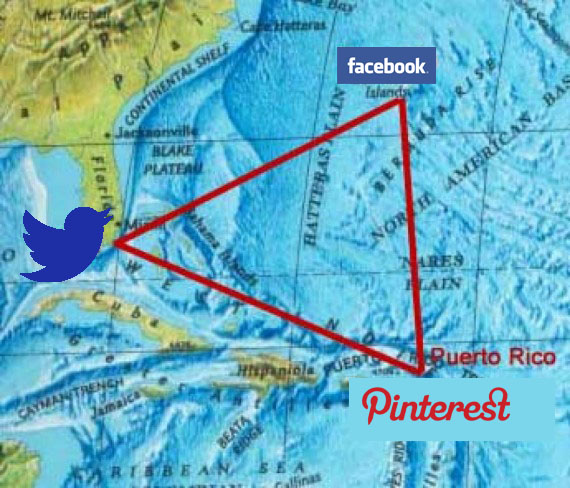
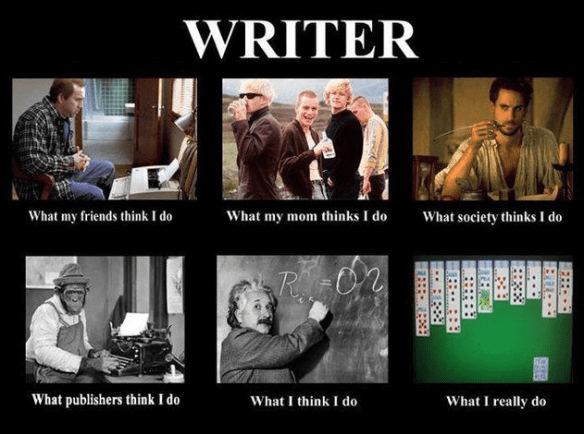
Time to write. That’s pretty much the only item on the writer’s eternal wish list. (Except for, “I want my book to be a best-seller,” of course.) There are various cartoons swimming around in the chaotic soup that is the Internet, like this one, that bemoan the writer never having enough time to write:

The Writer's Bermuda Triangle

The Writer’s Bermuda Triangle

So why do writers spend so much time on social media? Is there any indication that social media helps to draw in new readers or sell books? We all (publishers and writers alike) have this childlike faith that it does, but is there any proof?

Then there’s the question of: Does it matter if social media works or not? Because what else do we have? If you’re Neil Gaiman or Ken Follett or Dan Brown, your publisher is worshipfully setting up public appearances and paying for full-page ads in The New Yorker. If you’re like the rest of us, you are doing most—if not all—of your own marketing and publicity.

Then there’s the amount of time we spend just reading posts and following links and signing petitions.

Signing petitions. I suddenly realized that 75%+ of my email was from organizations whose aims I support, either asking me to sign petitions or asking for money, or both. I like signing petitions because it seems to me that they are a way for ordinary people to make their voices heard. It’s also a way to provide a voice to those who have none—endangered species, abused farm animals, and homeless people, for example.

I was delighted that several of the petitions I have signed were successful. A corporation changed its open-carry policy. A former K-9 Corps soldier was allowed to adopt his dog and take it home from Afghanistan (which otherwise would have been dumped in that country as a way of saying thanks for its service). A corporation raised its minimum wage. All of these things encouraged me to continue signing. I felt like I was doing something—a tiny something, but something—to support good causes and hopefully make the world a better place.

But the universe of good causes had discovered their ultimate sucker. I was getting messages from political candidates running in states in which I do not live, asking for my money. I got petitions from individuals asking for help for their relatives. I received just too many emails and petitions from too many organizations. It was taking half my limited time just to sort through them and sign the ones I was interested in supporting.

Add to this situation that our household recently expanded due to the addition of Jessamyn, now almost five months old. Jessamyn is a chubby pink charmer who graces all around her with wide, gummy smiles and delighted cooing. She adores my singing (I think she’s the only one). She is also demanding and needs a lot of attention, just like any other baby. Her mother went back to work outside the home, and a lot of baby and childcare devolved upon my husband and me.

So I had to choose between Jessamyn and the petitions. You may not be surprised to hear that Jessamyn won. I unsubscribed from every one of them. I mark them as “junk” when they enter my mailbox—even though I feel a twinge of guilt every time.

It still takes too long to get through my email. The email system still hasn’t really learned which things are junk. For some reason, the system leaves a lot of unwanted email in my “In” box, even though it carefully marks them with a yellow notice that says, “Postbox thinks this is junk mail.” Well, if you think it’s junk mail, what the hell is it doing in my inbox?

But it’s getting better. Getting though my email is gradually becoming a shorter process. I have a little more time each day to devote to book marketing and research on the sequel to “The Obsidian Mirror.” It’s not enough, but as the days grow shorter, my working day is a tiny bit longer.

But I still feel guilty about not signing all those petitions.

Interview with K.D. Keenan on (r)Evolution with HiC

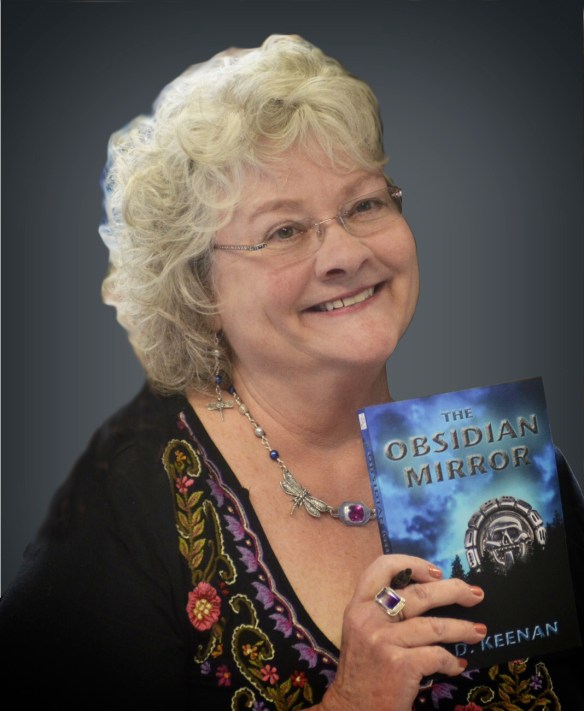
K.D. Keenan, author of "The Obsidian Mirror"

K.D. Keenan, author of “The Obsidian Mirror”

http://player.cinchcast.com/?platformId=1&assetType=single&assetId=5859167

Check Out Books Podcasts at Blog Talk Radio with Firefly Willows LIVE on BlogTalkRadio

Interview with Fantasy Author Ryan Attard

Ryan AttardHow many fantasy authors do you know who live in Malta, study martial arts, and write wildly funny, action-packed stories about a wizard who can’t use magic? There’s only one: Ryan Attard, author of the “Legacy” fantasy series.


My Writing Process

Writer

Today’s blog is part of a writers’ blog tour, so the format is predetermined. I was nominated to write this by Ryan Attard, author of the wild, action-packed “Legacy” fantasy series. Ryan has two books in the series out now, “Firstborn” and “Birthright.” His blog on the subject of “My Writing Process” can be found here. 

1. What am I working on? At present, I’m marketing “The Obsidian Mirror,” which is my debut novel. As a new writer (OK, I’ve been writing my whole life and write for a living, but I am newly-arrived as a novelist), I don’t have an established reader base, and I’ll have to work hard to build one. I expected this and I’m eager and willing to put in the work, but I have not been able to turn my full attention to the next novel, which will be the second in the “Obsidian” series.

As those of you who have been hanging in here with me for a while know, “The Obsidian Mirror” is based entirely on New World mythologies, legends, folk tales and traditions. Supernatural beings—they may have been called gods or folk heroes or even demons—are active in today’s world. I call them “Avatars,” more or less to avoid the whole religion thing. There were thousands of different religions in the ancient Americas, and I wanted to be able to draw on any of them without getting too embroiled in theology.

The second story in the “Obsidian” series will be set in Hawaii. I thought it would be interesting to see what happens when an ancient Avatar such as Coyote the Trickster ventures from his native land to another land where he and his cohorts never had any influence. Hawai’i may be part of the United States now, but the ancient Hawai’ians had their own traditions that owed nothing to the mainland Americas. I have plans for Coyote (also known as Chaco) in particular, but he’s not going to like them much.

Fred the mannegishi will also venture to Hawaii with Sierra, but his experience will be radically different from Chaco’s. As I was writing the character of Fred, he always reminded me of the Hawaiian menehune; Fred is small, green, and mischievous, as are the menehune. Well, it’s time that Fred met some menehune, and we will see what happens. (I honestly don’t know any more at this point.)

The underlying theme of “The Obsidian Mirror” is threat to the natural environment. I plan to continue that with the next book, but my focus will be on the “Pacific Garbage Patch,” which is a continent-sized area in the Pacific that contains millions of tons of particularized plastic swirling around in the ocean—and Hawai’i is right in the middle of it. Marine birds and animals consume this plastic confetti, often with fatal results, and the plastic leaches toxic chemicals into the water. “Plastiglomerates” have been washing up on Hawai’i’s beautiful beaches—chunks of plastic fused together with volcanic rock, sand and coral. Next time you have a fun day at the beach, please be sure you take all the sand buckets, bags, plastic shovels and toys home with you, even if they’re broken. Otherwise—it’s off to the great Pacific Garbage Patch! (Unless you’re picnicking by a different ocean, in which case, please do the same.)

I won’t get preachy with all this. If the story isn’t fun to read, it won’t be read.

When I’m not marketing the first book, I’m trying to find time to do research on ancient Hawai’ian culture for the next book. I may have to actually travel to Hawai’i to accomplish some of this, but no one ever said the writer’s lot is an easy one.

2. How does my work differ from others of its genre? Basing my work on New World mythologies, legends and archetypes is the most unique aspect of my work. I don’t mean to say that no one has ever done this before, but my observation of fantasy is that it leans heavily on European traditions such as swords, sorcerers, vampires, elves, faeries, cloaked adventurers, and so forth. As a matter of fact, that’s why I wrote “The Obsidian Mirror” in the first place. In early 2007, I finished reading an epic fantasy by Robert Jordan. (It was one of the “Wheel of Time” novels.) I thoroughly enjoyed the book, but found myself pondering the whole Eurocentricity of fantasy. My freelance writing business was slow at the time, so I began writing the story largely as an experiment. Much to my surprise, my characters became so vivid and real to me that they did not allow me to quit until I had finished the entire book and rewritten it about three times.

That being said, I am as intrigued by the mysteries of European traditions as anyone—especially when it comes to Celtic folklore and legends. Ethnically, I am pretty much a mutt, but I’m as much Scots-Irish as anything else, and these stories resonate with me. I’d like to write something based on Celtic tradition someday, but I would need to develop my own personal twist on it.

Back to what makes my work unique—I may be fooling myself, but I like to think that I have developed a distinctive “voice” as a writer. Key to this voice is humor, which I use much like salt in cooking; drama, action, and suspense are so much tastier when served with a good dollop of humor.

3. Why do I write what I write? I have wanted to be a writer since I was eight years old. In many ways, I have always been a writer; that’s how I got through school, and I built a career in public relations and marketing communications on my writing ability.

But of course, I didn’t aim to be a marketing writer at the age of eight. I wanted to write fiction because I read everything fictional I could get my hands on, and I thought writing fiction was the most amazing and wonderful thing anyone could do.

I majored in English Literature, so I thought I should be writing “literature”—something profound. Something that might eventually wind up on some college sophomore’s reading list. I attempted this a few times and quickly gave up in despair.

For some reason, it had not occurred to me to write the book that I wanted to read. You will more frequently find me curled up with Diana Gabaldon, Terry Pratchett, Neil Gaiman or Tom Holt than with Faulkner, Saroyan, Shakespeare or Melville. When I started writing “The Obsidian Mirror,” I finally set out to create a book that I would enjoy reading—which is probably why it worked.

4. How does my writing process work? I think this has changed, because I learned a lot about writing a book from creating “The Obsidian Mirror.” And the next time, I will outline the plot FIRST. When I started the story, I was writing on a whim, so I didn’t bother with plotting it out or doing character backstories, or creating walls full of stickies with timelines and so forth. I just wrote it, and that created some difficulties.

My most challenging problem was finishing the book. My second major rewrite had taken me past the end of the original version, but I got to a point in the story where I could not see how it would end. I knew how I wanted it to end, but I couldn’t figure out how to get there from where I was. I had written myself into a corner. It took probably six months and many earnest and frustrated attempts before I located where I had gone wrong and corrected it. The book just about finished itself from that point—I think it took a week.

So, long story short, I will create a plot outline for the next book. Beyond that, my process is: just write. I read somewhere that Terry Pratchett set himself the goal of writing at least 400 words per day. Every day. Holidays, weekends, sick or well. That struck me as a wise discipline, so I take the same goal for myself when I’m in writing mode. Usually I write far more than that, but 400 words is the minimum.

I write whether I’m feeling inspired or not. When you write for a living, as I do, you don’t have the luxury of waiting for inspiration to strike. You just do it because it’s a job like any other job. Waitresses, accountants, lawyers and phlebotomists do what they do with or without the muse of inspiration. (Note for short story: waitress meets the muse of table service!) I write whether I think every word is golden, or whether I think it’s trash. That’s what editing is for.

I do not edit as I write. I wait for it to “cool off” first. That’s true for my marketing writing as well as fiction. You can’t edit your work effectively if you try to do it while in the throes of composition. You have to walk away and come back later when you’re fresher and more objective.

With the exception of my difficulty finishing “The Obsidian Mirror,” I have never had writer’s block. This is because if I start writing and I think it’s basically shit, I force myself to continue. Eventually, the process of writing gets the creative juices flowing, and then I’m over the hill and far away with my characters. I can always go back and fix the shitty parts.

Finally, every writer needs an editor. I paid a well-regarded fantasy writer to edit my story, and she was worth every penny. I also paid an editor friend of mine to proof and edit the final manuscript. (I didn’t pay her what she is worth, but I did pay her.) When you write something and then go back and read it, I don’t care how good you are, you will tend to see what you thought you wrote instead of what you actually wrote. This inevitably results in typos, missing words, and sentences that read as though you were just coming off a 10-day bender on ‘shrooms. A good editor is worthy of h/her hire.

Of course, once the story is finished, you have to find a publisher (unless you self-publish, which has become more respectable these days). And once it’s published, you have to market it, because unless you’re Neil Gaiman, your average publisher these days is not going to fly you first-class to every bookstore in the nation and run ads in The New York Times Review of Books. The author must market his or her own books through social media, bookstore appearances, reviews and so forth, seeking for that elusive audience. But that doesn’t have anything to do with writing, though it has everything to do with making money at fiction writing.

So nothing is wasted. I’m glad I learned about marketing before I wrote a book!

I am supposed to nominate two other authors to pick up this blog tour. I invited two, but only heard back from one: the inimitable Sorin Suciu. Sorin wrote a wondrously funny urban fantasy called “The Scriptlings.” I defy anyone with any sense of humor to avoid laughing out loud while reading this tale, which is full of sly references and geeky humor. His “magical system” will delight anyone with even a passing acquaintance with computer programming. I have never met Sorin Suciu, but he comes across even in email exchanges as engaging, kind, smart and funny. I don’t know what Sorin will write, but I can flat-out guarantee that you will enjoy reading it on his blog next week.

Coverage of the Launch Party for “The Obsidian Mirror”

Really nice coverage of the book launch by the Palo Alto Weekly! Thanks to my friend Bob Stetson (who bought the very first copy sold of “The Obsidian Mirror”) for sending this to me!

Palo Alto Interview

The Launch Party, Coyotes, Mannegishi, and What Comes Next

Chaco, the Coyote Trickster

The launch party for “The Obsidian Mirror” went beautifully last Saturday afternoon. Kepler’s Bookstore in Menlo Park, CA graciously hosted the event, and there was a good crowd of people there. I did a very brief reading and answered questions.

Here’s a sampling of what I was asked:

Q: Is your protagonist (Sierra) autobiographical?

A: Sierra is concerned about the environment; so am I. Sierra is a PR executive, and used to be one. Sierra designs silver jewelry, and I do, too. There the resemblance ends because Sierra is way cooler than I am. (I didn’t mention this, but she’s also younger and more athletic than me.)

Q: What started you writing the book?

A: I had recently finished a Robert Jordan novel that involved riding horses, armor, swords, sorcery, etc. I really enjoyed the book, but later I wondered why, with thousands of legends, mythologies, folk tales and traditions, the New World is rarely used as inspiration for fantasy. Most epic fantasy, at any rate, is usually set in some pre-Industrial Age, pseudo-European environment. Elves, faeries, trolls, ogres, goblins, vampires, etc. are staple fare.

I love swords-and-sorcery, don’t get me wrong! But I had time (my freelance writing business was slow at the time), so I began writing a story based on New World traditions as an experiment. Before long, the characters took over and I HAD to finish the story.

Q: Is Chaco (Coyotl the Trickster) based on a person in your life?

A: I said Chaco was based on my husband, Tom, but I was kidding. Coyotl the Trickster is a folk hero among many of the Native American tribes. I should have mentioned that appearance-wise, I saw Chaco, in his manifestation as a deliciously sexy young man (as opposed to his coyote gig), as Gael García Bernal, the excellent Mexican actor who (among many other roles) played Ché Guevara in “The Motorcycle Diaries.”

One person thanked me for not making Chaco the villain. I started out thinking that since Chaco was The Trickster, he ought to be rather ambiguous; the reader would not be sure whether he was good or bad. I really, truly would have liked to write him that way, but he came out more of a scamp than a real rogue. (That was all his doing, not mine. I had other ideas.)

Q: What other characters are in the book?

A: There’s Fred the Mannegishi. Mannegishi are sort of like leprechauns in that they are small and green, but mostly because they are mischievous. Mannegishi are from legends of the Cree tribe. Fred is truly unreliable, but as one person present said (she had edited the manuscript for me), “Fred seemed like a pain in the butt at first, but he became my favorite character.”

I was asked if I made up Fred’s appearance, but I followed the description of Mannegishi in Wikipedia. I rarely made up anything about the supernatural characters; I tended to follow the traditional descriptions if they were available. Of course, much of my research consisted of strolling around the Internet when I needed a new monster. As the New Yorker cartoon has it, “Nobody knows you’re a dog on the Internet.” By the same token, it’s hard to know whether you’re reading something authentic, or a made-up legend by a tequila company or something. As “The Obsidian Mirror” is fiction—and fantasy fiction at that—I didn’t worry too much about academic purity.

 Q: Do you have a sequel planned?

 A: Yes, two. The next book will be set in Hawai’I, where Fred might meet some cousins of his. “The Obsidian Mirror” has an underlying theme of threat to our natural environment, which will continue to be a theme of my work. I am very concerned about the Pacific Gyre, also known as the Pacific Garbage Patch, a continent-size vortex of plastic particles in the ocean swirling around Hawai’i. But I do not plan on getting preachy. The books have to be fun to read, or no one will read them.

Of course, I may have to make the ultimate sacrifice and travel to Hawai’i to do research. A writer’s life is so hard.

The third sequel will be set in Mexico, and will have something to do with the Virgin of Guadalupe as Tonantzin, the Aztec flower goddess. I don’t know much more about it yet.

After answering questions, I sat down at the assigned table and signed books. The store sold out, with Kepler’s purchasing the last one for the staff. I hope they enjoy it as much as I enjoyed the party. I got a ton of compliments on the food—which I never touched because I was too wound-up!

From Sea to Poisoned Sea

Image: High Contrast

Image: High Contrast

Growing up, I learned in school about the natural wonders of our great land—the deep forests, crystalline rivers, wide and sweeping plans, and pristine deserts. This was probably reinforced by various Disney nature films depicting animals in the wild, with not a telephone line in sight.

Imagine my surprise when I got a little older and found out about “dead” lakes so polluted that nothing much could live in them. Rivers that caught on fire from time to time. Sweeping landscapes of gray factories belching dirty smoke into the air, surrounded by heaps of toxic slag. And because I lived a mere 100 miles from Los Angeles, that mother of all urban blight, the pall of grayish-brown smog that obscured the nearby 8,000-foot-plus-high mountains on many days.

I know it sounds as if I were a complete naïf, but I was stunned. The people who were dumping toxins and garbage into the water had to live here, too. Their children were being exposed to poison in the air and water. They had to look at the blight of human ingenuity, right along with the rest of us. So what could they possibly be thinking?

Many decades later, I am still wondering. It has never made sense to me that people would crap all over their own dinner tables. And it has never made sense to me that governments allow them to do this. Every time I read about some scheme to defang the EPA, or lower air and water quality standards, or build another nuclear power plant even after the disasters at Three-Mile Island, Chernobyl and Fukishima, I am newly gob-stopped. Why would anyone knowingly and deliberately destroy the only home we possess?

That’s one reason I wrote “The Obsidian Mirror.” In it, the ancient and evil Necocyaotl devises a new way to entice people to “look into the obsidian mirror,” after which they become so focused on their personal wants and desires that they are willing to despoil the earth to obtain them. He does this by spreading his evil essence in a fiendishly clever way, using modern technology.

To be honest, it’s the only explanation I can understand. Nothing else makes any sense at all. Profit motive, you say? That’s like burning down your own house to warm your hands for a bit. Until I get a better explanation, I’m sticking with the Necocyaotl Theory.

A Walk on the Beach. With Sooty Shearwaters and the Cement Boat.

Our son-in-law, Mike, went camping overnight with Lilah (our granddaughter) and some family friends. This is a traditional trip for the dads and girls, and they camp at New Brighton Beach, which is quite close to us. Tom and I decided to walk down the beach to say hello, but found they were tired and packing up to come home.

But we saw some amazing things on the walk. We have, against all logic, a cement boat here. That is, it once was a boat. Now it is a wrecked remnant of a boat, used by pelicans and other seabirds as a roost and nesting area above deck, and the interior (broken open long ago by waves and storms) has been populated by a rich array of sea life.

The cement boat has a history (and yes, it once did float on the water, despite being made of concrete). It was built as a tanker toward the end of WWI, and christened “S.S. Palo Alto,” but never saw service. It was purchased by an entertainment company and towed to Seacliff Beach in 1929. It was grounded a few yards offshore, and they built a pier out to it. For a brief time, it was a tourist amusement with a swimming pool, dances, refreshments, and all the other accoutrements of a seaside tourist trap. After two years, the entertainment company went bankrupt and the boat was abandoned. She cracked open amidships, but was used by the locals as a fishing pier.

Today, the pier still runs out to the boat, but there is a wide gap between the end of the pier and the boat. There is a barrier at the end of the pier, apparently to prevent people from attempting to leap the gap. The pier is still used for fishing, but the S.S. Palo Alto is basically a tiny manmade island, a bird refuge, and a synthetic reef.

Cement Boat1

The black fuzzy-looking stuff beyond the boat is thousands of birds.

And, lest this sound romantic, it stinks to high heaven of bird shit. It is one of the most highly-polluted beaches in Northern California, thanks to the birds, but this doesn’t seem to deter campers and picnickers one bit, even though I personally find the stench gagulous.

But we had to walk past the concrete boat today, and as we headed down the beach, tens of thousands of sooty shearwaters appeared and began to settle on the water to feed. Sooty shearwaters, which look like dirty seagulls, are migratory. They nest in New Zealand, but migrate around the Pacific, spending much of the summer in Northern California. In New Zealand, they are often referred to as “muttonbirds,” which is indicative of what the NZ settlers did with them. The Maori still harvest about 250,000 sooty shearwaters every year for food, oils, and fat. Yet many thousands (of shearwaters, not Maori) still wind up in Northern California every summer, where the natives prefer virtually anything over fricaseed seabird.

The shearwaters were joined by the pelicans, gulls, dolphins and seals, all of which followed the unseen school of fish back and forth along the coast, gobbling as fast as possible. All in all, it wasn’t a good day to be an anchovie.