Writing the Sequel: Embarking on a Spirit Journey

"Under the Cliffs of Molokai" by D. Howard Hitchcock

“Under the Cliffs of Molokai” by D. Howard Hitchcock

I deliberately spent the past six months promoting “The Obsidian Mirror.” I curtailed most of my other activities to give myself time to launch my first book properly. I did not start writing the sequel, though I have thought about it a great deal.

Well, “The Obsidian Mirror” is launched, and the time has come to start working on the next novel. During a vacation last year in Oahu I came up with some really fun things that could happen to my characters if they traveled to Hawai’i—although it won’t be as much fun for them as it will be for me. I knew I needed to ground the story in Hawai’ian mythology and tradition. I’ve been to several of the Hawai’ian islands and I have read a fair amount about the Hawai’ians’ ancient culture and mythology. But there is far more that I do not know, so I felt the need to do more research.

In my previous visits to the islands I have been a tourist. I was there for the snorkeling, the beautiful beaches, the fresh-from-the-ocean fish, and the relaxing natural beauty of Hawai’i. This time, it’s different; I want to know more about modern Hawai’ian culture—the culture of the people of Hawai’ian descent—but I also want to know how modern ethnic Hawai’ians relate to the culture and beliefs of their ancestors. To do this, I need to have some meaningful conversations with ethnic Hawai’ians. I am not going to learn this from a book.

I began by trying to track down my former chiropractor, an ethnic Hawai’ian and an excellent practitioner. Kalani has apparently vanished off the face of the earth. Short of hiring a private eye, I am not going to find him. I asked a friend of mine with connections in Hawai’i if she could introduce me to people there. She tried, but the person she introduced me to via email was always too busy to talk, and finally stopped responding altogether.

Then I asked a friend who lives in Hawaii for help. He is not ethnic Hawai’ian, but having lived on the Big Island for many years, he knows many. We actually have met in person only once. He was a technology journalist while I was working in high tech public relations. We’ve stayed in touch as he moved to Hawaii to grow coffee and eventually became an expert in sustainable agricultural practices. Despite the fact that he hasn’t seen me in person for probably 30 years (!!!) he agreed to introduce me to some of his friends and acquaintances on the Big Island. I am still amazed at his generosity and trust.

At the same time I was seeking personal contacts in the islands, I did what a good researcher does; I tried to get in touch with experts at The Bishop Museum, which is recognized as the world’s best museum of Polynesian culture. I never heard back from any of my attempts to communicate by email or phone.

But I did have a commitment from my Big Island friend, so it was starting to get real. I spent a weekend setting up a week on the Big Island, going from there to Oahu, where the Bishop Museum and the University of Hawaii reside. I set it all up—places to stay, rental cars, airplane flights. I arranged eight days in Oahu, reasoning that if worst came to worst, I could always just pay the entrance fee to the Bishop Museum and then find a docent of Hawai’ian descent who might be willing to help me.

Then I started reading a book called “The Sacred Power of Huna,” by Rima A. Morrell, Ph.D. I was actually looking for books on Hawai’ian mythology and folk tales, but I had never heard of Huna, so I bought it on a whim. According to Morrell, Huna is the original Hawai’ian spiritual practice, developed before the introduction of things like the kapu system and human sacrifice, which she says was imposed on the islands by Samoan invaders around the 14th century. Huna is deeply intertwined with hula and with the Hawai’ian language. Its purpose is to help individuals to increase the light in the world—literally and metaphysically. The author—who did her Ph.D. in Hawai’ian shamanism at University College London after getting her masters and undergraduate degrees from Cambridge—firmly states that magic is REAL, and gives several examples from her personal experience. She also states that Hawai’ians on other islands suspect that Molokai—the island of fewest tourists and greatest percentage of ethnic Hawai’ians other than Ni’ihau—is where magic is still being made. How could a fantasy writer resist?

I put the book down at this point. Molokai. Why had I not thought about Molokai? I have often wondered about it. It’s described as the “Aloha Island,” the friendliest. And it’s called the last remnant of Old Hawai’i, with no high-rise buildings and not a lot of tourists, despite having beautiful white sand beaches, forested uplands, and its own share of snorkeling spots and other tropical delights. I had a strong feeling I should go to Molokai, but thought, “I can’t, because I’ve already made arrangements for Oahu. It’ll cost too much money to change now.”

So I went about my business for a few days, but I couldn’t shake the feeling that I needed to go to Molokai. I don’t really know much about the island. I certainly don’t know anybody there. But it called to me. So I gritted my teeth and made all the changes and paid the extra money to Hawai’ian Airlines to change the reservations.

I have abandoned all my reasonable and rational plans to talk to experts at the museum or the university. I am embarking on what I see as a spirit journey. I don’t know what I will do when I get there. I don’t know what questions to ask. I don’t know what I will discover or whom I will meet. I don’t know how I am going to get what I need to write the next novel. I run the risk of not finding out anything at all. I am taking a leap of faith that my inner guide is taking me to the right place to do what I need to do and learn what I need to know.

At the very least, I will have spent two weeks in one of the most beautiful places on earth.

POSTSCRIPT

Immediately upon posting this piece–I mean, literally within a minute or two–I happened upon a FB page called “Huna Is Not Hawaiian.” Startled, I spent quite a while reading the page and following up on many of its links to longer pieces.

It appears that, indeed, Huna is NOT Hawai’ian, but a new-age overlay on Hawai’ian spirituality. The “Huna Is Not Hawaiian” page views it as a commercialized appropriation of Hawai’an culture.

I thought I should mention this, but it doesn’t impact what I am doing. My purpose in visiting Hawai’i and Molokai in particular is not to study Huna or become Hawai’ian by some strange magic. My purpose is to learn what there is for me to learn to write my next book.

Yes, I still view it as a spirit quest and have abandoned my usual rational methodology in favor of letting what happens happen. I have found in the past that letting things unfold naturally is sometimes a more effective way to reach a goal than systematically striving.

Did the book on Huna change what I planned to do? Absolutely. It reminded me that I had always wanted to visit Molokai, and that of all the islands, Molokai may be the one closest to Old Hawai’i. I still feel excited and confident that I made the right decision–for me. There is something for me there.

But I am under no illusion that a couple of weeks in Hawai’i will do more than enrich my store of experience and knowledge and, hopefully, stoke the joy and impetus of creating a new story. If I’m lucky, I won’t get sunburned.

Time, Time, Time…Is Not on My Side

vetta

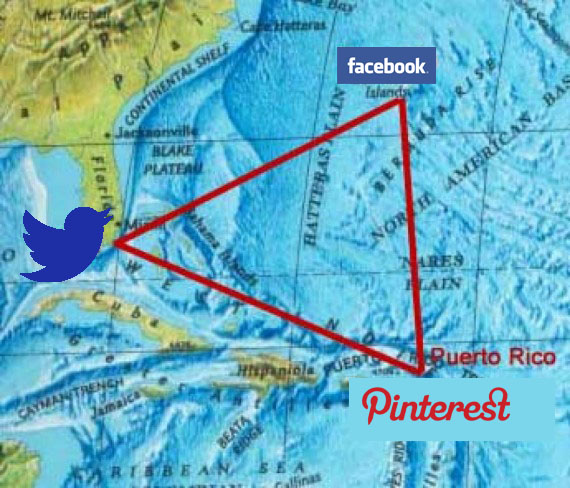
Time to write. That’s pretty much the only item on the writer’s eternal wish list. (Except for, “I want my book to be a best-seller,” of course.) There are various cartoons swimming around in the chaotic soup that is the Internet, like this one, that bemoan the writer never having enough time to write:

The Writer's Bermuda Triangle

The Writer’s Bermuda Triangle

So why do writers spend so much time on social media? Is there any indication that social media helps to draw in new readers or sell books? We all (publishers and writers alike) have this childlike faith that it does, but is there any proof?

Then there’s the question of: Does it matter if social media works or not? Because what else do we have? If you’re Neil Gaiman or Ken Follett or Dan Brown, your publisher is worshipfully setting up public appearances and paying for full-page ads in The New Yorker. If you’re like the rest of us, you are doing most—if not all—of your own marketing and publicity.

Then there’s the amount of time we spend just reading posts and following links and signing petitions.

Signing petitions. I suddenly realized that 75%+ of my email was from organizations whose aims I support, either asking me to sign petitions or asking for money, or both. I like signing petitions because it seems to me that they are a way for ordinary people to make their voices heard. It’s also a way to provide a voice to those who have none—endangered species, abused farm animals, and homeless people, for example.

I was delighted that several of the petitions I have signed were successful. A corporation changed its open-carry policy. A former K-9 Corps soldier was allowed to adopt his dog and take it home from Afghanistan (which otherwise would have been dumped in that country as a way of saying thanks for its service). A corporation raised its minimum wage. All of these things encouraged me to continue signing. I felt like I was doing something—a tiny something, but something—to support good causes and hopefully make the world a better place.

But the universe of good causes had discovered their ultimate sucker. I was getting messages from political candidates running in states in which I do not live, asking for my money. I got petitions from individuals asking for help for their relatives. I received just too many emails and petitions from too many organizations. It was taking half my limited time just to sort through them and sign the ones I was interested in supporting.

Add to this situation that our household recently expanded due to the addition of Jessamyn, now almost five months old. Jessamyn is a chubby pink charmer who graces all around her with wide, gummy smiles and delighted cooing. She adores my singing (I think she’s the only one). She is also demanding and needs a lot of attention, just like any other baby. Her mother went back to work outside the home, and a lot of baby and childcare devolved upon my husband and me.

So I had to choose between Jessamyn and the petitions. You may not be surprised to hear that Jessamyn won. I unsubscribed from every one of them. I mark them as “junk” when they enter my mailbox—even though I feel a twinge of guilt every time.

It still takes too long to get through my email. The email system still hasn’t really learned which things are junk. For some reason, the system leaves a lot of unwanted email in my “In” box, even though it carefully marks them with a yellow notice that says, “Postbox thinks this is junk mail.” Well, if you think it’s junk mail, what the hell is it doing in my inbox?

But it’s getting better. Getting though my email is gradually becoming a shorter process. I have a little more time each day to devote to book marketing and research on the sequel to “The Obsidian Mirror.” It’s not enough, but as the days grow shorter, my working day is a tiny bit longer.

But I still feel guilty about not signing all those petitions.

From Sea to Poisoned Sea

Image: High Contrast

Image: High Contrast

Growing up, I learned in school about the natural wonders of our great land—the deep forests, crystalline rivers, wide and sweeping plans, and pristine deserts. This was probably reinforced by various Disney nature films depicting animals in the wild, with not a telephone line in sight.

Imagine my surprise when I got a little older and found out about “dead” lakes so polluted that nothing much could live in them. Rivers that caught on fire from time to time. Sweeping landscapes of gray factories belching dirty smoke into the air, surrounded by heaps of toxic slag. And because I lived a mere 100 miles from Los Angeles, that mother of all urban blight, the pall of grayish-brown smog that obscured the nearby 8,000-foot-plus-high mountains on many days.

I know it sounds as if I were a complete naïf, but I was stunned. The people who were dumping toxins and garbage into the water had to live here, too. Their children were being exposed to poison in the air and water. They had to look at the blight of human ingenuity, right along with the rest of us. So what could they possibly be thinking?

Many decades later, I am still wondering. It has never made sense to me that people would crap all over their own dinner tables. And it has never made sense to me that governments allow them to do this. Every time I read about some scheme to defang the EPA, or lower air and water quality standards, or build another nuclear power plant even after the disasters at Three-Mile Island, Chernobyl and Fukishima, I am newly gob-stopped. Why would anyone knowingly and deliberately destroy the only home we possess?

That’s one reason I wrote “The Obsidian Mirror.” In it, the ancient and evil Necocyaotl devises a new way to entice people to “look into the obsidian mirror,” after which they become so focused on their personal wants and desires that they are willing to despoil the earth to obtain them. He does this by spreading his evil essence in a fiendishly clever way, using modern technology.

To be honest, it’s the only explanation I can understand. Nothing else makes any sense at all. Profit motive, you say? That’s like burning down your own house to warm your hands for a bit. Until I get a better explanation, I’m sticking with the Necocyaotl Theory.

A Walk on the Beach. With Sooty Shearwaters and the Cement Boat.

Our son-in-law, Mike, went camping overnight with Lilah (our granddaughter) and some family friends. This is a traditional trip for the dads and girls, and they camp at New Brighton Beach, which is quite close to us. Tom and I decided to walk down the beach to say hello, but found they were tired and packing up to come home.

But we saw some amazing things on the walk. We have, against all logic, a cement boat here. That is, it once was a boat. Now it is a wrecked remnant of a boat, used by pelicans and other seabirds as a roost and nesting area above deck, and the interior (broken open long ago by waves and storms) has been populated by a rich array of sea life.

The cement boat has a history (and yes, it once did float on the water, despite being made of concrete). It was built as a tanker toward the end of WWI, and christened “S.S. Palo Alto,” but never saw service. It was purchased by an entertainment company and towed to Seacliff Beach in 1929. It was grounded a few yards offshore, and they built a pier out to it. For a brief time, it was a tourist amusement with a swimming pool, dances, refreshments, and all the other accoutrements of a seaside tourist trap. After two years, the entertainment company went bankrupt and the boat was abandoned. She cracked open amidships, but was used by the locals as a fishing pier.

Today, the pier still runs out to the boat, but there is a wide gap between the end of the pier and the boat. There is a barrier at the end of the pier, apparently to prevent people from attempting to leap the gap. The pier is still used for fishing, but the S.S. Palo Alto is basically a tiny manmade island, a bird refuge, and a synthetic reef.

Cement Boat1

The black fuzzy-looking stuff beyond the boat is thousands of birds.

And, lest this sound romantic, it stinks to high heaven of bird shit. It is one of the most highly-polluted beaches in Northern California, thanks to the birds, but this doesn’t seem to deter campers and picnickers one bit, even though I personally find the stench gagulous.

But we had to walk past the concrete boat today, and as we headed down the beach, tens of thousands of sooty shearwaters appeared and began to settle on the water to feed. Sooty shearwaters, which look like dirty seagulls, are migratory. They nest in New Zealand, but migrate around the Pacific, spending much of the summer in Northern California. In New Zealand, they are often referred to as “muttonbirds,” which is indicative of what the NZ settlers did with them. The Maori still harvest about 250,000 sooty shearwaters every year for food, oils, and fat. Yet many thousands (of shearwaters, not Maori) still wind up in Northern California every summer, where the natives prefer virtually anything over fricaseed seabird.

The shearwaters were joined by the pelicans, gulls, dolphins and seals, all of which followed the unseen school of fish back and forth along the coast, gobbling as fast as possible. All in all, it wasn’t a good day to be an anchovie.


Intergenerational Living…with a Newborn Baby


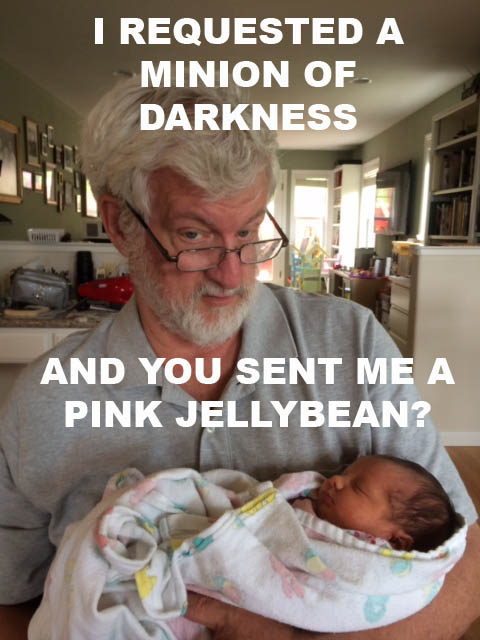
Daddo Jedssamyn MINION


I’ve written posts in the past about the fact that I live in an intergenerational living situation (see “An Experiment in Intergenerational Living,” and “Intergenerational Living: The Experiment Continues”). My husband and I sold our house last June and our daughter and her husband sold their house in July. We bought a house together in a new community. With Kerry and Mike came our granddaughter Lilah, 4, and two geriatric Japanese chins. (Chins are small, fluffy dogs with bulging eyes, squashed-in noses and a gremlin-like ability to find trouble anywhere, anytime.) Tom and I brought with us a third geriatric dog (large mutt) and a small black cat.

Now we have a new addition to the family: Jessamyn, one week old today. Jessamyn arrived a couple of weeks early because Kerry developed pre-eclampsia and what with one thing and another, had a caesarian delivery. (Getting the baby out is the only treatment for pre-eclampsia, which is the beginning of kidney failure and results in death if untreated.) So we were all a bit surprised by Jessamyn’s early debut, including Jessamyn.

All newborns are unbelievably tiny and fragile-looking, and Jessamyn is no exception. So far, she has been fairly easy. She sleeps, eats and poops. The only time I’ve heard her cry is when her diaper is changed or when she’s hungry. Lilah is delighted with her and tries hard to be helpful by fetching things for her mother. She is fascinated by Jessamyn’s tiny nose, which she touches very gently. Marley (#1 geriatric chin) wants to cuddle. The other animals have noted Jessamyn’s presence, but are keeping their distance.

Tom loves to hold the baby. He will hold her literally for hours. The photo above isn’t really fair—but I couldn’t resist, given the expression I caught on his face.

So another life has joined the family, and I wonder what she will be like. Will she dance through the house singing off-key, like her big sister? Will she like to draw? Will she love words? Will she want to be a poet, or an engineer? Jessamyn is physically here, but I don’t know who she is yet. It’s odd, feeling all this love for someone I don’t even know. I look at her little face, and she owns me, just like her big sister Lilah owns me. I am theirs for as long as I’m alive.


Lost in the Fog at FogCon

Lost in the Fog

I attended FogCon a couple of weeks ago. I had only attended one other con, and that was several years ago when I went to WorldCon in San Jose, CA. WorldCon was huge, taking up much of the McEnry Convention Center. There were lots of cosplay people dressed as Galadriel or Romulans or as people/creatures/characters I didn’t even recognize. And I met Terry Pratchett.

Yes, I know I said I was going to talk about FogCon, but I have to stop and talk about my encounter with Mr. Pratchett, who is one of my VERY EXTREMELY MOST FAVORITE fantasy authors.

You see, I met Connie Willis first. I was in the vendors’ hall when I happened to glimpse her nametag. Connie Willis is also a favorite author, so I introduced myself—and proceeded to commit every rabid-fan sin it is possible to commit in attempting to praise her work. Even as I heard the vapid words burbling out of my mouth, I knew I was doomed. The expression of pain on Ms. Willis’ face only confirmed my gauche blundering. I attempted to extricate myself by saying, “Well, I’m starting to drool on you, so I guess I’d better go now.” Ms. Willis nodded mute agreement, and I slunk away with my tail between my legs, feeling like a complete moron.

I was standing at a vendor’s stall wondering if it is possible to actually die of embarrassment when a tidy gentleman with a gray beard and a black fedora walked up. I thought he looked familiar, but when the vendor called him “Mr. Pratchett,” my suspicions were confirmed. He stood right next to me as the vendor handed him a CD and said, “I’ve been saving this for you, but I was afraid I might come across as a rabid fan.” (Like me, I thought.)

Pratchett took the CD and said, “I adore rabid fans!”

I turned to him and said, “Well, then, would you mind if I drooled on your shoulder?”

Pratchett responded, “Not at all—but would you mind drooling on this shoulder”—he patted his right shoulder—“as the other one is already rather damp?”

Instantly, the oppressive cloud of feeling foolish lifted and disappeared. I will never forget how Terry Pratchett’s humor and kindness brightened my day and turned my embarrassment into laughter. (Not that I mean to say Connie Willis made me feel bad. I made myself feel bad. I should’ve kept my mouth shut.)

Okay, back to FogCon, which is a very different con. I thought the topics appeared geared more to writers than to fans (“How To Create a Magical System” is one example), but there were probably more fans than writers. The sessions were a combination of panel discussion and group discussion. I introduced myself to several people, and sometimes got into conversations, but most people seemed to be there with groups of like-minded friends, and they were more interested in hanging with their posses than mingling. No one was rude or even cold; I just never clicked with anyone. I asked several people why they came to FogCon, and the answers were all along the lines of “I enjoy the discussions. The topics are so interesting.” Perhaps other cons are not as participative? I don’t know yet.

I managed to miss all the good parties because I didn’t know about the con suite. I handed out a few cards about “The Obsidian Mirror,” but no one expressed much interest. I finally just left a stack on the literature table. When I tried to talk about the book to a bookseller (from whom I was purchasing three books at the time), he just looked bored and pointedly set the card aside without a word.

By the time the “Non-Awards Banquet” rolled around on Saturday night, I was kind of done. There was a party afterwards, but I was tired and didn’t feel like trying to push myself onto more indifferent people.

I’ve done a lot of successful networking in my time, but I felt like a complete tyro at FogCon. I suspect that I am on a learning curve here. I went to the con to learn more about how cons work, and from that perspective, I was successful. I think I need to attend more cons and pick up on the culture (which I think differs from con to con, based on my limited experience). If I continue to attend, I’ll probably get to know others who go to cons and vice versa. Who knows? Maybe someday I’ll have my very own posse.

I Took My Skull Back to the Place It Came From (Almost)

When I turned six years old, my grandfather gave me a present. It wasn’t wrapped, as I recall, but just placed in a plain cardboard box. As it happened, it was my favorite gift that year: a genuine human skull.

My grandfather, Frank W. Moore, was an adventurous man. In the earlier days of the 20th century, he helled around California in a Model T, driving across the desert before there was such a thing as “off-road” driving. He had a sailboat called “Amy H” in which he explored the California coast and offshore islands. (My grandmother was not named Amy H. I think the boat came with the name and he never got around to changing it.) In those days, California was underpopulated and he had the freedom to go pretty much wherever he wanted to do whatever he felt like. One of the things he liked to do was go out with his buddy, Dr. Walter B. Power, and cut down billboards.

On one occasion in 1917, he landed on San Nicholas Island, later made famous by writer Scott O’Dell as “The Island of the Blue Dolphins.” On or near the beach, he saw a white dome poking up out of the sand. He uncovered it and found a skull with half of its lower mandible. The teeth (those that were left) were ground down quite smooth as a result of the inhabitants’ diet of shellfish which contained a lot of sand. My grandfather took the skull home, where it became an object of envy for my mother, who had ambitions of becoming an archeologist (and eventually did). Mom named it Yorick after the skull in “Hamlet.”

In those days, there was no Native American Repatriation Act, aimed at restoring the remains of Native Americans to their tribes and homelands. The battle of Wounded Knee was a mere 27 years in the past when my grandfather found the skull, and the term “Native American” hadn’t yet been coined. Indians, in short, were not highly regarded by the mainstream culture back then. No one thought twice about my grandfather taking Yorick from his resting place on San Nicholas Island.

In 1917, there were no inhabitants on the island. The Nicoleños (or Ghalas-at) had been almost exterminated by Russian fur-trappers. In 1835, the padres of the California mission system moved five of the six remaining inhabitants to the mainland. The one who stayed, Juana Maria, became known as “The Lone Woman.” She lived there, utterly alone, until her removal from the island in 1853. She died not long after.

My mother thought the skull was that of a young male in his 20’s, pointing to the supra-orbital ridges and cranial sutures, and we continued to refer to it as Yorick. Sensibilities toward Native Americans hadn’t improved too much by the time my childhood rolled around, so I happily took Yorick to show-and-tell sessions at school–and I have to tell you, he never failed to make a hit appearance. No one could top me when it came to show-and-tell; imagine following my human skull with your toy cap gun (also a perfectly acceptable show-and-tell item in the 1950’s).

I took as much care of Yorick as a small child might be expected to do, but one day, something heavy fell on him as he rested in my off-duty Easter basket. My mother undertook to glue him back together–and while she was engaged in this project, the chipmunk I had taken home for the weekend from my third grade classroom escaped in the family room and took up residence in the couch. Mom thought this would be a good way to start a book: “While I was glueing my daughter’s skull back together, the chipmunk got loose.” I thought this had promise, but she never did write the book.

When my own children were in elementary school, I let them take Yorick to their show-and-tell sessions. He was as much a hit as ever, but I heard back from one teacher that Yorick was an inappropriate show-and-tell subject. She mentioned the Native American Repatriation Act, and I realized with something of a shock that Yorick was, of course, subject to that law. That ended Yorick’s career in show-and-tell.

I suppose I should have realized earlier that Yorick had been a human being whose remains had been wrested from his native land in an insensitive and chauvinistic manner. But Yorick had been a fixture in my life, and I hadn’t really thought of him as such. He spent the next couple of decades in a cardboard box. Out of sight, out of mind.

When I finished “The Obsidian Mirror” and began to look for a publisher, I remembered my unfulfilled obligation. My novel is based on New World legends, myths, and folk tales, and I recognized my enormous debt to the Native Americans and their many cultures. I thought if I got published–by a real publisher, not self-published–the finest way to celebrate this would be to repatriate Yorick to whichever Native American tribe now held the responsibility for those long-dead people of San Nicholas Island. I thought the Chumash were the most likely, as they are the tribe that lives around Santa Barbara now. I pledged to Yorick and the Powers That Be that I would repatriate Yorick if my book were picked up by a publisher. (I planned to self-publish if I failed to find a publisher, but I didn’t even contemplate what I would do with Yorick in that case.)

Well, AEC Stellar Publishing is bringing out “The Obsidian Mirror” sometime this summer. So I had a promise to keep.

To be honest, I had never before investigated where San Nicholas Island was, precisely, or what had become of it. I had assumed, as the island is considered part of the Channel Islands group, it had been rid of its introduced species like rats and goats and made into a nature preserve like Anacapa. A group of us sat in our living room this past holiday season and did some research. Some of us (not me) were voluble in proposing that we hire a fishing boat and go out to San Nicholas to rebury Yorick ourselves.

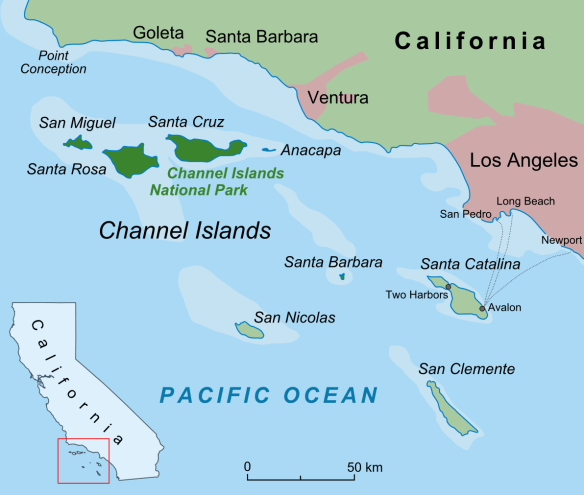
It turned out that San Nicholas Island is considerably south of the other Channel Islands (except for Santa Catalina and San Clemente), and sits perhaps 100 miles out to sea from the Southern California coast.

The Channel Islands

The Channel Islands

It also turned out that the island is under the jurisdiction of the United States Navy, which uses it for weapons research. The occupants of a fishing boat that attempted to land would probably be arrested. Some of the group still wanted to do it. “We’ll just tell them we’re old and we got lost,” said my friend Meg. Nope. Nope. Nope. Not going there. I reserve my feckless adventuring for my fiction writing.

I contacted my cousin Sally, who lives near Santa Barbara. Sally suggested contacting Dr. John Johnson, an anthropologist specializing in the Channel Island Indians. Dr. Johnson, a very kind and knowledgeable man, explained that there was an investigation underway to try to determine who (if any) were the legitimate descendants of the Nicoleños. And the organization in charge of the investigation? The U.S. Navy. I don’t have a whole lot of faith that the U.S. Navy feels any urgency about resolving this problem, but according to Dr. Johnson, there isn’t any alternative. Repatriated remains go to the Santa Barbara Museum of Natural History, where Dr. Johnson works. He assured me that there is a special area where these remains are kept until they can be interred in an appropriate manner and place. Yorick would stay in the museum until the Navy decided where he belonged.

Well, Santa Barbara was at least closer to San Nicholas Island than Yorick has been in more than half a century. I made an appointment with Dr. Johnson to turn Yorick over.

When my husband and I went to Santa Barbara, Dr. Johnson spent some time examining the skull, then said, “I think what we have here is actually Yoricka.” He believes that the skull was that of an older woman, not a young man, and showed us why he thought so. (Sorry, Mom. I think he’s right.) He asked me details about my grandfather and mother and I filled out some paperwork. Then it was time to say goodbye. On the way out of the museum, my husband turned to me and asked, “Feeling a little sad?”

I said, “Yes.” I wish I had taken a picture of Yorick before we left. After all, he–she–was a member of my family for 97 years. I wish I had known who you really were, Yorika. I hope you find your way back to your Island of the Blue Dolphins.

Everything Old Is New Again

This post is appropros of nothing at all. My husband, Tom, sends me emails with links to everything he thinks I will find interesting on the Internet. (Yes, this is a HUGE amount of stuff!)

One day, he sent me a link to “Creative and Innovative Packaging,” http://www.toxel.com/design/2014/01/09/creative-and-innovative-packaging/. Amid all the clever design ideas I found this photo for a brilliant new way to package that old standby, the match:

Matches Designed by Fitzsu

Matches Designed by Fitzsu


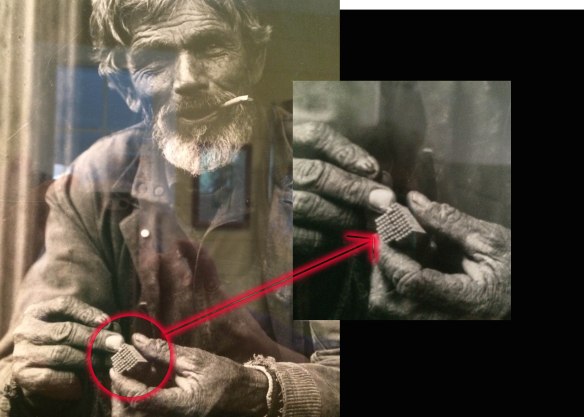
Clever, yes? Except that I possess a photograph taken sometime in the 1920’s by my great-uncle Lawrence Moore, of a ranch hand named Nacho at Muleshoe Ranch in Arizona, preparing to light his hand-rolled cigarette:

Nacho's matches.

Nacho’s matches.

Hmmm. Guess that hot new match design is…really old. Or–this could be PROOF of time travel!!!! Just like all those old photos of movie stars and war heroes using cell phones…except that Nacho’s matches happened to be real.

OK. Enough frivolity for today.

My Obamacare Horror Story

HiRes

We have met Obamacare, and I’m here to tell you about our ghastly experience.

When I was working full time for a large corporation, health insurance for my husband and me cost about $120 a month. The deductibles were low, and everything was covered, from dental to vision to psychiatric care.  Plus, the company had its own on-site clinic, which was cheaper and more convenient than going to a private clinic or physician.

When the firm ran into problems, I was offered early retirement. The early retirement program was generous, and included 18 months on COBRA at a cost of about $1200 a month. This was a 10X increase, but the coverage was still great.

Of course, 18 months passed like no time at all, and we were faced with the necessity of finding health insurance on our own. My husband and I were working out of our house as freelancers–he as a website developer, I as a writer. At the time we were both 62 years old, so Medicare wasn’t an option yet. I set about trying to find private health insurance. After reciting the brief list of medications we take, I was met with complete rejection and indifference on every side. (Pre-Obamacare, remember, insurance companies could turn down anyone they wanted on the basis of pre-existing conditions. So if you needed health insurance, obviously they would not want to cover you.)

Finally, I connected with a wonderful insurance broker who gave us several options for obtaining private insurance. The one that made the most sense was for us to start a business partnership. As a business, the insurance companies would not turn us down for pre-existing conditions.

So that is what we did. And we got insurance. For $1200 a month, our deductible was $4000 a year. Prescriptions were not covered. No dental or vision coverage. Given how infrequently we visit doctors, we never met the deductible, but at least we knew if something horrible happened, we had coverage. As for dental, it seemed cheaper to pay for bi-annual cleanings out of pocket than to spend the extra money it cost to get dental insurance at something like $120 a month in addition to the basic health coverage.

Then Obamacare struck. It appeared that under the new rules, husband-and-wife businesses were excluded, so again, I hit the insurance-buying trail. On the advice of the same amazing broker, I went to coveredcalifornia.com. I evaluated the plans, selected one that would cost about $600 a month, and filled out an application to see if we qualified for a subsidy.

I waited and waited. Then I went back to the site. I could find no way to track the progress of my application. I knew that Covered California had received it because I mailed it with return receipt requested. After cruising around the site fruitlessly for a while, it went down for maintenance. I called them. The woman who took my call said that yes, we did qualify for a subsidy. And as I couldn’t see all the options on the site because it was down, she mentioned a plan that would provide the basic coverage we were receiving, but with no deductibles and the addition of coverage for prescriptions. There were small co-pays for doctor’s visits and medication. There was no dental or vision care because these were not included under Obamacare. And I would not be able to keep my primary physician, who is a woman worth her weight in rubies and diamonds.

But our premium would be $4.00 per month. For covering both of us.

Yes, you read that right: four dollars a month to cover two adults. Suddenly, I was not at all concerned about losing my primary physician. I forgave coverdcalifornia.com for being hard to deal with. I was no longer irritated with Obamacare for excluding husband-and-wife businesses.

The one thing I did not forgive was the insurance companies for being such jerks in the first place.

Did I Find a Publisher? And More Dolphins.

Last week, I was reading “The Barsetshire Diaries,” a blog about retired life in an English village by Lord David Prosser. (Is he really a lord? I have no idea, but he is certainly a noble man!) Lord D. published an interview with Sorin Suciu, the author of a humorous fantasy novel called “The Scriptlings.” Sorin mentioned he was with a new publisher with “an author-oriented business model and a heart of gold,” AEC Stellar Publishing.

Humorous fantasy? I stopped reading and went to AEC Stellar’s website, where I queried “The Obsidian Mirror” online. “Obsidian” isn’t written as a humor piece, but it does have a lot of humor in the writing—my way of sweetening the underlying theme of ecological threat and conservation.

The next day, to my astonishment, I received a request for the first chapter.

The day after that, I received a request for the entire manuscript and an analysis of my writing. Though disappointed by my score in “Writing Craft” (80.9%), the verbiage did say, “You appear to have a good grasp of the craft of writing… Your style of writing is likely to be well received by readers.” My score in “Marketability” of 88.6% made up for it. (“We believe your book is likely to succeed in today’s marketplace.”)

So now I am waiting on pins, needles and tenterhooks to hear back. I was told it would be three or four weeks, which seems lightening fast, considering that my submission to Harper Voyager in October of 2012 only just came back with a rejection notice. Apparently, the rejection was conveyed on the back of an unusually pokey snail.

Please wish me well. And many thanks to the inimitable Lord David and Sorin Suciu.

* * *

On a completely new topic, my daughter, my husband and I took advantage of a rare afternoon when we were all free to go for a walk on our favorite beach. It’s October, and the midweek population of beach-goers was negligible, despite the golden, warm weather and sunny skies.

It was low tide, assuring a flat, firm walking surface by the water’s edge and lots of flotsam to peer at. The small crabs are all gone. I suppose they have their season, spawn, and die, for there are many tiny, empty carapaces scattered about on the sand.

Dolphins surfing. Photo by BabyNuke.

Dolphins surfing. Photo by BabyNuke.

 We walked for a mile and a half or so before turning back. Almost immediately, we began to see dolphins (or porpi) swimming just beyond the breakers. They rolled and splashed, and a baby broke joyously up from the waves, curved in a graceful arc and disappeared again.  We began to see dolphins surfing in the waves—something I had heard about but never seen for myself. As a wave rose up, the sun shone through, making it look like green glass. Inside the breaking wave, silhouetted against the light, we could see dolphins surfing along the curve and subsiding again as the wave foamed onto the shore. Then we began to see dolphins leaping out of the water, launching their entire bodies into the air, diving, then doing it again and again like enormous skipping stones.

Some days just make you glad to be alive.