Thanks for Voting Me One of the “50 Great Writers You Should Be Reading”

2014-winner300dpi

Well, the results are in, and I am officially a winner of the “50 Great Writers You Should Be Reading,” a contest sponsored by The Authors Show. The results are determined by public vote–and enough of you voted for me to get me into the winner’s circle! My sincere thanks for taking the trouble to vote for me; I am truly grateful.

Now–on to the next book!

Writing the Sequel: Embarking on a Spirit Journey

"Under the Cliffs of Molokai" by D. Howard Hitchcock

“Under the Cliffs of Molokai” by D. Howard Hitchcock

I deliberately spent the past six months promoting “The Obsidian Mirror.” I curtailed most of my other activities to give myself time to launch my first book properly. I did not start writing the sequel, though I have thought about it a great deal.

Well, “The Obsidian Mirror” is launched, and the time has come to start working on the next novel. During a vacation last year in Oahu I came up with some really fun things that could happen to my characters if they traveled to Hawai’i—although it won’t be as much fun for them as it will be for me. I knew I needed to ground the story in Hawai’ian mythology and tradition. I’ve been to several of the Hawai’ian islands and I have read a fair amount about the Hawai’ians’ ancient culture and mythology. But there is far more that I do not know, so I felt the need to do more research.

In my previous visits to the islands I have been a tourist. I was there for the snorkeling, the beautiful beaches, the fresh-from-the-ocean fish, and the relaxing natural beauty of Hawai’i. This time, it’s different; I want to know more about modern Hawai’ian culture—the culture of the people of Hawai’ian descent—but I also want to know how modern ethnic Hawai’ians relate to the culture and beliefs of their ancestors. To do this, I need to have some meaningful conversations with ethnic Hawai’ians. I am not going to learn this from a book.

I began by trying to track down my former chiropractor, an ethnic Hawai’ian and an excellent practitioner. Kalani has apparently vanished off the face of the earth. Short of hiring a private eye, I am not going to find him. I asked a friend of mine with connections in Hawai’i if she could introduce me to people there. She tried, but the person she introduced me to via email was always too busy to talk, and finally stopped responding altogether.

Then I asked a friend who lives in Hawaii for help. He is not ethnic Hawai’ian, but having lived on the Big Island for many years, he knows many. We actually have met in person only once. He was a technology journalist while I was working in high tech public relations. We’ve stayed in touch as he moved to Hawaii to grow coffee and eventually became an expert in sustainable agricultural practices. Despite the fact that he hasn’t seen me in person for probably 30 years (!!!) he agreed to introduce me to some of his friends and acquaintances on the Big Island. I am still amazed at his generosity and trust.

At the same time I was seeking personal contacts in the islands, I did what a good researcher does; I tried to get in touch with experts at The Bishop Museum, which is recognized as the world’s best museum of Polynesian culture. I never heard back from any of my attempts to communicate by email or phone.

But I did have a commitment from my Big Island friend, so it was starting to get real. I spent a weekend setting up a week on the Big Island, going from there to Oahu, where the Bishop Museum and the University of Hawaii reside. I set it all up—places to stay, rental cars, airplane flights. I arranged eight days in Oahu, reasoning that if worst came to worst, I could always just pay the entrance fee to the Bishop Museum and then find a docent of Hawai’ian descent who might be willing to help me.

Then I started reading a book called “The Sacred Power of Huna,” by Rima A. Morrell, Ph.D. I was actually looking for books on Hawai’ian mythology and folk tales, but I had never heard of Huna, so I bought it on a whim. According to Morrell, Huna is the original Hawai’ian spiritual practice, developed before the introduction of things like the kapu system and human sacrifice, which she says was imposed on the islands by Samoan invaders around the 14th century. Huna is deeply intertwined with hula and with the Hawai’ian language. Its purpose is to help individuals to increase the light in the world—literally and metaphysically. The author—who did her Ph.D. in Hawai’ian shamanism at University College London after getting her masters and undergraduate degrees from Cambridge—firmly states that magic is REAL, and gives several examples from her personal experience. She also states that Hawai’ians on other islands suspect that Molokai—the island of fewest tourists and greatest percentage of ethnic Hawai’ians other than Ni’ihau—is where magic is still being made. How could a fantasy writer resist?

I put the book down at this point. Molokai. Why had I not thought about Molokai? I have often wondered about it. It’s described as the “Aloha Island,” the friendliest. And it’s called the last remnant of Old Hawai’i, with no high-rise buildings and not a lot of tourists, despite having beautiful white sand beaches, forested uplands, and its own share of snorkeling spots and other tropical delights. I had a strong feeling I should go to Molokai, but thought, “I can’t, because I’ve already made arrangements for Oahu. It’ll cost too much money to change now.”

So I went about my business for a few days, but I couldn’t shake the feeling that I needed to go to Molokai. I don’t really know much about the island. I certainly don’t know anybody there. But it called to me. So I gritted my teeth and made all the changes and paid the extra money to Hawai’ian Airlines to change the reservations.

I have abandoned all my reasonable and rational plans to talk to experts at the museum or the university. I am embarking on what I see as a spirit journey. I don’t know what I will do when I get there. I don’t know what questions to ask. I don’t know what I will discover or whom I will meet. I don’t know how I am going to get what I need to write the next novel. I run the risk of not finding out anything at all. I am taking a leap of faith that my inner guide is taking me to the right place to do what I need to do and learn what I need to know.

At the very least, I will have spent two weeks in one of the most beautiful places on earth.

POSTSCRIPT

Immediately upon posting this piece–I mean, literally within a minute or two–I happened upon a FB page called “Huna Is Not Hawaiian.” Startled, I spent quite a while reading the page and following up on many of its links to longer pieces.

It appears that, indeed, Huna is NOT Hawai’ian, but a new-age overlay on Hawai’ian spirituality. The “Huna Is Not Hawaiian” page views it as a commercialized appropriation of Hawai’an culture.

I thought I should mention this, but it doesn’t impact what I am doing. My purpose in visiting Hawai’i and Molokai in particular is not to study Huna or become Hawai’ian by some strange magic. My purpose is to learn what there is for me to learn to write my next book.

Yes, I still view it as a spirit quest and have abandoned my usual rational methodology in favor of letting what happens happen. I have found in the past that letting things unfold naturally is sometimes a more effective way to reach a goal than systematically striving.

Did the book on Huna change what I planned to do? Absolutely. It reminded me that I had always wanted to visit Molokai, and that of all the islands, Molokai may be the one closest to Old Hawai’i. I still feel excited and confident that I made the right decision–for me. There is something for me there.

But I am under no illusion that a couple of weeks in Hawai’i will do more than enrich my store of experience and knowledge and, hopefully, stoke the joy and impetus of creating a new story. If I’m lucky, I won’t get sunburned.

Please Vote for Me for the “50 Great Writers You Should Be Reading”

Authors Show finalist

Thanks to David Prosser, a fellow writer/blogger who is as kind as a summer day is long, the link for final voting is http://questionpro.com/t/AJhWsZRq7r.

Again, “50 Great Writers You Should Be Reading” is a contest sponsored by The Authors Show. My sincerest gratitude to you for voting for me. As a new author, it’s an up-hill climb to get recognition, but this sort of thing really helps.

I’m a Finalist in “50 Great Writers You Should Be Reading”

Authors Show finalistI just found out that I’m a finalist in The Authors Show’s contest, “50 Great Writers You Should Be Reading.” Apparently, there is another round of voting, but The Authors Show kindly sent me a graphic to show that I am a finalist.

Humble thanks to all who voted for me–or rather, for “The Obsidian Mirror.” It’s the work that counts. And because I am pushy, would you please vote for me in the final round? I’ll let everyone in the world know as soon as they give me a link!

Thanks to all who have read “The Obsidian Mirror,” whether or not you voted or reviewed or whatever. A work of art only lives when it is experienced, whether read, viewed, or heard. I am grateful to all of you for granting my story its life in this world.

New Coverage of “The Obsidian Mirror” from Local Newspaper

Below is a clipping from my local paper, the Watsonville Register-Pajaronian from an interview with me about “The Obsidian Mirror.” In case you’re wondering after you read this if I really decided “at the age of eight” to pursue public relations as a career–I didn’t. I even know what public relations was at that point (and I’m sure I wouldn’t have chosen to pursue it then, although later it made some sort of weird sense).

Kathy Register Pajoroian2

Book Reviewer Blogger Liis Pallas Reviews “The Obsidian Mirror”

Liis Pallas reviews “The Obsidian mirror”–and I am thrilled!

Liis's avatarCover to Cover

Environmental issues, power-play, ancient Mayan gods, a Coyotl (yes, Coyotl) that turns into a drop-dead-gorgeous young man, a green being of mannegishi, vodun (no, not voodoo), and a bit of reality- admit it- it sparked some interest in you!

from Goodreads

A few days ago I published an interview K.D. was so very kind to tackle.

You know what? It feels strange how some times you read a book, or watch a film, on a serious issue (such as environmental problems, a nuclear power plant worry, fracking causing earthquakes, rubbish in the vast oceans, etc) and when we read about these issues in books, or see them in the movies, we tend to take them as someone’s brain-children, or brain-babies. But I really am humbled and in awe and in the process of having my faith restored because people notice! Authors notice the issues, the global issues that should…

View original post 195 more words

Time, Time, Time…Is Not on My Side

vetta

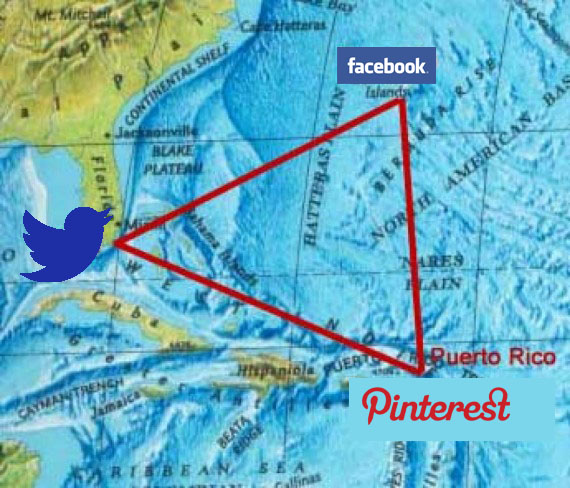
Time to write. That’s pretty much the only item on the writer’s eternal wish list. (Except for, “I want my book to be a best-seller,” of course.) There are various cartoons swimming around in the chaotic soup that is the Internet, like this one, that bemoan the writer never having enough time to write:

The Writer's Bermuda Triangle

The Writer’s Bermuda Triangle

So why do writers spend so much time on social media? Is there any indication that social media helps to draw in new readers or sell books? We all (publishers and writers alike) have this childlike faith that it does, but is there any proof?

Then there’s the question of: Does it matter if social media works or not? Because what else do we have? If you’re Neil Gaiman or Ken Follett or Dan Brown, your publisher is worshipfully setting up public appearances and paying for full-page ads in The New Yorker. If you’re like the rest of us, you are doing most—if not all—of your own marketing and publicity.

Then there’s the amount of time we spend just reading posts and following links and signing petitions.

Signing petitions. I suddenly realized that 75%+ of my email was from organizations whose aims I support, either asking me to sign petitions or asking for money, or both. I like signing petitions because it seems to me that they are a way for ordinary people to make their voices heard. It’s also a way to provide a voice to those who have none—endangered species, abused farm animals, and homeless people, for example.

I was delighted that several of the petitions I have signed were successful. A corporation changed its open-carry policy. A former K-9 Corps soldier was allowed to adopt his dog and take it home from Afghanistan (which otherwise would have been dumped in that country as a way of saying thanks for its service). A corporation raised its minimum wage. All of these things encouraged me to continue signing. I felt like I was doing something—a tiny something, but something—to support good causes and hopefully make the world a better place.

But the universe of good causes had discovered their ultimate sucker. I was getting messages from political candidates running in states in which I do not live, asking for my money. I got petitions from individuals asking for help for their relatives. I received just too many emails and petitions from too many organizations. It was taking half my limited time just to sort through them and sign the ones I was interested in supporting.

Add to this situation that our household recently expanded due to the addition of Jessamyn, now almost five months old. Jessamyn is a chubby pink charmer who graces all around her with wide, gummy smiles and delighted cooing. She adores my singing (I think she’s the only one). She is also demanding and needs a lot of attention, just like any other baby. Her mother went back to work outside the home, and a lot of baby and childcare devolved upon my husband and me.

So I had to choose between Jessamyn and the petitions. You may not be surprised to hear that Jessamyn won. I unsubscribed from every one of them. I mark them as “junk” when they enter my mailbox—even though I feel a twinge of guilt every time.

It still takes too long to get through my email. The email system still hasn’t really learned which things are junk. For some reason, the system leaves a lot of unwanted email in my “In” box, even though it carefully marks them with a yellow notice that says, “Postbox thinks this is junk mail.” Well, if you think it’s junk mail, what the hell is it doing in my inbox?

But it’s getting better. Getting though my email is gradually becoming a shorter process. I have a little more time each day to devote to book marketing and research on the sequel to “The Obsidian Mirror.” It’s not enough, but as the days grow shorter, my working day is a tiny bit longer.

But I still feel guilty about not signing all those petitions.

Interview with K.D. Keenan on (r)Evolution with HiC

K.D. Keenan, author of "The Obsidian Mirror"

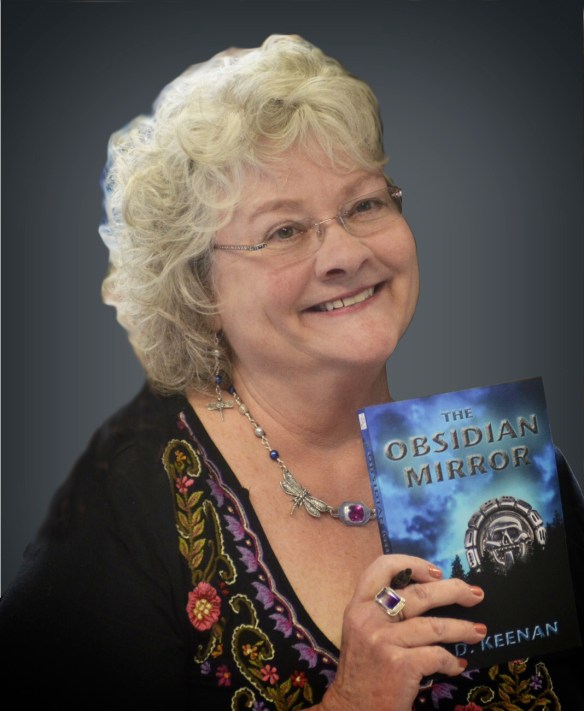
K.D. Keenan, author of “The Obsidian Mirror”

http://player.cinchcast.com/?platformId=1&assetType=single&assetId=5859167

Check Out Books Podcasts at Blog Talk Radio with Firefly Willows LIVE on BlogTalkRadio

Book Clubs Take Note: Discount Offer on “The Obsidian Mirror”

Chaco #1

Chaco #1

I am offering a special discount on “The Obsidian Mirror” to book clubs while supplies last. Book clubs get a 28% discount to $9.49 ($5 off retail!) plus shipping (retail price is $14.49).

The conditions:

  • Book clubs only;
  • Minimum order of five paperback copies;
  • All books shipped to a single address;
  • Single payment through PayPal for all books shipped to a given book club.

Here are some of the reviews so far:

“Native American mythology is often understated and you can never find enough of it in Fantasy Literature. But don’t worry, K.D. Keenan is here to fix that with The Obsidian Mirror.

What makes the author so special? Well, let’s just say that her best childhood friend was a Native American skull, which she received when she turned six. Show me a better qualification and I’ll eat it! And before you ask, yes, she did return the skull to its proper place when she got old enough to know better.

The story turned out so well and it is so rich in detail that one can almost suspect the author learned more than a few tales from said skull. Add a little bit of Voodoo to the mix and you are well on your way to an all-star American pantheon, echoing Neil Gaiman’s American Gods in a most interesting manner.

Oh, and for all that the author won’t admit it, The Obsidian Mirror has tons of humor. This is skillfully done, with the jokes lurking in the backdrop, tiptoeing behind the text and seldom breaking the surface of the mirror. More often than not you will recognise the joke the same way scientists recognise dark matter – by its effect on the surroundings rather than by its blatant presence.”—Sorin Sociu, author of “The Scriptlings”

“A riveting blend of ancient myth and modern intrigue. Supernatural thrills, corporate espionage and great characters make for a thrill-ride read!”—Gail Z. Martin, author of “Reign of Ash”

“Any fan of mythology and good old fantasy will greatly enjoy this novel. Keenan manages to hook the reader from page one, throwing in some unusual characters (and tropes), mixing it up with a villain that has a brand new bag of toys. I won’t spoil – but it is a new take on the whole good vs evil fight. I love the fact that Keenan picked Meso-American mythology – and rocked the world with it. She clearly knows her stuff and has the potential to take on seasoned authors with her mastery of language and modern twists on some of the most awesome fictional gods around. Looking forward to the sequel.”—Ryan Attard, author of “Firstborn”

“I really enjoyed this book! K. D. Keenan wrote fantasy and characters that were enjoyable! Fred, Chaco, Clancy, Kaylee, and Sierra were my favorites! It has humor, conspiracy, good and evil. K.D. Keenan has a vivid imagination with her characters all through the end. So descriptive in forming a man from a coyote! It’s a great story that kept me hanging on the edge to see who was going to be saved! Her writing has an easy flow, that made me go chapter to chapter! I look forward to her next book!”—Dora E. Gil

“What a wonderful book! I loved reading every minute of it and I am hoping that there will be a sequel soon. There was never a lull or moment’s boredom in the story. It was fascinating learning about the ancient American myths and folklore. The author did an excellent job blending the ancient folklore it into a plausible contemporary setting. The story was so well crafted and the characters albeit mythical came to life and they were so believable. A good read is so hard to find and I am thrilled when I find it.”—J.B. Dow

“’The Obsidian Mirror’ is an urban fantasy based on New World mythologies and legends. It’s an action-packed page-turner, but it doesn’t take itself too seriously. There are plenty of tense moments and some really evil bad guys, but it’s all enlivened by the author’s ability to weave humor throughout the drama.

I enjoyed the well-rounded characters—especially Fred, who’s a mannegishi (sort of a Native American leprechaun). Fred’s a greedy, irresponsible little thief, but you’ll wind up loving his brand of goofy innocence. Chaco, another supernatural character, is another of my favorites. Chaco is kind of a lech, but he’s so cheerful and good-natured that he never offends.
The action mostly takes place in modern-day Silicon Valley, and at the heart of the story is how an evil Aztec/Mayan god takes advantage of modern technology to execute his dark plans. For those familiar with Silicon Valley or Northern California, you will recognize the locale and the culture of the Valley. If you aren’t familiar with this area, take my word for it—the local color is dead-on accurate.

There’s a friendship that forms among three secondary female characters that I particularly enjoyed. None of the three are acquainted before the story begins, but as it unfolds, they form a sort of sisterhood that I found very appealing. I found myself believing in their role in the story and cheering them on.

I truly enjoyed reading this book. It has basically everything I love in a story: characters I care about, action, drama and humor, all tied up with creative storytelling that has enough unexpected twists and turns to keep me interested—and make me genuinely sorry when the story ends. I hope there’s a sequel.”—Linda M. Duyanovich

Interested? Contact me at kdkeenan@theobsidianmirror.net. You can read the first chapter here.


Looking Back: “A Canticle for Leibowitz”

A_Canticle_For_LebowitzI have decided to write a few book reviews from time to time. I don’t intend to turn this into a book review blog, but I’d like to be able to set down my musings on random books as the fancy strikes me.

I recently re-read (listened to an audiobook version of) “A Canticle for Leibowitz,” by Walter M. Miller. I read it as a teenager, but I’ve noticed I get a lot more out of everything I read now than I did when my system was awash with raging hormones. (For example, I discovered that Thomas Hardy, far from being an incredible drag, was a funny, vivid and poignant writer.)

“A Canticle for Leibowitz” has been called a classic of science fiction. It’s also a classic in post-apocalyptic fiction, equal to George Stewart’s “Earth Abides” (which has held up remarkably well), “The Death of Grass” by John Christopher or “Malevil” by French writer Robert Merle. It has all the elements I look for in a great read: well-delineated characters, drama, mystery, humor and sorrow.

“A Canticle for Leibowitz” was published in 1960, at the height of the terror of nuclear annihilation. I remember “duck and cover” quite well; while crouching under my desk in my middle-school classroom, I was fairly certain that a blackout curtain and a wooden desk were not going to preserve me from frying to a crisp if an atomic bomb landed on, say, Los Angeles. At the time, nuclear catastrophe was a chill breath on the back of everyone’s vulnerable neck.

Miller’s opus opens after a nuclear apocalypse has literally bombed all of mankind back to the Stone Age. There’s a backlash against science, knowledge, and everything associated with the catastrophe buy anti-intellectuals who proudly call themselves “Simpletons.” Those perceived as intellectuals or scientists are murdered. Books are burned. Mankind descends into another Dark Age. Mutated humans, called “Children of the Pope,” are more or less accepted, because there are so many of them.

But there is one beacon of intellectual light left in the world: the Catholic Church, which resumes its ancient tradition of preserving past knowledge. The story opens with Brother Francis, a young postulant in the Albertian Order of Leibowitz, somewhere in the Southwestern desert of the United States. Leibowitz was one of the scientists murdered by the Simpletons, and after his martyrdom, miracles are said to have happened under Leibowitz’s aegis. The monks of the monastery want to canonize Leibowitz as a saint, but there hasn’t been enough evidence of his sanctity to satisfy New Rome. Brother Francis stumbles upon a cache of ancient papers, some of which appear to be pre-apocalyptic shopping lists—but others are blueprints. It becomes obvious to the reader (but not to the monks) that Leibowitz was an engineer, a designer of electronic circuits.

Poor Brother Francis meets his end as the first section of the book closes, having delivered his copy of one of the blueprints (suitably adorned with fanciful illuminations) to the Pope in New Rome.

The second section of the book takes place a few centuries later. An esteemed scholar visits the abbey to study the Leibowitzian relics and is able to tease out some of the technology from the ancient manuscripts. Technology is clearly in a renaissance as one of the monks has succeeded in building a generator to power an arc light. The scholar departs to New Rome to share his new-found insights and to recommend the canonization of Leibowitz.

The third section takes us another six or seven centuries into the future. Technology—much of it based on the study of old documents like the Leibowitzian relics—has developed to the point where space flight is practical. But nuclear weapons have been reinvented, as well—in all likelihood directly due to the knowledge preserved by the Order of St. Leibowitz—and nuclear war is imminent. The last abbot of the order perishes after an atomic blast brings his church down in ruins as he tries to save the consecrated hosts. But a ship commissioned by the Order launches into space, looking for a new home for humanity.

Well, sure, we destroy ourselves all over again, but maybe that rocket ship full of devout Catholics will colonize a new world that will never see an atomic mushroom cloud. Yet the reader is left with the impression that the human race is ultimately doomed to repeat its worst mistakes.

Sadly, “A Canticle for Leibowitz” was the only novel published during Miller’s lifetime. His last work, a follow-up novel called “St. Leibowitz and the Wild Horse Woman,” was published after his suicide in 1996. He must have seen that his ability to continue was in doubt, because he asked author Terry Bisson to finish it for him if he were unable to do so. Bisson did finish the book after Miller’s suicide. It’s thought that Miller’s traumatic experiences in WWII—including the bombing of an ancient abbey at Monte Casino—contributed to his depression and eventual suicide. That may be the case, but it also contributed to the creation of a science fiction masterpiece. Some people write to exorcise their demons, but even St. Leibowitz couldn’t exorcise the dark demons of Walter M. Miller’s haunted spirit.