The Coyote Didn’t Cut It

Sometimes I have to shake myself to see if I am dreaming. I am fulfilling a lifelong ambition: writing and publishing a novel. It has been a daydream so long that I had given up on it—until I actually wrote a book.

But now, I am listed as an author on the publisher’s website. I am working on the graphics. I am working on the marketing. I should be working on final-editing the manuscript, but haven’t quite gotten there yet. (Tomorrow. I promise!) Sometimes I wonder if this is real, or just an extended daydream—but then my publisher asks me to do something else, and I’m sure these tasks were not part of my original roseate dream, so I am becoming more convinced that this will really happen.

And then I go back to being amazed.

Well, anyway, here’s a mockup of my latest cover design, front, back and spine. I haven’t gotten feedback from the publisher yet, but I kind of like it. But no man/coyote graphic. <Sniff><Sob> I am very attached to the shape-changing coyote, but he just isn’t working out too well as a cover. I am sure I’ll continue to use him, but perhaps not on the book cover. If you were kind enough to weigh in on the graphic, thanks. I agree with the majority that the original one is the best.

Cover Art 2a

How’s This Coyote? I’d Really Like Your Opinion.

Many of you were kind enough to comment on three different versions of Chaco: my supernatural character who can appear either as a ridiculously beautiful young man, or as a coyote. (But not just any coyote; he is Coyotl the Trickster).

My publisher had asked for a somewhat lighter feel to the image because the tone of the book overall is light. Chaco is (usually) a cheerful guy.

The vote was overwhelmingly in favor of my original, Chaco #1, with 10 votes, #2 got three votes, and #3 got two votes. I also favor the original.

However, my friend Erica Chase asked, “Is there a happier looking coyote?” I thought this was nothing short of brilliant (typical of Erica). So I went looking for a coyote whose expression was less threatening and more upbeat. And then tried to match the coyote with an image of a young man that more or less matched (or was at least complementary to) the coyote’s expression. The image below is the result, and if you would be so obliging, I’d like to know if you think this is an improvement. Or not. (To see the three images I posted for comment, please go to https://obsidianmirrorblog.wordpress.com/2013/12/13/vote-for-your-favorite-coyote/)

New Coyote/Chaco

New Coyote/Chaco

Vote for Your Favorite Coyote!

I sent last week’s cover art to my publisher. One of his comments was: “…the book itself also felt a bit more light hearted than the dark cover with the serious boy (who was definitely not so serious in my mind, as I read anyway).”

The man (Chaco) changing into a coyote is central to my story. Chaco is Coyotl, the trickster folk hero of many Native American cultures. He can shift back and forth at will, and this comes in handy several times during the story. So I’d really like to use the image of the shape-shifting man-coyote. But my publisher is right: the tone of the book is on the lighter side.

I picked out a few more handsome latino men from iStock.com, where there is a plethora of such men on sale for very little money, and created two alternatives to my original. I present them here for your deliberation: which is the best Chaco: #1, #2, or #3?

I eagerly await your judgement!

Chaco #1

Chaco #1

Chaco #2

Chaco #2

Chaco #3

Chaco #3

Did I Find a Publisher? And More Dolphins.

Last week, I was reading “The Barsetshire Diaries,” a blog about retired life in an English village by Lord David Prosser. (Is he really a lord? I have no idea, but he is certainly a noble man!) Lord D. published an interview with Sorin Suciu, the author of a humorous fantasy novel called “The Scriptlings.” Sorin mentioned he was with a new publisher with “an author-oriented business model and a heart of gold,” AEC Stellar Publishing.

Humorous fantasy? I stopped reading and went to AEC Stellar’s website, where I queried “The Obsidian Mirror” online. “Obsidian” isn’t written as a humor piece, but it does have a lot of humor in the writing—my way of sweetening the underlying theme of ecological threat and conservation.

The next day, to my astonishment, I received a request for the first chapter.

The day after that, I received a request for the entire manuscript and an analysis of my writing. Though disappointed by my score in “Writing Craft” (80.9%), the verbiage did say, “You appear to have a good grasp of the craft of writing… Your style of writing is likely to be well received by readers.” My score in “Marketability” of 88.6% made up for it. (“We believe your book is likely to succeed in today’s marketplace.”)

So now I am waiting on pins, needles and tenterhooks to hear back. I was told it would be three or four weeks, which seems lightening fast, considering that my submission to Harper Voyager in October of 2012 only just came back with a rejection notice. Apparently, the rejection was conveyed on the back of an unusually pokey snail.

Please wish me well. And many thanks to the inimitable Lord David and Sorin Suciu.

* * *

On a completely new topic, my daughter, my husband and I took advantage of a rare afternoon when we were all free to go for a walk on our favorite beach. It’s October, and the midweek population of beach-goers was negligible, despite the golden, warm weather and sunny skies.

It was low tide, assuring a flat, firm walking surface by the water’s edge and lots of flotsam to peer at. The small crabs are all gone. I suppose they have their season, spawn, and die, for there are many tiny, empty carapaces scattered about on the sand.

Dolphins surfing. Photo by BabyNuke.

Dolphins surfing. Photo by BabyNuke.

 We walked for a mile and a half or so before turning back. Almost immediately, we began to see dolphins (or porpi) swimming just beyond the breakers. They rolled and splashed, and a baby broke joyously up from the waves, curved in a graceful arc and disappeared again.  We began to see dolphins surfing in the waves—something I had heard about but never seen for myself. As a wave rose up, the sun shone through, making it look like green glass. Inside the breaking wave, silhouetted against the light, we could see dolphins surfing along the curve and subsiding again as the wave foamed onto the shore. Then we began to see dolphins leaping out of the water, launching their entire bodies into the air, diving, then doing it again and again like enormous skipping stones.

Some days just make you glad to be alive.

Die, Vampire, Die!

No VampiresFor the record, I’m still trying to get my novel, “The Obsidian Mirror,” published through conventional channels. Yes, I know all about how respectable self-publishing has become in the digital age. That’s my Plan B. But I would like to get it published conventionally if I can swing it.

So far, no joy. And I have a theory about why this is so. (Other than that my book is no good. I’ve read it and it’s great! No, seriously, it’s a fun, fast read, which is what I usually want from a book myself. And it’s well written, too, she noted modestly.)

So bear with me here for a moment while I tell you a story.

Long, long ago, when dinosaurs roamed the earth and poodles ran wild and free, I wrote a children’s novel called “The Singer and the Song.” It was about a city-dwelling girl who found she could pass from her world to another, magical world. As I recall, there was a talking cat involved. I wrote it for a graduate class in children’s literature in lieu of writing another essay on something like “Christian Influences in C.S. Lewis’ ‘The Chronicles of Narnia,’” or something else equally boring and trite. My professor loved it and so did my Mom. My mother had always supported my writing and she thought this one had a lot of potential, so she paid for me to take it to the William Morris Agency in New York City. William Morris charged $100 to review and evaluate the manuscript. (Mom and I didn’t know any better.)

I think I kept the letter from the agency, but I am between houses right now, and everything is in storage so I can’t give an exact quote. But the general gist of it was that children today (Remember the dinosaurs? That day.) aren’t interested in magic and talking animals. They want realistic, gritty urban tales that reflect their own lives.

So take that, J.K. Rowling! No one’s interested in your silly little stories about magic and talking animals, okay?

I may have been all of 21 years old, but even then I knew William Morris Agency was full of shit. The marketing fashion of the time happened to be gritty urban tales, but fashion and marketing have never influenced what children like to read about. Which in many, if not most cases, definitely includes magic—with talking animals if possible.

Nonetheless, I was embarking on a more or less adult life by that time, which meant earning a living, and I put my poor novel away. I thought I might read it to my kids some day, but I don’t believe I ever did.

Fast-forward to our dinosaur-free present. “The Obsidian Mirror” features magic and at least one talking animal, who isn’t really an animal, but an avatar of Coyotl, the Trickster of Native American legend. (My personal tastes have changed some, but not that much.) Various American myths, legends and traditions come into it in a manner that I haven’t seen elsewhere—which could be good or bad, depending on your personal viewpoint. Apparently, the editors and agents who have seen the synopsis so far aren’t intrigued.

Now for my theory. I think agents and publishers weren’t intrigued because what I wrote about isn’t currently fashionable in fantasy fiction. I don’t have to tell you what is currently fashionable, but I will anyway: vampires, zombies and werewolves.

I used to like a good vampire story as much as the next person. Bram Stoker: fabulous. Anne Rice: new twist on an old tale (at least at first). But then they came fast and furious: “Buffy,”  “Twilight,” the Sookie Stackhouse series, “Dark Vampire Knight” series, “The Vampire Coalition” series, and so on ad nauseum. I thought the genre had burned itself out (or been buried with a stake through its black heart) with the advent of “Abraham Lincoln: Vampire Hunter,” but no! Hollywood made a movie out of it.

I suppose I’m not making any friends with this, but c’mon, people. Aren’t you just the teensiest, tiniest bit bored with vampires yet?

But this isn’t sour grapes, honest. I’m just dealing with a marketing trend. All marketing trends die—at least, theoretically they do. Vampire stories, like their deathless subjects, show every sign of living forever, sucking the lifeblood out of other fantasy genres.

I’ll wait a bit longer, then it’s on to Plan B, I guess. Where’s the garlic?

An Unexpected Backlash: A Tolkien Commentary

This is a guest blog by Michelle Browne, author of “The Loved, the Lost, the Dreaming.” She is also the author of “SciFi Magpie,” where this blog post was originally published.

# # # #

So, by now, most of you have probably seen ‘The Hobbit’. I finally caught up to it in theatres just recently. I wanted to touch on the relevance of that, but I’m going to splice an analysis of Lord of the Rings in here too, and look at why the series has been so instrumental in creating the fantasy worlds of writers today. However, I also have a few choice remarks to make on culture and possibly colonialism, so don’t expect an entirely comfortable post. Get your sword, your bow, and your axe; this could get ugly.
For the sake of expediency, and because I don’t have time to reread the entire trilogy AND The Hobbit AND The Sillmarillion (blech!) before writing this review, there may be a few factual detail errors. However, given my ‘to be read’ shelves on GoodReads and Amazon, I figured it was best just to get on with it.

Photo belongs to the internets.
So, what makes the series so special? Let’s have a look at some common misconceptions and ideas while we’re trying to figure it out.

Lord of the Rings was the first book of its kind! Well…actually…

It’s more than just clever marketing, certainly. Although The Lord of the Rings series was written during WWII and published in three volumes between 1954-55, it wasn’t the first high fantasy work ever written. Before The Hobbit in 1937, Robert Howard’s Conan the Barbarian hit the shelves in 1932. Weird Tales, the magazine that started it all, had hit shelves back in 1923, bringing stories of horror, science fiction, and the fantastic to pulp readers everywhere. Reading these contemporary works definitely reveals some very common themes. If you’ve read H.P. Lovecraft’s work and a bit of Howard–which I have–you can see the overlap in the style of the antagonists, as well as in other elements. The spooky and mysterious forces even return in modern game narratives, such as DragonAge, The Elder Scrolls, and World of Warcraft. 

What LoTR did, though, was refine the style and give it a voice, a look, an emblematic work that encompassed new ground. Only children’s stories had been written about knights and beasts and dragons, and before that, the mythology of a people. Tolkein managed to combine children’s stories, folklore, and the organization of mythos into a single work. There’s no getting around it–the Middle Earth stories are the sort of creation myth territory that had previously belonged to whole cultures.

He single-handledly defined orcs (inventing those himself), dwarves, elves, and halfings/hobbits for generations of fantasy writers. He defined the period and setting (a sort of sparsely populated mediaeval Britain/Germany/France amalgam) for what high fantasy would become. He defined the idea of a big bad scary villain working through armies of henchmen. He codified the Merlin-like figure of a wise old wizard and crafted many tropes and archetypes that we still rely on. High fantasy, as it currently exists, just wouldn’t have come to be without Tolkein, or would have been markedly different.

Source. Some time, we’ll have a long talk about my mixed feelings about dragons, but this is a pretty epic picture.

So, what can you possibly say about LoTR’s impact that could be negative? He invented the genre, right?

LoTR begat many other authors’ works. Ursula Le Guin and her literary descendents have diverged a bit, but both Arthurian structure and LoTR dominate the flavour and types of worlds created by modern writers. Stories revolve around magic and whether it ought to be used (or not), kings and their courts, power struggles, fantasy racism and ancient grudges, looming evil forces or ideological conflicts, the role (or lack thereof) for women, and Epic Grand Battle Royales. Tamora Pierce, Terry Brooks, Robin Hobb, George R. R. Martin, and many other authors have all experimented with variations on this formula, with varying levels of success.

There is some really wonderful high fantasy out there, but as one reads the list, certain patterns emerge. Even from titles alone, a tendency towards the mediaeval is obvious. That’s all right on its own, surely, but a second glance reveals more. The vast majority, in fact, almost every single book, is set in some sort of British/Germanic/French/Nordic world. Mongolians, Chinese, Arabs, or Africans are the antagonist forces–sometimes cloaked in scales or green skin or in various deformities. While some books do deviate and head to a Middle-Eastern world–Tamora Pierce’s Circle, Guy Gavriel Kay’s canon, or G. R. R. Martin’s Fire and Ice quintet–most stay firmly in the classic mediaeval Europe zone.

Now, I am citing classics of the genre. I’m not all that keen on high fantasy, as stated in previous posts, but there are some books here that I truly love. Pullman, Zelazny, Martin, Bakker, Rowling, Pratchett, Nix, Gentle, Goodkind, and yes, Tolkein, are authors I’ve absolutely adored and who have influenced me. However, even these interesting and fairly diverse voices tend to gravitate to that European mediaeval standard I’ve mentioned. LGBTQ people are an endangered species, diversity is limited to a few strange folk and tokens, and everything is based on a muddy mix of the worst of 11th century daydreams.

So, why insist that I dislike the genre if I’ve read so much of it?

The problem is that reading one or two books in the genre, by and large, is like reading all of them. Sure, some of the authors have the excuse of time on their side, but new authors are still imitating their forebears with religious accuracy. Simply put, if you’re reading high fantasy these days, you can count on a lack of cultural diversity and different ideas, and there’s not much point in picking up a new book in the genre. I’m not saying the whole thing needs to be chucked out, or that these books are bad, per se, but I do think there’s a danger of intellectual bankruptcy and negatively influencing younger, newer authors.

Source.  This is basically how I feel when I pick up a book and find out that it’s exactly the same as a classic fantasy work. This has happened recently. Multiple times.

So, why has Lord of The Rings continued to keep such a hold on the public imagination?

I think some of it has to do with not only the greatness of the work and the shocking faithfulness of its adherence in works that followed, but also with comfort zones. I’m not going to rant about American/Eurocentric media right now, but I will say that it’s simply what we’re used to–Britain and Germany as cultural centres, with blurred understanding of how much even these two nations have changed in modern times. We know Tolkien and we know the works of authors inspired by him, and their sameness and familiarity may actually be a selling point. When people like something, they want more of it. That isn’t necessarily a bad thing, but when even smaller-name, newer authors feel compelled to repeat the same formulas–and the formulas come from only one or two sources–you’re bound to encounter a lot of repetition. It’s a standard epic escape route.

Going back to an earlier point, not all the writings were intended to be this homogeneous. Arguably, a lot of these works cross into the real world, and when urban fantasy is lumped into High Fantasy (which it is on the Wikipedia page), you see a bit more wriggle-room and creativity. However, the idea of pushing boundaries isn’t a welcome one in fantasy circles. Consider how many of the greats–even those writing in the present–have prominent gay or lesbian characters who are open about their sexuality. Answer: Very few. Even G. R. R. Martin’s fiction, which does move away from the Euro-zone a bit, maintains misogyny (though it’s explored) and ‘European’ main characters for all the named, prominent protagonists.

It’s also given people the wrong idea about the actual mediaeval era, which–according to scholarly research I’ve done–is essentially nothing like the books supposedly written to imitate it. Even without the more exotic and non-realistic aspects, the time between the fall of Rome and the rise of the Medicis in the Renaissance was a very busy period for human history, not just a wasteland of political struggle and plague. The myth has faded into legend, and some things that should not have been forgotten–such as the surprising diversity of mediaeval science and some tolerant attitudes towards gay people–were. However, it doesn’t mean that it’s the end of the world, or that the genre is doomed to continue cannibalizing itself and Tolkein.

Okay, smartypants, how do we fix it?

I’ve been leading up to this, but the answer isn’t really that difficult: we need to diversify. I would read the living crap out of a book set in ancient China or Africa. Mediaeval setting and all. Most authors are Europeans or Americans (yours truly included, though I’m Canadian) and there are certain knowledge limits imposed by that. That said, we’re running out of options; ideas are basically tapped dry, and being recycled at this point. Stretching beyond the classics and taking inspiration from other cultures–respectfully–could do a world of good. As well, adding new elements to the classic books, such as clashes over technology, LGBTQ and non-traditional marital structures, and different ideologies, would also change up the formula.  Some issues might arise from incompetent treatment of other cultures and LGBTQ people. That’s going to be a problem as people expand their reach and subject matter, without question, and you can bet I’ll have more to say about cultural appropriation in future.
On the other hand, nobody really likes change as a process. It’s uncomfortable. I can also anticipate a lot of screaming over destruction of the genre and that sort of thing. Given how well classic high fantasy has survived so far, I wouldn’t describe that as a real problem. In fact, some authors have already started to mess heavily with the formulas, and to excellent effect. Bakker, one of the authors mentioned, does a pretty good job of changing around traditional elements in his Prince of Nothing series, in my opinion. Eve Forward’s The Animist is another example of a book that bent a few rules by varying the races and species used.
While there’s a good discussion to be had about the realistic value about fantasy (and sci fi) stories for the real world, there’s also a need for even the most fantastical works to relate to contemporary circumstances. Our circumstances are just so different from fifty or sixty years ago that travelling back to the make-believe mediaeval Disneyland setting designed in that era is no longer realistic. Real Britain has a very diverse population, women comfortably work in many different industries (and men demonstrate far more than mere combat skills, proving to be excellent solo parents), and equal marriage is becoming a very important issue worldwide. Fantasy just doesn’t represent this very well, and a few updates will help the genre stay relevant and interesting for our children and children’s children. And that’s why we need to dethrone Tolkien as the one and only golden standard of fantasy, especially for new authors: if things stay the way they are, fantasy will fail to move forward. We’ll have the classics, sure, but those little pockets of racism and sexism will remain, and no culture needs that.
So, in conclusion: I actually like a fair bit of high fantasy, and have respect for many authors in the genre, but it’s already suffering from some serious inbreeding. I haven’t touched on the issues in science fiction, and I will get to that eventually. For now, it’s time for you guys to tell me your thoughts: is fantasy oversaturated with a certain setting style? Is it just the traits of the genre? Or do we need to change things? Any recommendations of new and unique fantasy series are also very welcome. I want to hear your thoughts in the comments!

Whack Me Twice and I’ll Listen

Smack Me

Despite my conviction that I had finished rewriting my novel, “The Obsidian Mirror,” I once again found myself in the throes of a rewrite.

Rewriting sucks. You know that if you’re a writer. It’s like taking apart a complex piece of machinery and putting it all back together so that it works better than it did before. You don’t want to go through all that labor, sigh happily at your achievement—then spy a couple of leftover parts on the floor that are absolutely required for the thing to operate.

But I suddenly became convinced that yes, indeed, I needed to revise the prologue and first two chapters. It came about because of a comment I received from a publisher. He said that the first chapter was full of a lot of unimportant stuff that didn’t push the plot forward, and it took too long to get to the intriguing fantasy elements.

To be honest, I had heard this before. An agent said the first chapter was “boring, boring, boring.” With a crit like that, you’d have thought I’d have jumped on it. However, the agent in question turned out not to be interested in fantasy. I questioned the judgment of someone who didn’t even care about my genre. Also, the manuscript had been read carefully by a published fantasy writer who did a fantastic job of reviewing the book and giving me feedback—and she was cool with the first chapter, so I figured what does the non-fantasy-reading agent know? I was wary of succumbing to self-doubt as well, because self-doubt will suck all the vitality out of your writing if you let it.

But a second critique that basically said the same thing convinced me that self-doubt was very far from being the issue here. A rereading of the prologue and first two chapters confirmed it.

There was nothing wrong with the prologue; it just needed to be tucked into the first chapter in a logical way. But the first chapter—oh, dear. It was all about how my heroine, Sierra, got fired. It contained a lot of backstory, which would be needed at some point, but I focused on her firing, talking about it to her friend Kaylee, going home, feeling bad, etc. In my naiveté, I thought this would introduce conflict and engage the reader. But I guess getting fired isn’t as interesting as I had assumed. In fact, I was personally bored with the whole thing.

So I condensed the prologue and chapters one and two into a single chapter. It’s a long one—about 4,000 words. I slashed about 3,000 words from the overall length of the novel, bringing it to nearly 100,000. I was worried about losing critical backstory, but I found various places in the early chapters to slip it all in. (Fingers crossed. Knock on wood and all that.)

I’m very happy with the result. It pulls the reader in quickly, keeps the action moving, introduces the fantasy elements immediately, and (I hope) piques the reader’s curiosity from the start.

I’d be humbly delighted if you would take a little time to read the new chapter one of my novel. If you agree with me that it works well, would you be kind enough to leave a comment? And if you don’t agree with me, I’d like to hear that, too.

I do listen. Most of the time. Really.

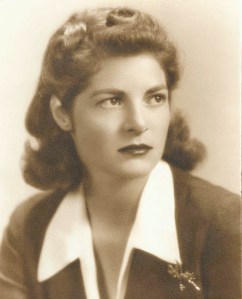
My Mom: the Female Indiana Jones

Barbara IndianaAs I have mentioned a few times in this blog, I wrote “The Obsidian Mirror” based on American archetypes. I am no expert on Native American folklore, but perhaps I know a little bit more than the average person because my mother was an archeologist specializing in southwestern Native American cultures. She also excavated in Yucatan and Guatamala, helping to uncover Mayan pyramids and temples that had been lost to the jungle hundreds of years ago.

In fact, my mom, Barbara Moore Doyle, was sort of a young, female Indiana Jones. She was excavating at about the same time—the late 1930’s. In the service of archeology, she wielded a machete, slashing through the Central American jungles. At a dig somewhere in the wilds of Arizona she got blood poisoning after falling off the buckboard of a roadster and scraping up her legs. They were excavating far from any hospital—in fact they were far from any roads at the time. A young Apache medical student named Tom White Cloud (what a romantic name!) fixed up a drip of some sort and saved her life.

My mother-to-be climbed up the side of a pyramid in Guatamala and came face-to-face with a fer-de-lance, one of the most poisonous and aggressive snakes in the world.

“What did you do?” I asked breathlessly when she told me this story.

“I made a split-second decision between snakebite in the middle of the jungle where there were no hospitals or anti-venom—or falling. I decided to fall, and…just let go.”

“What did the snake do?”

“I don’t know, but I think he was just as surprised as I was.”

Fortunately, she rolled to the bottom of the pyramid with nothing worse than a bruise or two.

She witnessed strange rituals during the night of Dia de las Muertes in Tegucigalpa, and was perhaps the first and only woman, white or Indian, who was invited into a working Hopi Kiva.

Most of the time, of course, she spent crouched in ditches with a pick and camelhair brush, painstakingly removing dirt and rocks to discover whatever was there to be found. She taught me to walk in the desert with the “archeologist’s stoop,” scanning the ground for potsherds or worked flints. (Also rattlesnakes.) It was like a treasure hunt, and I still have the bits of ancient painted pottery and arrowheads gleaned from these expeditions.

My young mother even ran afoul of the Nazis. During a sojourn in Mexico City, she dated a man named Oswald (last name forgotten by me) who was the brother of the head of the Nazi Party in Mexico. He would take her to the Nazi Officer’s Club, where there was a huge portrait of Adolf Hitler hanging in the dining room. I was scandalized that she would date a Nazi, but she said that Oswald himself was not a Nazi and said that he quietly scoffed at the self-important posturing of the party members.

My mother’s archeology career came to an end with the entrance of the United States into WWII. She returned home to California and got a job as a riveter at Lockheed-Martin. Being bright, she worked her way up and obtained Top Secret clearance as an aircraft inspector. Inspecting aircraft equipped with radar required Top Secret clearance, as it was still highly classified technology. One day, she came home after work to find two FBI men waiting in her parents’ living room. They had intercepted a letter to her from her friend Oswald. Oswald had crossed the Mexican border into Arizona, possibly to avoid being drafted into the German army. He was promptly picked up and placed in an internment camp for suspect nationals. Oswald, with touching sentimentality, wrote to my mother asking her to marry him so that he could get out of the camp. As all the mail from camp inmates was intercepted and read, the FBI decided his plea was actually code—and addressed to a woman with Top Secret clearance, it set off alarm bells.

My mother explained the situation. Wonder of wonders, they believed her, and she served out the war at Lockheed-Martin, inspecting airplanes. She never went back to archeology. She had met my father when he was stationed at the University of Redlands with a VF12 unit of Marines. They fell in love, and were married toward the end of the war. My father had distinctly Victorian ideas, and disapproved of working women, so that was that.

As a child, I was fascinated by my mother’s early adventures, and asked to hear her stories over and over. I also asked her to tell me Native American folktales, and explain the different cultures and religions to me. As an adult, I asked Mom to write down her adventures for me, because I was afraid I would forget the details. She promised to do so, but was always too busy. By the time I thought to record them on tape, it was too late. My funny, bright, kindhearted, brave mother had descended into dementia, never to recover.

But I had grown up in a house decorated with Navajo rugs, Hopi kachinas, and many ancient pots, arrowheads, fired clay sculptures from Mayan ruins, spearheads, spindles, and other archeological bricabrac she had squirreled away for herself. (These days, it would be considered criminal to take such things from their sites, but back in the day, if the young archeologists took a few souvenirs, nobody cared.) I had the best show-and-tell possession ever: a human skull. (My grandfather had found it on an unpopulated island in 1917 and gave it to me for my sixth birthday—much to my mother’s disgust. She had wanted that skull herself, and it was one of the reasons she had become interested in archeology.) So it was no surprise that these influences came through when I finally decided to write a novel.

When (I won’t say if) my novel is published, I will dedicate it to my mother. She not only gave me a love of Native American traditions, she also believed in me as a writer. My only regret is that she didn’t live to read “The Obsidian Mirror,” because she would have loved it.

The Coyote Who Taught Me How To Live

Okay, instead of writing this blog post, I’m actually supposed to be finishing up a white paper on implementation of the new ICD-10 codes in the healthcare industry. Hard to believe I could tear myself away from that kind of topic to write about coyotes—but that’s what I’m doing.

One of the main characters in “The Obsidian Mirror” is Coyotl, the Trickster. Like Anansi, the trickster spider in African folktales, Coyotl or Coyote is the loveable but sneaky culture hero who tries to put things over on others and sometimes ends up tricking himself. He often attempts to be helpful, as in the tale where he brings fire to the people from the gods. In that story, coyote winds up burning his tail, which is why the coyote’s tail tip is always black. There are many ribald stories about Coyote and various beautiful maidens, including the time that Coyote lost his penis…ahem. Getting off track here…

Coyotl is described as an Avatar in “The Obsidian Mirror” because I wanted to stay away from defining the immortal characters too closely. I also wanted to stay away from religion as much as possible. Religion today is a touchy subject, and I just didn’t want to go there.

In “The Obsidian Mirror,” Coyotl can take the form of a beautiful, sexy young man named Chaco. I originally named the character “Chuy,” (pronounced “Chewy”) which is the Mexican nickname for people named “Jésus.”  There were two problems with this. Unless you speak Spanish, you wouldn’t know how to pronounce his name. And those who do know that people nicknamed Chuy are really named Jésus might think I was trying to create a Christ figure—which I was, most emphatically, not trying to do. I wanted the character to be uninhibitedly sexy and approachable, with a hint of rascal. “Chaco” sounds good, and it is also the name of a marvelous archeological site in New Mexico, Chaco Canyon. As the novel uses American myths and legends, many of which are Native American, it just felt right. (I kind of missed Chuy, though. I named the character after my hairdresser.)

I had a transformative adventure with a coyote once. I was young, and I had a broken heart. I called my cousin Esther, who was about my mother’s age, to ask if I could stay with her for a few days. Esther lived (still does, at the age of 100) on a ranch near the coast of California, one of the happiest places I have ever known, and very beautiful. Esther and her family had always been kind to me, and the ranch was my emotional refuge. So, packing my aching heart and some jeans, I got on a Greyhound bus to visit.

Esther welcomed me and gave me ample space to reflect on where I was and how I had come to be there. I was at a true turning point in my life, hurt, confused, and wondering what on earth I was going to do. My self-confidence was at an all-time low, and at that age, self-confidence wasn’t something I possessed in huge measure.

I developed a daily routine. I would get up, have breakfast with Esther, and then take my little knapsack out for a lengthy walk around the ranch. The knapsack had a notebook for writing and a sketchbook and watercolors for painting. Accompanied by the ranch dogs, Doña and Jack, I would wander all over the ranch, stopping to do nude sunbathing now and again. I wrote and wrote and wrote in my journal, pouring out my misery, uncertainty and pain on paper.

The ranch was about 2,000 acres of rolling hills covered with golden grass and dark-green California liveoak trees. There was no one around except for the cattle and the dogs. It was quiet except for the wind whistling through the grass, making it toss like waves on the ocean. It smelled wonderful—sagebrush, wildflowers and a soupçon of cattle flop. It was the perfect place to be introspective and miserable.

One day, probably four or five days into my visit, I was walking on the ranch road with Doña and Jack. Suddenly, the dogs took off like a shot, something they had never done before. Then I saw they were chasing a coyote through the brush. I eventually wrote a poem about the experience that followed, as it had a huge impact on me that has reverberated ever since:

Coyote

I took the ranch road in the morning

hefting a backpack and an aching heart

the dogs went with me

ranging front and back

I sent my feet ahead, forcing one step and then another

the point is to keep going, don’t you see

the dogs launched into the brush

white dust sparkling above the road

they ran like greyhounds

though both were furry and fat

squinting into the sun I saw him

a lean gray shape loping easily

soaring over fragrant sagebrush

dogs crashing in his wake

coyote

trickster

survivor

little wolf

god’s dog

dogs and coyote

all vanished into the spiced gold of the hillside

the dogs came back

tongues flopping loose

dripping foam

ribs heaving

paws caked with dust

their faces said don’t ask

we sat in the cool of a gray-green liveoak

there he was again

the dogs could not resist

coyote’s gray brush held high

he paused to look over his shoulder

not once but many times

were they following?

could they keep up?

he grinned all the same

I heard him laugh

I know I heard him laugh

the dogs came back quickly

collapsing to either side of me

fat sides

shuddering like overheated engines

hairy faces downcast and pained

I sat in the shade and waited

he sauntered into our clearing

the Fred Astaire of small wolves

the dogs gave not one sign

of his presence but panted on

coyote cocked his head, curious

barked once or twice

the dogs now deaf and blind

turned their pleading eyes to me

he sat on his haunches and studied us

a sorry lot, I guess

he tipped his pointed snout to heaven

and howled

howled like all the mad things of earth

howled like a girl with a broken heart

the sulking dogs were still

but I howled back

he stopped to listen

he answered me

howl for howl we made the dry hills ring

I howled for the pain of losing

for the pain of past loss

for the pain to come

and ended laughing

coyote picked up his paws and yapped three times

once more stung to action

the dogs crashed after him

in hot-breathed pursuit

the last I saw of coyote

was his gray tail sailing over the thistles

coyote

trickster

survivor

little wolf

god’s dog

I’m still laughing

During our mutual hootenanny, the coyote was sitting about 15 feet away from me. I was frightened at first; he wasn’t acting like a normal coyote, so I wondered whether he had rabies. He approached a human and two dogs with no fear at all. But it became quickly clear to me that he wasn’t sick. He was having a lot of very obvious fun. He thought I was pretty amusing, but he loved it when he could persuade the dogs to run after him. He was jaunty and quite sure of himself.

Coyotes are consummate survivors. Their numbers and their range have increased dramatically since the 1800’s because they deal quite well with the presence of humans (and the presence of human garbage and pets). They are omnivores who both hunt and scavenge, living off just about anything, from salmonberries to the occasional shi’tsu.

After meeting that coyote, I decided to be a survivor myself. I decided that I was strong, and that no one would ever make me feel small and weak again. I decided to fight for what I wanted, and refuse to allow anyone else to determine the course of my life.

I returned from my visit with Esther to a fresh round of heartbreak. But this time, I fought back. I didn’t let it overwhelm me. I endured a steep depression that I thought would never end. I made some terrible mistakes, but in the end, I learned to love myself and discovered how to be happy most of the time.

I owe much of that to a lesson from a mischievous little wolf who spent a few minutes singing to me. In a way, “The Obsidian Mirror” is my love song back to him.

My Adventures with Voodoo

Most of my urban fantasy novel “The Obsidian Mirror” is loosely rooted in the traditions of North American and meso-American cultures. But I didn’t want to leave out all the other rich traditions of the Americas, and the one I know the most about happens to be Vodún—more commonly called Voodoo (which is a Hollywood invention).

You might ask, why is a nice middle-class white woman who has never lived in the Caribbean interested in Vodún? Excellent question! The answer is: I don’t know. I was just interested. I started reading about Vodún sometime in my early twenties. I can’t remember the names of most of the books I consumed, but the best by far was Wade Davis’ “The Serpent and the Rainbow”—which was not much like the later movie of the same name.

Davis was a Harvard botanist who was encouraged by an older professor to go to Haiti to collect plants that might have psychopharmacological value. Haiti offers a wealth of plants known to have potent effects, mostly toxic, that had never been scientifically analyzed. Haitian mambos and houngans (Vodún priestesses and priests) reportedly used things known as “zombie cucumber” and “zombie powder” to create zombies by raising the dead. Davis was supposed to go and see if these things actually existed outside the realm of the movie theater.

They did, and Davis found them. He also demonstrated that zombies were quite real. Ill-intentioned houngans used a blend of various poisons to put victims into a deathlike sleep, where heartbeat and respiration were slowed to imperceptibility. Bodies in rural Haiti are not embalmed, but buried as quickly as possible to avoid the inevitable rapid decay in a hot, wet climate. The houngan and his helpers would disinter the “corpse” the night of the burial, then allow the victim to partially recuperate. The victim was kept in a state of drugged compliance with the use of poisonous fruit—the “zombie cucumber.”—and used as the houngan’s slave labor.

However, what I principally learned about Vodún is that it is a perfectly legitimate religion—as legitimate as any other. The evil houngans and mambos were a tiny minority of Vodún practitioners. Most were in the business of healing and spiritual comfort, as is any pastor or rabbi. Vodún is a pantheistic religion, with many spirits, or loas, personifying various characteristics. There is an all-powerful single god, Bondye, but he does not interfere in human affairs, so followers of Vodún apeal to the loa, who are much more down-to-earth. Dumballah-Wedo is the father god, personified by the serpent, which is wise and all-knowing. Madame Ezilée represents sexuality and feminine beauty. Baron Samedi­—beloved of Hollywood for his gruesome skull-face and black top hat—is the spirit of sex and resurrection, an interesting combination. He is also a Trickster, like Coyote in the American Southwest or Anansi in Africa, but he is not the gruesome horror that the movies make him out to be. And so on—there’s a quite a lot of loa.

Vodún is a charismatic religion. Worshippers become ecstatic, offering themselves as “horses” for the loa to ride. Observers say it is easy to tell which loa rides each individual by their characteristic behavior. Madame Ezilée is all sensuality and seductiveness. Baron Samedi is a wencher and enjoys smoking and drinking. Afterwards, celebrants are usually exhausted and may not remember what they have been doing while possessed. Ceremonies are usually for benign purposes such as healing, celebrating an occasion–or entertaining tourists.

Well, it gets more complicated, and there are various forms of Vodún, just as there are different flavors of almost any religion. Various traditions came from different African tribes. And of course, it got mixed up with the Catholicism of the French colonizers of Haiti. But it is well established, and practiced more widely than you might think.

How do I know this? Many years ago, I visited New Orleans to attend the annual convention of the American Association of Advertising Agencies. ) I was a public relations executive, but my agency sent me to represent them anyway. I did not decline.) The meeting was held in a hotel right smack dab in middle of the French Quarter. I had never been to the city before, and was determined to see as much as I could during the time I was not attending meetings on “Maximize Your Agency Billings” or “Integrated Communications: Agency of the Future?”

I picked up a little street map of the Quarter to assist me in my ramblings. I quickly noticed the Voodoo Museum and made my way to the spot indicated on the map. There was nothing there but the usual French colonial house fronts turned into shops full of rag dolls, gold-embellished shell jewelry and “Cajun Chewing Gum.” I asked a few people about the museum over the next day or two, and finally someone knew; the museum had moved its location. I went to see it the next day.

It was a gray day, spitting down rain, simultaneously chilly and steamy. I arrived dripping wet in the marble-tiled lobby. The museum was located on the ground floor of an old New Orleans house, built around an open atrium with a garden. The lobby had been the original entry hall of the house. To my left was a reception desk, behind which sat an enormous black man knitting a bright orange and green sweater the size of a circus tent. He was chatting with a tall young white man with long blond hair. They both stopped talking as I approached and the knitting man took my fifty cents admission. In exchange, I got a little map of the museum.

I took the map and stood by the open doors into the atrium. There were exhibits in the garden, but the rain was sheeting down in buckets, so I decided to stay indoors. The young blond man walked over and stood beside me. He didn’t say or do anything, but he made me uncomfortable, and I decided to move into a small room marked “Marie Laveau Room.” It turned out to be a very small room indeed when the man walked in after me. I peered into antiquated and dusty museum cases at the unlit exhibits, usually labeled on yellowing paper in faded typewriter ink, and tried to ignore him. He showed no signs of going away, so I walked out again. He walked out after me.

Feeling quite nervous by this time, I hesitated in the lobby.  Finally the young man spoke.

“Would you like a tour of the museum?” he inquired. He had a slight accent of some sort that I couldn’t place, but he wasn’t from New Orleans.

“Do you work here?” I asked, still suspicious. He nodded. “How much?”

“No charge,” he responded.

“What do you do here?”

He nodded toward a nearby sign that read, “Psychic Readings.” “I do the readings.”

“Are you a practitioner of Voodoo?” I asked, wondering if the young man could tell me more about the exhibits than did the faded labels.

“Vodún,” he corrected me gently. The correct way to say it is ‘Vodún.’ Voodoo is only in the movies. My name is Roland, by the way.” He held out a long-fingered, slender hand. I introduced myself and shook it, still a bit reluctantly.

“Vodún is a world religion, like Christianity, Judaism or Islam,” he went on. “It’s practiced everywhere.”

“Really? I thought it was just in Haiti and New Orleans?”

“No, you can find it anywhere. Even in Israel, where I come from.” Curioser and curioser. We had a good 15-minute discussion about world religions and Vodún, and I decided he was the real goods. He knew a great deal about many different religions, and was not just jiving me. I followed him through the museum, and I had a fantastic time asking questions and learning about Vodún. Occasionally, I would express revulsion at some particularly gruesome exhibit, and Roland would shake his long elf-locks at me.

“That was then,” he said several times. “It’s not like that now.” I could only hope he was right.

At the end of the tour, my confidence in Roland’s essentially benevolent intentions had grown, and I asked him for a reading. He took me to a sheet-draped back room. A small marble-topped table with elaborate wrought-iron legs stood to one side, the kind of table you might see in an old-fashioned ice cream parlor. Its small surface was crowded with greasy Burger King wrappers and a plaster skull with a candle stuck to its dome. Roland clucked and swept the mess off the table, muttering excuses. He left for a few minutes and returned with—to my surprise—a pack of Tarot cards. I didn’t know what to expect, but I hadn’t expected Tarot, which I didn’t associate with Voodoo—excuse me— Vodún. I had never had a Tarot card reading either, and settled down with anticipation.

I don’t remember all the details of what Roland told me, or which cards he turned up, beyond The Empress, which he said was my card. Oddly, it usually turns up in my readings, so I guess he was right. (Not that I have Tarot readings frequently, but I do have an extraordinarily gifted friend who does them for me from time to time.) What I do remember is that he told me I would suffer the normal hurts and losses of life, but I would never undergo tragedy, such as the death of a child. And he also said that I should never, EVER! become involved with the occult. It would be too dangerous for me.

That struck me as odd then, and it still does. I was being warned away from the occult by the practitioner of an occult religion who was telling my fortune through occult divination. In a museum dedicated to the occult.

As I left, Roland gave me a card, where he could be reached at any time. The simple black-and white card had his name and address—which was the Divine Light Christian Mission. And I guess that was the cherry on the top of this particular experience.

I never became involved in the occult, beyond a continuing fascination in learning about it. And I have not—yet—experienced major tragedy, though I have come too close for comfort. But I had to find a way to use Vodún in my novel, and invented a mambo named Mama Labadie who plays a fairly important role in the plot. In the midst of meso-American gods and characters from Native American folktales, Mama Labadie stands out rather conspicuously. But Vodún is as much a part of the Americas as any aboriginal tradition, and if I get the chance to write another book, she may pop up again.