The Sublime and Then There’s Peeing in the Parking Lot

This is the first long-haul trip I’ve been on in a long time that I didn’t just about die from jet lag. Tom and I landed in Madrid in the morning and napped for a few hours in the hotel before heading out for what passes for an early dinner in Spain at 9:00pm. (Tom is in heaven. Nine o’clock dinners and lunch at 4 pm.) We went to bed at about 11 and woke at 6 am. I felt wonderful, and we were now attuned to the Spanish timetable. Absolute magic, especially since the trip lasted approximately 20+ hours in all, and I was awake for the entire time. plus travel to and from airports, because I don’t sleep on airplanes. Please don’t send me your sleep remedy–I’ve tried them all. This time I drank three glasses of wine and took two Xanax and DID NOT GO TO SLEEP. (Also please do not send me warnings about mixing pills and alcohol. I normally would not, but I was desperate–and yet I still didn’t conk out.) It’s been this way since I started flying at the age of two. I am not anxious about flying or tense during a flight. I just Do. Not. Sleep. It’s a major frustration, and sometimes leads to up to three vacation days just recovering from jet lag.

But this morning I was bright eyed and bushy tailed. We rented a car and Tom headed to Granada with no maps or GPs and got us there without any problem. Andalucia reminds me a lot of California, except instead of miles and miles of grape vines, there are kilometers and kilometers of olive trees.

We are staying at the Parador de Granada, which is actually inside the Alhambra Palace complex. We had a bit of trouble figuring out where to go and how to get there without buying a ticket to the palace (we are getting these through the parador). So we parked in one of the paid lots, which is a long way from the parador. As we were walking, we saw a woman sitting sideways in the open driver’s seat of her car with her legs spread wide, peeing on the asphalt. Well, they say travel broadens the mind, and that certainly was a completely new sight in my experience.

Our bedroom at the Parador de Granada

Our bedroom at the Parador de Granada


The parador is gorgeous, and everything here is amazing. There are nightingales singing in the trees! We couldn’t be happier with the room(s) (yeah, it’s pretty swank, but Tom tells me not to get used to it), and tomorrow we tour the palace.

Sparkling wine and yummy treats awaited us in our sitting room at the parador

Sparkling wine and yummy treats awaited us in our sitting room at the parador


Cool archway in the parador. The paving is made of different colored pebbles in intricate patterns.

Cool archway in the parador. The paving is made of different colored pebbles in intricate patterns, but it’s hard to see in this photo.


Oh, and I have been able to navigate in Spanish and make myself understood, which thrills me because I never studied it. I probably owe this to my mother, who was bilingual English/Spanish, but who for some reason wanted me to take French. (French speakers in California are extremely thin on the ground.) Thanks, Mom! Your blessings continue to enrich my life.

Aloha from Spain!

Spanish wave

Sorry! That was jet lag speaking. I have been immersed for a few months in writing the sequel to “The Obsidian Mirror,” which is set in Hawai’i. I meant, of course, “Hola from Spain!”

I won’t be blogging in the same kind of detail that I blogged my trip to Hawai’i last January. This is a vacation, not a research trip. And, in the faint possibility you might be concerned that I won’t get the sequel done, I am taking nearly a week in one place, the Rioja region, to work on the next novel. Did I mention that the Rioja region is home to some of Spain’s finest red wines? Naturally, that had nothing to do with my choice of locations in which to work on the book. No, indeed.

So hasta la vista, mis amigos. (Practicing!) I’ll be back with odds and ends as Tom and I wend our way across Spain.


Race Is Dead. Racism Is Alive and Well.

Diverse group of kids outside.

With the spate of recent police killings of blacks and the resultant urban riots, race has bullied its way to the forefront of American consciousness yet again. Along with the rest of you, I have read the various postings and news stories—and been horrified by the nasty, cruel, bigoted comments that follow.

What astounds me is that people still think race is a thing. With DNA science and technology, it has been proven beyond any shadow of a doubt that the concept of race is completely, utterly false. There is no such thing as race.

Let that sink in: there is no such thing as race.

According to the National Human Genome Research Institute of the National Institutes of Health, “All human beings are 99.9 percent identical in their genetic makeup.” The remaining 0.1% difference accounts for diversity in skin tone, eye color and shape, and thousands of other variations between one individual and another. It has also been shown that every human being on Earth can trace his or her DNA ancestry back to Ethiopia of about 150,000 years ago. We are ALL out of Africa, every last one of us.

This means that a bushman in the Kalahari Desert, an office worker of European descent in New York and a factory worker in Taiwan are almost literally brothers. All that hatred, violence, fear, injustice, and bloodshed is over a 0.1% difference between us that takes place in structures so small we can’t see them without a scanning electron microscope.

Racism has apparently been with us as long as there have been hominids. Jane Goodall observed young male chimpanzees band together to hunt and bludgeon to death chimps of a different social group (a phenomenon that caused her a great deal of disillusionment and sorrow). There is some archeological evidence that homo sapiens may have caused the demise of other early hominids such as Neanderthals and Denisovans. Maybe we shouldn’t be surprised—after all, human DNA differs from chimpanzee DNA by only 1.2% (http://humanorigins.si.edu/evidence/genetics). That makes us cousins, if not brothers.

So here we are, thousands upon thousands of years later, still beating each other up for being different. During the 19th Century, (white) anthropologists and others tried to deploy science to support race theory. “Scientists” measured skulls and defined “racial” characteristics to prove that there were different races of men. Of course, they had already decided—scientifically, of course!—that Adam and Eve were white, making the white race the “original” and the peak of creation. Falling short of the white measurement stick, all other races were deemed inferior. All kinds of ludicrous models were set up to “prove” this, spawning horrors like eugenics, genocide and the Nazi Holocaust.

In the clear light of DNA science, all these antique constructions were blown away like the dark and ugly cobwebs they were. Unfortunately, much of the world does not seem to have received the message. Although the concept of “race” is utterly false, racism is very real.

I read recently (sorry, can’t remember where) that racism today is really tribalism—“Us” versus “Them”—and that race has little to do with it. That may be true, but if you ask a white bigot about why he hates blacks, you’ll hear a lot of claptrap about the differences between the “races.”

There’s also nonsense coming from the side of the oppressed, probably in natural retaliation for the crimes of racism. For instance, I have read that there is no such thing as reverse racism. The idea is that if you are not a member of an oppressed minority, you cannot be victimized by racism; racism can be directed only from the empowered toward the powerless. C’mon, guys. That’s just justifying racism under a new euphemism. It’s a made-up notion with no more basis in fact than “blacks aren’t intelligent enough to go to college.” Human beings have a tragic penchant for attacking “The Other,” and what color you are makes no difference.

My granddaughters are of “mixed” DNA. We know from DNA tests of their parents that they have genes inherited from almost every group on Earth. (There must be some interesting stories back there!) They are beautiful, tender, loving, and they have no idea at all that there is a concept called ”race.”

I want these children to grow up in a world where “race” is viewed as a hideous artifact of a long-dead age. There is no such thing as race. There are only human beings in their infinite and interesting variety. Help me get the word out.

Diversion Books Announces Re-publication of “The Obsidian Mirror”

New Cover


FOR IMMEDIATE RELEASE

DIVERSIONBOOKS

seth@diversionbooks.com

DIVERSION BOOKS RESCUES THE OBSIDIAN MIRROR, RELEASES NEW VERSION OF FANTASY NOVEL

May 15, 2015—Diversion Books today released The Obsidian Mirror, an inventive high tech-meets-Aztec fantasy novel by Silicon Valley public relations veteran K.D. Keenan, marking the second time the novel has been issued in less than a year.

Diversion Books, which publishes a number of classic fantasy authors—including Ursula K. Le Guin, M.K. Wren and Henry Kuttner—scooped up the title after its original publisher, AEC Stellar Publishing, went out of business.  “The Obsidian Mirror is a terrifically fun read,” said acquiring editor Laura Duane. “It recalls the wit and invention of Douglas Adams, and fits perfectly with many of our other fantasy titles.”

The Obsidian Mirror tells the story of Sierra Carter, an out-of-work PR executive who receives a call from Quetzalcoatl, the plumed serpent god of the Aztecs, and discovers that her former firm’s semiconductors are a means of spreading a deadly evil around the world.  Powering these nasty vibes is Necocyaotl, Aztec god of death and destruction, who has placed his essence in every device, causing people to place their self-interest and selfish desires above all else.

Carter, with the help of some paranormal pals—Chaco, a handsome young man when he isn’t being a coyote; Fred, the mannegishi with the ability to disappear at will; and Rose, a Native American shaman—learns how to develop her inner powers. She’ll need them, because Necocyaotl’s team is playing for keeps, and the evil god brings an ice demon, dark spirits, and assorted monsters into the game to bolster his more human henchmen.

The Obsidian Mirror is available as an eBook from Diversion Books, Amazon, Apple’s store, Barnes & Noble, Kobo, and Google Books.

ABOUT DIVERSION BOOKS:

Founded in 2010, Diversion Books has emerged as a premier digital publishing house, partnering with top literary agencies, media companies, and authors to build a rapidly -growing catalog across a range of genres. With its cutting-edge marketing and versatility in the changing landscape, Diversion proudly publishes top-tier authors old and new, building the next generation publishing company, one great book at a time.

FOR MEDIA QUESTIONS, PLEASE CONTACT:

Seth Kaufman, Sales & Media Strategist

seth@diversionbooks.com


Cover Reveal for “The Obsidian Mirror” (Redux)

I am delighted to announce that Diversion Books has come up with a splendid new cover for the republished version of “The Obsidian Mirror”! It has a lot of the feel of the original, with a lot more sophistication and glamor. LeNew Covert me know what you think:


Writing: The Never-Ending Journey

Photo by Bec Brown

Photo by Bec Brown

When I first started this blog, the subtitle was “A Blog about Writing a Novel.” I thought of it as a journal documenting the process of writing my first novel and trying to get it published. Of course, at the time, I had no idea whether I would get it published (or even finished).

Well, “The Obsidian Mirror” was finished and published, and now will be republished by Diversion Books. (They are giving it a new cover as well, which should be interesting. I can’t wait.) I have a contract for the sequel from Diversion, and I have written about 20% of the first draft.

So it’s no longer a blog about writing a novel. It’s about the journey I am on as an author. I have changed the subtitle to “The Journey to Authorship.”

Now, that sounds like I will be forever journeying toward a goal, but never reaching it. That would be exactly right.

I learned a huge amount about writing a novel when I wrote “The Obsidian Mirror.” I revised it eight times. I had many people read it and comment on it, including the wonderful Gail Z. Martin, who has authored numerous fantasy novels herself.

Now I am trying to put those lessons to good use in the sequel. I am also trying out new things. For example, the antagonist in “Fire in the Ocean” (working title) is not an evil god. He’s not even evil. As a reader, I am much more interested in complex characters than cardboard cutouts, but as a writer, it’s really easy to fall into the mistake of making evil characters 100% evil, twiddling their mustachios and laughing, “BWAHAHAHAH!” (Okay, maybe not that bad, but you get the idea.) So I am trying to create a more complex character, one who is human, with human strengths and weaknesses, whose actions are not motivated by pure nastiness.

I have to admit, this is a bit scary for me, and I am proceeding with this character in baby steps. But, as in “The Obsidian Mirror,” I am still trying to understand why perfectly normal people do massively destructive things to the environment—even though they have to live the consequences along with the rest of us.

Another challenge is the setting in Hawai’i. “The Obsidian Mirror” was set in Silicon Valley, where I lived and worked for more than 30 years, so I knew it very well. I have visited Hawai’i many times and love it, but I am not as intimately familiar with it as I am with Silicon Valley. I spent eight days on Moloka’i, where much of the novel takes place, but eight days doesn’t make me an expert. Fortunately, I made some friends in Moloka’i while I was there, and I am hoping they will help to correct any inaccuracies or general idiocies I may commit.

So I am still learning and stretching my authorial wings. I am on a journey I suspect I will never complete, because I hope always to be learning more about my craft and growing as a writer. If I stop doing that, I will stop writing.

I Have a New Publisher! (She Dances for Joy)

Me doing the happy dance!

Me doing the happy dance!

I have signed with a new publisher! Diversion Books has agreed to re-publish “The Obsidian Mirror” AND the sequel, which I am now writing. I simply could not be more pleased. I emailed the manuscript and cover art to them today.

Diversion Books is located in New York City (and on Park Avenue at that. Isn’t that cool? C’mon. It’s cool.). They started as a division of Scott Waxman Literary Agency, but are now an independent company. Diversion publishes a wide range of fiction and non-fiction titles. In my genre, you might recognize authors Henry Kuttner, Ursula K. LeGuin and M.K. Wren.

I am thrilled to be in such august company, and really looking forward to working with this very professional outfit. I am also–needless to say–delighted that “The Obsidian Mirror” will see the light of day again, and that the sequel has a home as well.

I’ll be keeping you posted about the sequel. The one thing I learned from writing “The Obsidian Mirror” is to always start with a plot outline. (In all fairness to myself, I didn’t think at the time that I was actually going to write a novel.) I finished the plot outline for “Fire in the Ocean” (working title; it may change) two weeks ago and started writing it last week. So far, I’m more than 7,000 words and four and a half chapters into it. I like having a plot outline!

I’ll try asking you another question. Do you like the working title of the sequel? Not? I really am looking for feedback.

Terry Pratchett Is Gone, and I Miss Him

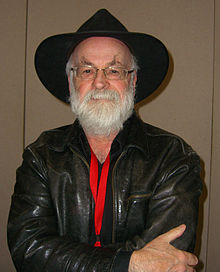
Terry Pratchett

Terry Pratchett

Today, I was going to write about some good news, but then the sad news arrived: Terry Pratchett died.

I have written about Pratchett before in these pages because he is one of my best-loved authors. He was a fantasy writer who was also a brilliant satirist and humorist of the highest order. Reading a new Pratchett book was for me as richly satisfying as artisan chocolate, and it lasted a good deal longer. (Plus I can go back and re-experience the books, which is hard, not to say disgusting, when chocolate is involved.)

Pratchett used his fantasy creation, the Discworld, to satirize our absurdities in this world. Nothing was off-limits for him. Personally, I think one of his finest pieces was “Monstrous Regiment,” which satirized bias against women and the absurdity of religion, which are deeply interconnected. Unlike fellow satirist and countryman Evelyn Waugh, Pratchett never indulged in invective; instead he made you laugh. And when you laugh, you become more open. And becoming open to new perspectives is how hearts and minds get changed.

There are, according to Wikipedia, 41 novels in the Discworld series. Pratchett also wrote several other novels, including “Good Omens” with the luminous Neil Gaiman, a series of children’s books, “The Long Earth” series with Stephen Baxter, and numerous handy guides to Discworld, short stories, and more. There’s a lot more to say about this man. He was awarded an O.B.E. and later knighted, so he is officially Sir Terry Pratchett. He suffered from a particularly vicious form of Alzheimer’s disease for eight years, and bore it with humor and bravery. He was deeply knowledgeable about the folklore of the British Isles, and commented to a meeting of folklorists that he viewed folklore much as a carpenter views trees. Wikipedia has an exhaustive amount of material on Pratchett and also his novels, so I won’t go into a lot of detail here–but he was a man of many parts.

I enjoy everything Pratchett wrote, but Discworld holds a special place in my heart (me and millions of others). He created a world so rich in detail, teeming with fascinating characters and creatures, that a return to Discworld was a richly enjoyable experience every time. I love his witches, especially grumpy and wise old Granny Weatherwax and Nanny Ogg, who had a lively girlhood and likes her pint or two. I love brave Captain Carrot, the 6 foot-plus dwarf who is the unacknowledged King of Ankh-Morpork, Discworld’s largest and (probably) most noisome city. And Lord Vetinari, the ultimate politician who always manages to keep things on course without too much bloodshed. And Death, who always SPEAKS IN CAPITALS (and has the last word). In Discworld, you meet hundreds of characters who are so beautifully drawn that they leave the mark of their personalities with you forever.

But the real reason I cried when I heard he had died is because he was kind to me once. I have related this before, but here it is again:

You see, I met Connie Willis first. I was in the vendors’ hall at Worldcon when it came to San Jose, CA several years ago. I happened to glimpse her nametag. Connie Willis is also a favorite author, so I introduced myself—and proceeded to commit every rabid-fan sin it is possible to commit in attempting to praise her work. Even as I heard the vapid words burbling out of my mouth, I knew I was doomed. The expression of pain on Ms. Willis’ face only confirmed my gauche blundering. I attempted to extricate myself by saying, “Well, I’m starting to drool on you, so I guess I’d better go now.” Ms. Willis nodded mute agreement, and I slunk away with my tail between my legs, feeling like a complete moron.

I was standing at a vendor’s stall wondering if it is possible to actually die of embarrassment when a tidy gentleman with a gray beard and a black fedora walked up. I thought he looked familiar, but when the vendor called him “Mr. Pratchett,” my suspicions were confirmed. He stood right next to me as the vendor handed him a CD, saying, “I’ve been saving this for you, but I was afraid I might come across as a rabid fan.” (Like me, I thought.)

Pratchett took the CD and said, “I adore rabid fans!”

I turned to him and said, “Well, then, would you mind if I drooled on your shoulder?”

Pratchett responded, “Not at all—but would you mind drooling on this shoulder”—he patted his right shoulder—“as the other one is already rather damp?”

Instantly, the oppressive cloud of feeling foolish lifted and disappeared. I will never forget how Terry Pratchett’s humor and kindness brightened my day and turned my embarrassment into laughter. (Not that I mean to say Connie Willis made me feel bad. I made myself feel bad. I should’ve kept my mouth shut.)

And now this kind, brilliant, prolific and amazing writer is gone. There will be no more tales of Discworld to anticipate with glee. His brilliance continues to shine in his work, which will live for a long, long time. He set a high standard for humanity. I only hope that someday we live up to it.

The last Tweet on Pratchett's account. Fans will know who is speaking.

The last Tweet on Pratchett’s account. Fans will know who is speaking.


American Folk Lore: There’s No Such Thing

Joseph Noel Paton [Public domain or Public domain], via Wikimedia Commons

Joseph Noel Paton [Public domain or Public domain], via Wikimedia Commons

I just finished reading Terry Pratchett’s “Folklore of Discworld,” co-written with folklorist Jacqueline Simpson. (Do people actually get paid for knowing about folklore? What a great job!) Pratchett and Simpson discuss the relationship between the Discworld’s traditions and those of Earth (with the conceit that folklore, tropes and memes are particles of inspiration that drift across the multiverse, so that myths of Discworld wind up here, and vice versa).

While reading (actually listening to) this book, it struck me how deeply I am attracted to the folklore of the British Isles (although this is obviously not a particularly rare trait, as evidenced by libraries full of epic fantasies, tales of witches and warlocks, dragons and cloaked heroes and faeries). Nothing entranced me more as a child than tales of banshees, pookahs, faeries, disappearing gold pieces, leprechauns, elves and pixies. As an adult, I am still entranced by Tolkein, C.S. Lewis, G.R.R. Martin, and many less well known authors who write in that tradition—whether humorous or not. It’s one of the reasons I adore Pratchett, who once remarked that he regarded folklore much as a carpenter regards trees.

Why be so attracted to the folklore of another place? I could put it down to my Scots-Irish ancestry. But I think the real explanation is that the folklore of my own time and place is sparse and rather unimaginative. Perhaps if I had grown up in Louisiana or some place with more history than California, I would have a healthy backlog of swamp critters, ghosts, haunted mansions, and eerie sightings to freshen the imagination. As it is, I am hard put to say exactly what constitutes folklore here.

Sure, we told each other the stories about the guy and girl making out in the car who hear on the radio about the escaped madman with a hook for a hand. And step on a crack, break your mother’s back. (As this never happened, I didn’t believe it for long.) But these things lacked the enchantment I found in fairy stories and old tales from Ireland, England, Wales and Scotland. Witches, warlocks and wizards. Spirit horses. Water nymphs. Faery gold. Selkies. Leaving milk out for the Good Folk. Strange dancing lights on the moors at night. The Wild Hunt. King Arthur.

An incredibly high percentage of American “folklore” has disappointingly mundane origins. Paul Bunyan and his giant blue ox, Babe, appears to have originated in the oral tradition of lumberjacks, but according to Wikipedia, was “later popularized by freelance writer William B. Laughead (1882–1958) in a 1916 promotional pamphlet for the Red River Lumber Company.” Rudolph the Red-Nosed Reindeer was originally a promotional character created for Montgomery Ward. Pecos Bill was a character created by short story writer Edward S. O’Reilly in the early 20th Century. Johnny Appleseed was a real person, John Chapman, but all he did was plant apple trees, not conjure gold and silver apples or something interesting like that. Santa Claus comes closest to having true folkloric origins, but in America, even he was largely shaped by modern forces in the form of Clement Moore, author of “A Visit from St. Nicholas” in 1823:

“His cheeks were like roses, his nose like a cherry;
His droll little mouth was drawn up like a bow,
And the beard of his chin was as white as the snow;
The stump of a pipe he held tight in his teeth,
And the smoke it encircled his head like a wreath.
He had a broad face, and a little round belly
That shook when he laugh’d, like a bowl full of jelly:
He was chubby and plump, a right jolly old elf,
And I laugh’d when I saw him in spite of myself…”

Moore changed the majesty of Father Christmas, a tall, thin gentleman wreathed with holly and robed in green, into a “right jolly old elf,” later immortalized in his modern incarnation by the Coca-Cola Corporation. Moore also invented the eight tiny reindeer, which were not found in the stable of Father Christmas.

Where’s the magic in all this? Sadly lacking, in my opinion. Our modern American monsters are the psychopaths, serial killers, stalkers of children, terrorists real and imagined, and that guy with the hook, who may be folkloric, but he’s not very magical. Our urban legends may technically be folklore, but flashing your headlights getting you in trouble with gangs, or tapeworm eggs in bubble gum, or waking up in a bath of ice with your kidneys missing falls well short of enchantment.

I will admit that we Americans have our share of cryptozoids. Probably the leading examples of this are Sasquatch (Bigfoot) and El Chupacabra (the goatsucker). El Chupa is an import from Mexico, where apparently they are so folklore-rich that some of it is oozing across the border. None of these to my knowledge is actually magic; it’s just that no one has ever proved they exist, so of course, lots of people believe in them. Here’s a map of North American cryptozoology, if you’re interested in more.

And, of course, there’s a lot of flying saucer lore. But I don’t think any of the anal probees would say that there was magic involved.

As I mentioned before, it may depend on where you grew up. In Hawaii it is clear that many ethnic Hawaiians (and also many non-ethnic Hawaiians) believe in the old lore. I met people who believe in ghosts, in Pele and other ancient gods, in Menehune, and in spirits generally, both good and evil.

Magic offers the possibility of the good and brave and clever overcoming evil or at least magical trickery, whereas our monsters are sometimes overcome by the judicial system (and sometimes not). Magic also casts a glamor over folk tales; in fact the word “glamor” used to mean magic or enchantment. Our “folk” heroes are artificially created to make money—although they are still presented to schoolchildren as though they were genuine. I suppose Pratchett would say that when people start to believe in something, it transforms that thing into folklore. But no one really believes in Paul Bunyan or Pecos Bill. Thank heaven, some children still believe in Santa Claus, and around a campfire at night, you can believe anything. But I still think we are a culture that is sorely deprived of a true folkloric element.

Do you agree or disagree? Did you hear a truly magical (and American) story when you were a child? Did you have a haunted house on your street where lights and music could be heard at night? Were tales of helpful pixies or harmful sprites told in your neighborhood?

I would love to hear from you if you have such stories to tell!

The Last Day on Molokai and a Return to Halawa Valley

Tom really is a hero. He agreed to drive the steep, winding, one-lane road back to Halawa Valley so that we could visit the beach there and maybe hike to the waterfalls. He surprised me–and this is after 43 years of marriage.

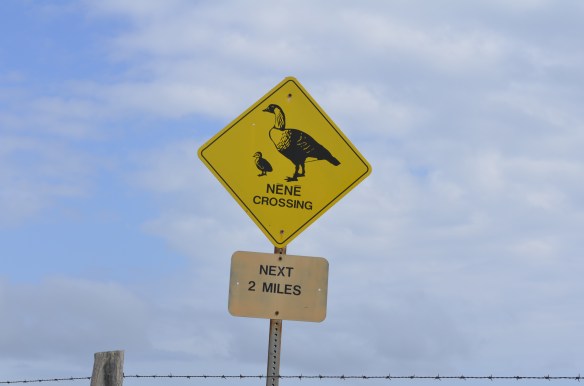
The drive was spectacular, and we stopped to take photos of things we remembered, but hadn’t stopped for the first time because of unfamiliarity with the road. For instance, there’s this sign:

Nene crossing sign.

Nene crossing sign.

Nene (pronounced nay-nay) are the native Hawaiian geese, and they are endangered. Sadly, we didn’t see any geese, just the sign. We also saw this, which we think is a roadside memorial, but it’s a bit different than the usual. In addition to the sun made of white coral, there were offerings:

Roadside memorial.

Roadside memorial.

There was no one waiting at the bottom of the road this time. We parked and walked down the dirt road to the beach. There is a river flowing into the sea here, and it’s  picturesque:

River at Halawa Valley.

River at Halawa Valley.


Beach at Halawa Valley.

Beach at Halawa Valley.


We picked our way along the beach, and I saw what I expected; lots of small pieces of plastic in the sand, white and blue, black and gray, yellow and red–the detritus of the Great Pacific Garbage Patch, collecting on this remote beach. I began picking up the larger pieces and putting them in my pocket. by the time we left, both pockets were bulging, and my arms were full of still larger chunks, bottles, and a small section of plastic fence. Tom gently makes fun of my plastic policing, but I regard it as the little that I can do to make it better. Worth nothing in the face of the magnitude of the problem, I agree. And many of the pieces were so small as to be impossible to retrieve, reminding me of “Rumplestiltskin,” where the poor girl has to count all the grains of sand or spin straw into gold.

Some of my plastic finds. Pockets are bulging with smaller bits.

Some of my plastic finds. Pockets are bulging with smaller bits.

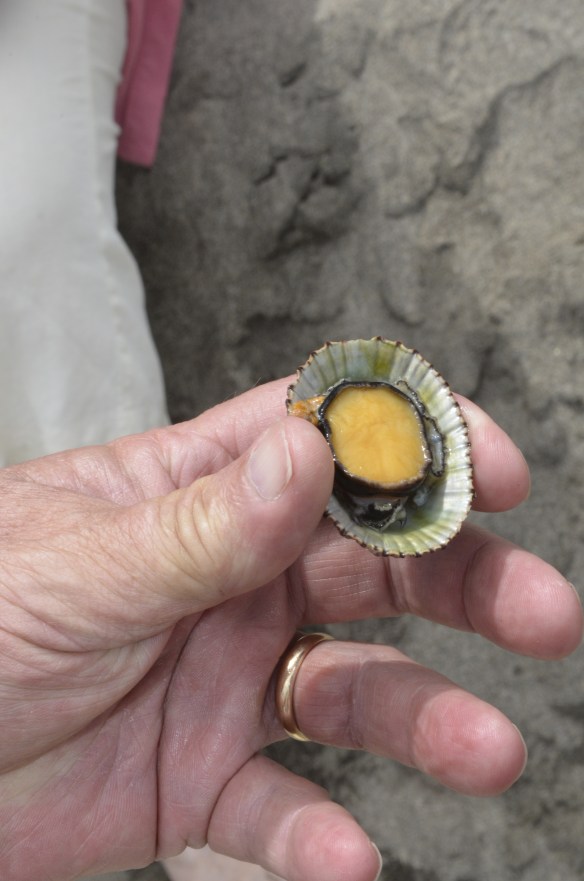
A Hawaiian family was picnicking on the beach. A young woman named Noni (noh-nee, means “beautiful”) was sitting on the sand, while her sister, husband and nephew were on the rocky point under the cliffs, fishing. We chatted for a while, and then her husband came back with a net bag full of ‘opihi (oh-pee-hee, limpets). We asked what they were going to do with them, and he said they were best barbecued, but could be eaten right out of the shell. Did we want to try one?

Yes, we did. He had lost his knife while prying ‘opihi off the rocks, but he used one limpet shell to dislodge the resident of another shell, and offered us some. They were rubbery, and the primary taste was a mild saltiness, but I’m sure they are delicious barbecued. This inside of the shell had a lovely iridescence, tinged with green. I washed mine out and brought it home with me.

Snack time!

Snack time!

We asked about the hike to the falls. Noni said it was really difficult, and she hadn’t done it in 20 years, so we decided to give it a miss. (Later, I learned that it takes two hours just to get there. I probably made the right decision.) After dumping my collected plastic in the trash bins provided, we got into our car and drove slowly back, taking pictures as we went.

Rainforest stream.

Rainforest stream.

Once we were back in two-lane country again, we stopped to take a picture of this:

Chicken condos.

Chicken condos.

I called it “chicken condos,” as they appear to be individual shelters for chickens or roosters. As I was taking the picture, a pack of dogs ran up to the fence and barked their heads off. A very large Hawaiian came down the drive, looking rather menacing. I waved and said I was just taking a picture of his chickens. He didn’t smile, but waved more or less amicably and went back down the drive. My guess is that he’s raising fighting cocks, which is abhorrent, but I don’t know.

The only real proof we saw that there are deer on Moloka'i.

The only real proof we saw that there are deer on Moloka’i.

We also stopped at a grove of coconut palms, right outside of Kaunakakai. This used to be a much larger grove called “the Queen’s Grove,” because it was planted for the wife of King Kamehameha V. It’s right by the beach, and the trees must be 100 feet tall, each with a cluster of coconuts clinging to the top under its fronds. There are piles of coconuts on the ground, both fresh, green ones and old, hairy ones. The top of my head began to feel peculiarly vulnerable as I imagined what a coconut would do to it after a drop of 100 feet, so I left.

The Queen's Grove.

The Queen’s Grove.

Then back to the condo. I was very behind in my journaling, so spent most of the late afternoon writing, listening to the waves crashing on the rocks nearby, and enjoying the trade winds. When we went to bed, another three-inch centipede was occupying the hallway upstairs, and I gave him the same treatment I gave Jesse the Centipede a few nights ago–a beating with my flip-flop. Neither centipede put up a fight, making me think they were unwell to begin with.

And so the journey came to an end, as all journeys must do–which is the beginning of another journey for me; writing a new novel. The entire experience was amazing. People were so helpful and kind, so willing to bring me into their lives a little bit. It was extremely touching, and I will never forget the experiences I had here. As a parting wave, here are the signs that greet new arrivals to Moloka’i, and bid departing travellers farewell:

Aloha!

Aloha!